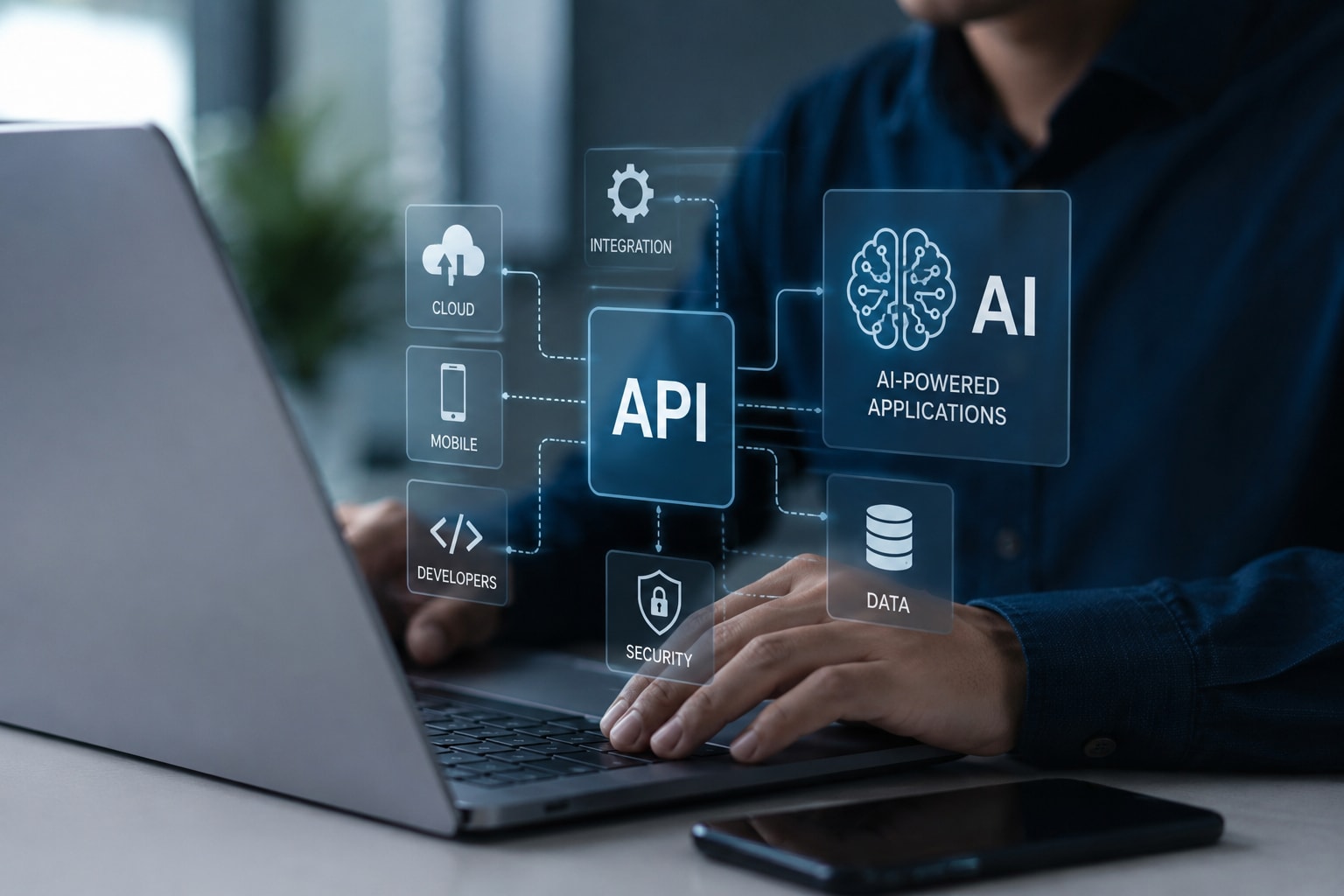
Intelligent technology is revolutionizing product design, operational efficiency, and customer interactions for companies across industries. AI is being implemented into most organizational processes, including chatbots, recommendation systems, and predictive analytics. But beneath many successful AI implementations is a platform that is often overlooked but shouldn’t be overlooked. These are API-first platforms.
As companies adopt artificial intelligence innovations, the importance of system integration, data exchange, and scalability becomes critical. That’s why an API-first approach is important in this scenario.
Growing demand for connected AI systems
Modern AI applications are typically not standalone products or solutions. For example, AI-based customer service tools may require access to information related to your CRM, previous transactions with customers, payment systems, and other third-party software applications. The same goes for predictive analytics systems.
Without smooth integration, even the most innovative AI models can struggle to deliver relevant results.
This is why API-first development is gaining momentum. Rather than making APIs an afterthought, companies design them from the beginning and build connectivity as a key part of the development process.
What is the difference between API-first platforms?
An API-first approach involves designing the interface before creating the application. This allows different systems to interact smoothly with each other during the application development process.
According to industry discussions around API-first architectures, this approach helps enterprises support advanced digital experiences while increasing consistency, adaptability, and integration capabilities.
Key benefits of an API-first platform
- Accelerate integration between systems
- Improved collaboration between development teams
- Increased flexibility for future technology deployments
- Easily scale across devices and channels
- Rapid deployment of services using AI
For companies pursuing AI software development, these benefits can significantly reduce complexity and accelerate innovation.
Why is API-first important for AI applications?
For AI solutions to function properly, they require regular access to high-quality data. Using an API-first approach can help create that situation.
Traditional vs. API-first approaches
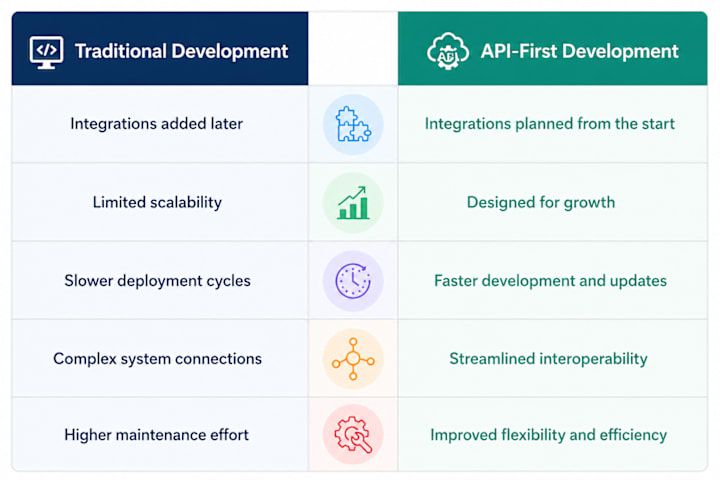
As AI becomes more involved, enterprises need architectures that can adapt quickly without requiring major redevelopment.
Support for scalable cloud-native AI
Cloud-native AI platforms are increasingly being adopted by many organizations due to their adaptability, efficiency, and scalability. API-first solutions enhance this strategy by facilitating seamless interactions between cloud-based services, AI algorithms, applications, and enterprise infrastructure.
This becomes even more important when developing AI applications that can respond to increasing demands and changing requirements.
What an organization can do is
- Deploy AI services to multiple environments
- Connect cloud-based and on-premises systems
- Enabling real-time data sharing
- Support omnichannel customer experiences
The result is a technology ecosystem that can evolve without creating unnecessary operational issues.
Drive innovation across the company
As AI adoption grows, companies are increasingly investing in enterprise AI solutions that support multiple departments and use cases.
Examples include:
- Intelligent customer service platform
- Predictive maintenance system
- Fraud detection tools
- Supply chain optimization solution
- automatic document processing
However, many of these applications rely on intelligent automation tools that require continuous interaction between systems. Using an API-first approach allows interactions to remain reliable and scalable.
Additionally, companies seeking professional AI application development services typically prefer API-driven systems due to their ease of integration and scalability.
conclusion
AI applications not only rely on cutting-edge algorithms, but also require robust architectures that enable connectivity, scalability, and flexibility. Therefore, the emergence of API-first platforms is inevitable for today’s digital transformation strategies.
API-first development allows organizations to innovate faster and make integrations more manageable, while ensuring processes have the agility needed to accommodate future AI innovations. Whether your organization is implementing an enterprise-grade AI solution, developing a scalable application, or leveraging a cloud-based platform, adopting API-first development is key to your future success.
In the digital economy of the future, companies that focus on interoperability today will be able to harness the power of AI within days.