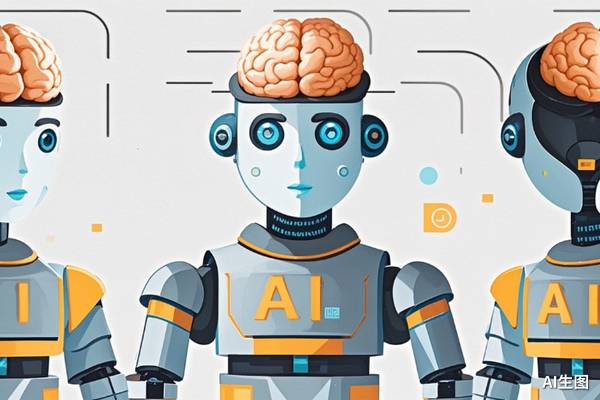
On June 1, OpenAI CEO Sam Altman posted a recruitment notice on social platforms, officially announcing OpenAI’s entry into the physical robotics field. Altman said the company is forming a new team called “OpenAI Robotics” and is recruiting full-stack hardware, operations, systems and machine learning engineers. Our goal is to “work together to program and create robots that are truly useful to society.”
OpenAI’s robotics strategy has both short-term and long-term goals, Altman explained. In the short term, OpenAI is focused on developing robots that can assist skilled workers in building the infrastructure of the future. In the long term, the company envisions that in the future everyone will be able to own a personal robot that can serve a variety of needs.
Altman revealed that the decision to enter the robotics field was based on the rapid development of OpenAI’s internal research project called “Worldsim.” The project evolved into OpenAI Robotics last year and is led by Aditya Ramesh, vice president of research at OpenAI and lead developer of the text-to-image model DALL·E and the video generation model Sora. The foundation of this project lies in the thorough integration and co-design of robotics hardware research and machine learning research.
OpenAI’s return to the robotics field is actually a “homecoming.” In the company’s early years, robotics was an important direction for its exploration of artificial general intelligence (AGI). From 2016 to 2019, OpenAI successively launched the reinforcement learning benchmark environment OpenAI Gym and the open source robot simulation platform Roboschool, and successfully developed a dexterous robot hand called Dactyl.
In 2019, OpenAI used reinforcement learning and “automated domain randomization” (ADR) technology to train an AI system that enabled a humanoid robot hand to successfully solve a Rubik’s Cube. This study proved the feasibility of the technical route of training in a simulated environment and transferring its capabilities to a real robot. However, although text and image data on the Internet was abundant and easy to obtain at the time, there was a lack of training data for robots at the time, and iteration was slow. Around 2020, OpenAI disbanded its robot team and made the strategic decision to focus its resources on research and development of large-scale language models represented by the GPT series. This decision ultimately led to the birth of ChatGPT.
The following year, OpenAI sparked a global frenzy for large-scale models with its ChatGPT series of products, becoming the world’s most acclaimed AI unicorn. According to multiple media reports, OpenAI secretly filed a draft IPO prospectus on May 22 and plans to list as early as September 2026. The latest funding round, completed in March of this year, valued OpenAI at $852 billion. Deutsche Bank and other financial institutions predict that the IPO could be valued at more than $1 trillion and raise as much as $60 billion, making it one of the largest technology IPOs in U.S. public market history.
However, OpenAI also faces significant loss pressure. The company is expected to incur a loss of approximately $14 billion in 2026, and its cash burn is expected to increase further. It is expected that cash flow will become positive by 2030 at the earliest. The company’s gross profit margin is only around 33%, and the high cost of AI model inference is the main reason for hurting profits.
In the years since disbanding its internal robotics team, OpenAI hasn’t completely abandoned the robotics space. Instead, the company has adopted a “diversified investment” strategy through its venture capital fund, investing in several robotics startups, including Norwegian humanoid robot company 1X Technologies, American humanoid robot star Figure AI, and Physical Intelligence.
The most notable collaboration was with Figure AI in February 2024. At the time, OpenAI not only participated in Figure AI’s $675 million Series B funding, but also announced the development of a multimodal AI model specifically for Figure’s humanoid robot. Just 13 days after the collaboration began, the Figure 01 humanoid robot powered by the OpenAI model demonstrated smooth natural language interaction, object recognition, and autonomous operation capabilities.
However, this cooperation did not last more than a year. In February 2025, Figure AI founder Brett Adcock officially announced the end of their collaboration with OpenAI and decided to develop their own end-to-end robotic AI models. The main reason for the breakdown of cooperation was the difference in technical routes. Figure believes that typical large-scale models cannot meet the hardware requirements of robots and that vertically integrated end-to-end models must be built. This led OpenAI to “resurrect” its robotics team for the first time in six years and upgrade robotics from an “investment” to an “internal strategic business.”
On the other hand, this is also how OpenAI charts a new growth curve in the capital market before the IPO. This shows investors the company’s grand vision to expand from pure software to a combination of software and hardware, and from the virtual world to the physical world, and hopes to leverage the story of “embodied intelligence” to alleviate market concerns about business model sustainability and huge losses.
The benefit of OpenAI’s entry into the robotics space is its world-leading large-scale AI modeling capabilities, particularly its “world model” capabilities for understanding and simulating the physical world. That technological path may be different than that of many companies that start with the hardware itself. Instead, it follows the logic of “build your brain first, then grow your body.” This means first making the AI understand the laws of physics through a strong model of the world, and then transferring that functionality to a physical robot. If successful, this idea of defining hardware with software and algorithms could reshape the robotics industry’s research and development model.
This article is from “Jiemian News” published by author: Li Kefeng, 36Kr with permission.