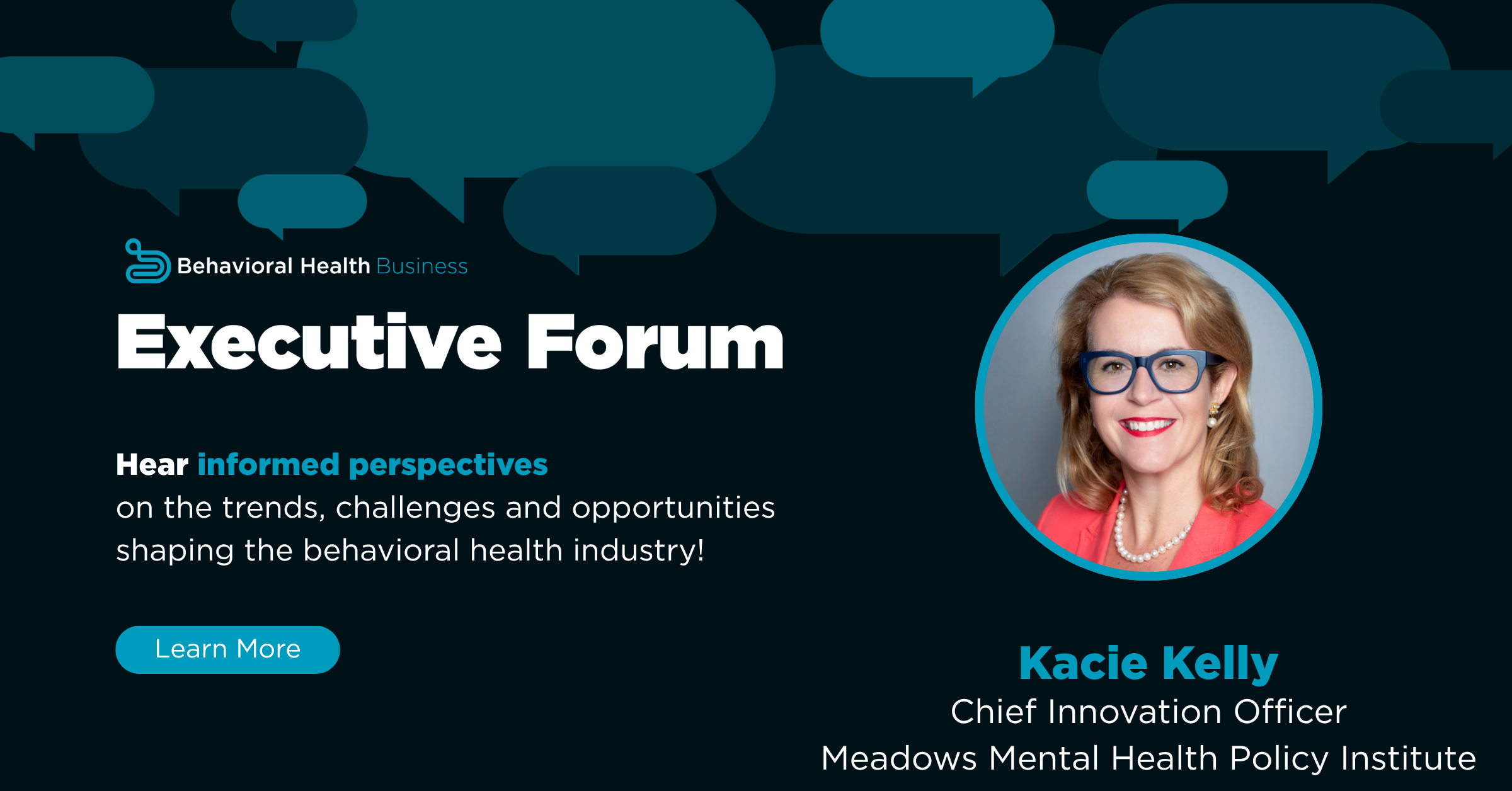
In my 20 years working in mental health policy, I have never been more hopeful than I am today.
Because there has never been a better time to improve mental health outcomes. One of the solutions that my colleagues at the Meadows Institute and I are most excited about is the potential of AI to revolutionize the delivery of mental health services.
When I spoke about AI in mental health at the American Academy of Arts and Sciences last December on a panel moderated by CNN’s Dr. Sanjay Gupta, the conversation centered around legitimate concerns about the dangers of AI chatbots, especially for the most vulnerable among us: young people and those already experiencing mental health conditions.
Of course, we must first and foremost protect the health and safety of our children and communities with strong safeguards against the use of AI to support mental health care. But as I told the Academy, we cannot allow these legitimate issues to blind us to the value that AI can provide. For the 43 million Americans who suffer from a mental health condition each year, the risks of doing nothing are too great.
The pace of change was so rapid that in the four months since that event, the narrative has shifted to one of less fear and more acceptance and engagement.
That’s why I wasn’t surprised when the American Medical Association released a new study last month showing that more than 80% of doctors actually use AI on a daily basis. Seven in 10 physicians see AI as a tool to automate tasks that contribute to work-related burnout, and 76% say the technology will help improve patient care.
Open AI reports that out of more than 800 million regular users, one in four sends a weekly healthcare prompt. According to a RAND Corporation study, one in eight adolescents and young adults in the United States use AI chatbots for mental health advice.
Given these facts, it was encouraging that Open AI recently held a listening session with the American Psychological Association and other members of the Mental Health CEO Alliance. Indeed, there is growing recognition in business and Congress that AI has the potential to transform mental health.
As Chief Innovation Officer at the Meadows Institute, I sit at the intersection of technology companies, health systems large and small, and policymakers interested in advancing solutions to mental health problems. Lately, I’ve been hearing two parallel conversations about AI.
Technology companies and large health systems seem excited about the theoretical and practical potential of AI. Smaller systems and providers, on the other hand, want to be bullish on this new technology, but remain skeptical about whether it will help them find a way to free themselves from overwhelming administrative burdens and spend more time delivering clinical services.
While it is encouraging to see more mental health leaders focus on the opportunity to reduce provider workload and burnout challenges with AI, I am concerned that a new technological caste system is emerging in the mental health field. One for large, established provider networks with the ability to leverage large-scale structured and unstructured data to make the most of AI-enabled solutions, and one for smaller providers located in rural areas and without similar capabilities.
Our team at the Meadows Institute has looked at the situation, and the good news is that there is an opportunity for AI-enabled tools to help both groups.
At small clinics like Texana Center, which operates in six Texas counties, AI tools are already being used to provide transcriptions, session records, and automate intake data such as symptoms, medical history, and screening results. It is estimated that physicians currently spend 35% of their time on clinical documentation. Effectively implementing AI-enabled tools can significantly reduce the workload of healthcare providers, facilitate billing enhancements, and free up healthcare professionals to spend more time with patients.
Large organizations like Centerstone, a nonprofit provider network that operates programs focused on accessibility in underserved areas, are proactively integrating AI-enabled tools to improve measurement and outcome monitoring along with quality improvements to reduce burnout among providers. Specifically, the company is partnering with an AI company to support certified community behavioral health clinics (CCBHCs) across the country, helping them improve the quality of care through cognitive behavioral therapy (CBT), dialectical behavioral therapy (DBT), and suicide prevention training and real-time coaching.
In addition to leveraging AI to reduce administrative burden and improve quality, large health systems are also leveraging technology to support clinical decision-making and improve outcomes.
Intermountain Health, the Intermountain West’s largest nonprofit health system, recently announced that it is leaning heavily into AI, with more than 300 AI projects currently underway. This includes partnering with a behavioral health platform that stratifies patients by risk level and helps clinical operators prioritize urgency and level of care needed. This includes using algorithms to detect patients in primary care who are most at risk of suicide. Successful implementation can revolutionize workforce efficiency and effectiveness by ensuring employees can focus on making the most of their skills.
We live in a brave new world where AI is rapidly reshaping healthcare. AI offers an unprecedented opportunity to transform mental health services for independent providers as well as provider networks large and small.
Like any innovation, AI for mental health will require thoughtful implementation, regulation, and human oversight, but AI is already here, and smart providers will seize the opportunity to use it to do what they do best: help care for the millions of people suffering from mental illness across America.
About the author: Kacie Kelly is Chief Innovation Officer at the Meadows Institute for Mental Health Policy.