
Christina Hood, a Palo Alto-based real estate agent, estimates she has saved about 10 hours a week since she started using artificial intelligence tools. She took that time back to spend time with her husband and volunteer in her community.
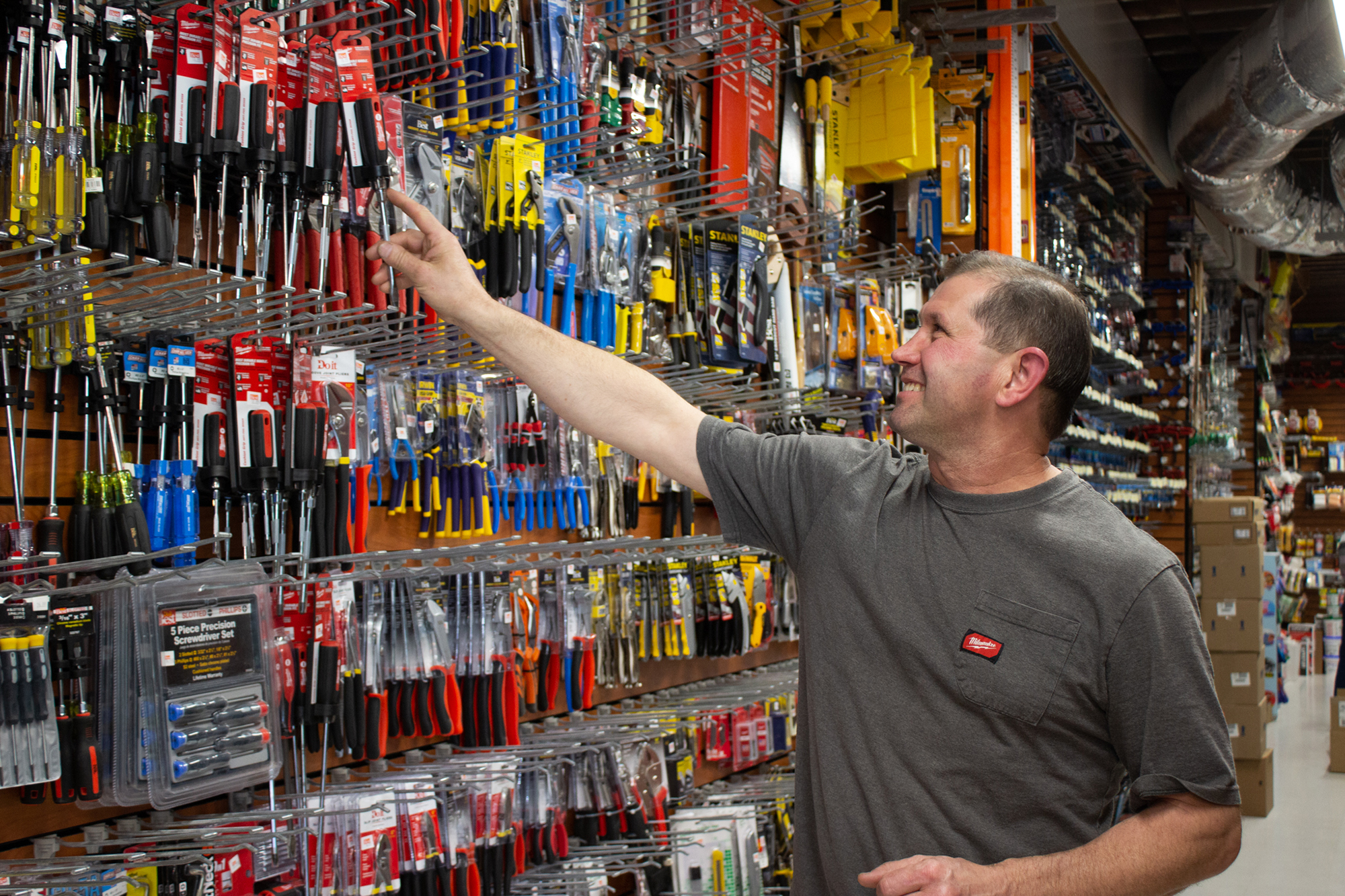
Michael Fechete, manager of the Nob Hill Hardware Store across town, said so far there has been limited use of AI at his business, where customers stop by to buy tools or ask Fechete for advice.
Since ChatGPT was released in 2022, media reports have swirled that people should prepare for the AI employment apocalypse, and that the apocalypse probably won’t happen.
Silicon Valley is a hub for artificial intelligence, and local companies’ use of the technology is diverse. Definitions and perceptions of AI also differ. Some consumers only think about generative large-scale language models like OpenAI’s ChatGPT or Anthropic’s Claude. You might think of voice assistants like Siri or Amazon Alexa, writing assistance like Grammarly, or algorithmic content recommendations from Spotify or Netflix. Michael Kennedy, CEO of Intuit, came up with a simple definition for the technology everyone is talking about.
“If there’s one way Intuit talks about or defines AI, it’s the experiences that are made for the customer,” Kennedy said. “They bring what’s most important to them: taxes, business, payroll, money experience. And the product does those things for them, giving them insight into how to grow their business, save more money, and make more money.”
Some local business organizations are holding workshops that explore the applications of AI to business. Hood, president of the Palo Alto Chamber of Commerce, will co-host workshops on June 10 and June 17 on how companies can leverage AI to grow. A similar event was held by the San Mateo Chamber of Commerce in early May, and another focused on AI and business is scheduled for May 27 in San Francisco.

Some, like Hood, are going all-in on AI. Hood is a Realtor with Keller Williams, a large real estate franchise with more than 1,000 offices nationwide, including an office in Palo Alto. Keller Williams also has a large technology department that builds tools specifically for real estate agents.
Hood began using language models like Gemini and Claude to create marketing materials, including creating semi-automated posts on LinkedIn. She said having an online presence is essential to expanding your reach and making your presence known in the community. Ms. Hood uses a tool called Beacons.ai to automate her meeting schedules and uses AI agents like Manas (an AI company that Mr. Mehta recently tried to acquire but was blocked by the Chinese government) to organize her calendar.
“[It] activity[s] “It’s like a chief of staff, where you get a notification that says, ‘Here’s what’s going on today,'” Hood said, adding that it gives you “an overview of your calendar and an overview of upcoming important emails that need to be addressed immediately.”
Hood learned many of the AI tools from another Keller Williams real estate agent. That person taught Hood to use AI tools and automation to increase efficiency and reach.
“My goal is to make things simple for people,” Hood said. “I’m a big proponent of using AI for good.”
Customers find Fechete at the California Avenue hardware store and ask about which screws to replace that were too short, or about the right TV cable to plug into their devices. Fechete knows what tools it has in stock and which tools suit its customers’ requirements.

“That’s why people come here, to get information,” Feschete said. “I don’t know if AI can tell people the right thing to do.”
Customers can order hardware parts online and use artificial intelligence to find out how to use tools, while people visit stores for emergency parts and employee knowledge on how to use them.
“Human-to-human contact cannot be replaced by AI,” Fechete says.
Steve Oberhauser, owner of The Cobblery, a shoe repair shop on California Avenue, said there are limited uses for AI outside of specific business cases such as packaging and scanning.
“AI won’t tell you how to fix your shoes,” he says.
According to the National Federation of Independent Businesses’ 2025 study, large companies had higher rates of AI adoption last year. NFIB is a small business association with more than 300,000 members nationwide. Additionally, current AI systems are generally more capable of digital tasks than manipulating the physical world, which many small businesses operate and perform somewhat niche tasks, said Peter Hansen, director of research and policy analysis at NFIB.
“Retail, transportation, warehousing, construction,” Hansen said. “These all require people, touching things, moving things, and talking directly to other people.”
Hansen added that another barrier to using AI for some small businesses is understanding how to use existing tools. Companies with older executives or established processes are also less likely to adopt AI, but developers can help them think about use cases, Hansen said.

“In terms of owners, we’re talking about the busiest people in the world, right?” Hansen said. “The company doesn’t have an employee development platform where employees can attend conferences and learn about the latest tools.”
Kennedy, an executive at Mountain View-based financial technology giant Intuit, said small businesses are “the backbone of the economy.” Kennedy said the company works with many small and medium-sized businesses, and many of Intuit’s products already include AI, including TurboTax, accounting tool QuickBooks, and marketing platform MailChimp.
Intuit is also embarking on the More With AI tour, conducting AI literacy workshops on how to use visual generation tools, how to write prompts for large language models, and AI safety. About 60 companies participated in the training held in Mountain View last year, Kennedy said.
According to Intuit metrics, AI adoption rates are high. In a February Small Business Insight survey, 77% of companies surveyed reported using AI on a regular basis. In contrast, a quarter of companies in last year’s NFIB survey said they were using AI. Differences in the companies sampled and the timing of the survey may have influenced this difference.
Nick Haschka, CEO of OnPoint Generators, said AI has changed the way his company works. The Monterey-based company, which has 30 employees and is also an Intuit customer, installs backup generators for customers around Northern California and Nevada.
Haschka uses AI tools in nearly every aspect of his work. He established an agent that captures nearly all of OnPoint’s historical documentation, including engineer tickets, invoices, equipment manuals, requests for proposals (RFPs), and documents issued by potential bidders from contractors.
“Think of it like an AI historian who knows everything that has ever happened in your company,” he said.
Using AI tools built by Haschka, technicians find information about specific equipment’s torque specifications (the amount of rotational force required) or information about the type of equipment a technician needs for a particular service. This allows businesses to learn about a customer’s financial history, such as how much they paid for specific equipment, and also helps identify RFPs that are applicable to OnPoint.

Technicians may have spent hours searching for information, Haschka said. This process will take a few seconds. It also reduces training time for technicians and allows them to check for mistakes. And tools have gotten even better, especially over the past year, Haschka said.
“As we continue to improve AI, offices will be able to handle significantly more work and grow their businesses faster than they need to increase their staff,” Haschka said.
Haschka built the infrastructure using Claude Code and Google Gemini. He said the system works pretty well on its own, but still requires a human to verify the AI agent’s answers. His background is in industrial engineering, and although he has coding experience, he has no formal training as a software engineer. Still, he became an experienced AI engineer.
His advice for people new to AI tools is to ask them how they can be used.
“I think the only thing you’re afraid of is losing your job to someone who is better at using these tools than you are,” he says. “Tools can’t take your job.”