
Microplastics are now present in oceans, soil, food chains, and even human biological samples. But scientists still face major challenges. These tiny particles are difficult to detect, track, and link to health risks using traditional laboratory methods alone. A New Perspective article argues that artificial intelligence could help change this situation.
Published in Artificial intelligence and environmentThe article “Revisiting the detection, fate, and health risks of microplastics in the environment with artificial intelligence” examines how AI can support the entire microplastics research chain, from detection and environmental tracking to health risk assessment and policy-making.
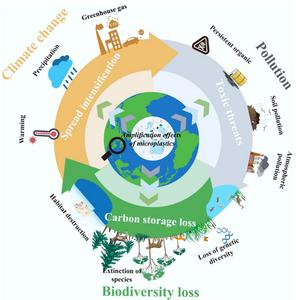
Microplastics are generally defined as plastic particles smaller than 5 millimeters and are part of a broader environmental crisis involving pollution, climate change and biodiversity loss. They can move through water, soil, air, and food webs, and may also carry and interact with other pollutants at the same time. Their behavior depends on many factors including size, shape, polymer type, aging, biofilm formation, hydrodynamics, and local environmental conditions.
Traditional tools such as Fourier transform infrared and Raman spectroscopy remain important, but can be time-consuming and labor-intensive when applied to large numbers of complex environmental samples. According to the authors, AI can overcome these barriers by recognizing subtle patterns in high-dimensional data. Machine learning can improve the speed and accuracy of microplastic identification, and deep learning can support rapid classification of very small particles.
“Artificial intelligence gives us new ways to view microplastics not as isolated particles, but as part of a connected environment and health system,” said corresponding author Xianang Hu from Nankai University. “By integrating surveillance data, toxicological evidence, climate information, and human exposure data, AI will help move from piecemeal observations to more predictive and actionable science.”
This article focuses on emerging applications such as AI-assisted spectroscopy, microfluidic sensing, portable field sensors, satellite and drone monitoring, interpretable machine learning for transportation modeling, and digital twins to test environmental management strategies before implementation.
The authors also propose a “pan-microplastic AI framework” for One Health governance. The framework aims to link environmental, ecological, and human health data to better understand how microplastics interact with climate change, biodiversity loss, and other emerging pollutants.
However, the authors caution that AI is not a magic solution. High-quality data, standardized methodologies, interpretable models, and responsible “green AI” practices are essential. They argue that if developed carefully, AI could become a powerful tool for building a more quantitative, systematic, and intelligent response to microplastic pollution.
===
Reference magazines:
Hu XG; Wang RQ; Liu CH. Reconsidering the detection, fate, and health risks of microplastics in the environment through artificial intelligence. AI environment. 2026, 1(1): 33-39. DOI: 10.66178/aie-0026-0005
https://www.the-newpress.com/aie/article/doi/10.66178/aie-0026-0005
===
About the journal:
Artificial intelligence and environment is an international interdisciplinary platform for communicating basic and applied research advances at the intersection of environmental science and artificial intelligence (AI). It serves as an innovative, efficient and professional platform for researchers around the world across the fields of geoscience, environmental science, big data science and AI, and is dedicated to delivering discoveries from this rapidly expanding field of science. It is a peer-reviewed open access journal that publishes critical reviews, original research, rapid communication, perspectives, commentaries, and perspective papers.
follow us above facebook, ×and blue sky.
Disclaimer: AAAS and EurekAlert! We are not responsible for the accuracy of news releases posted on EurekAlert! Use of Information by Contributing Institutions or via the EurekAlert System.


