
This column is part of the Indianapolis Public Editors Project. This project is a pilot program designed to test whether the presence of public editors analyzing local reporting can increase audience trust in journalism and promote media literacy.
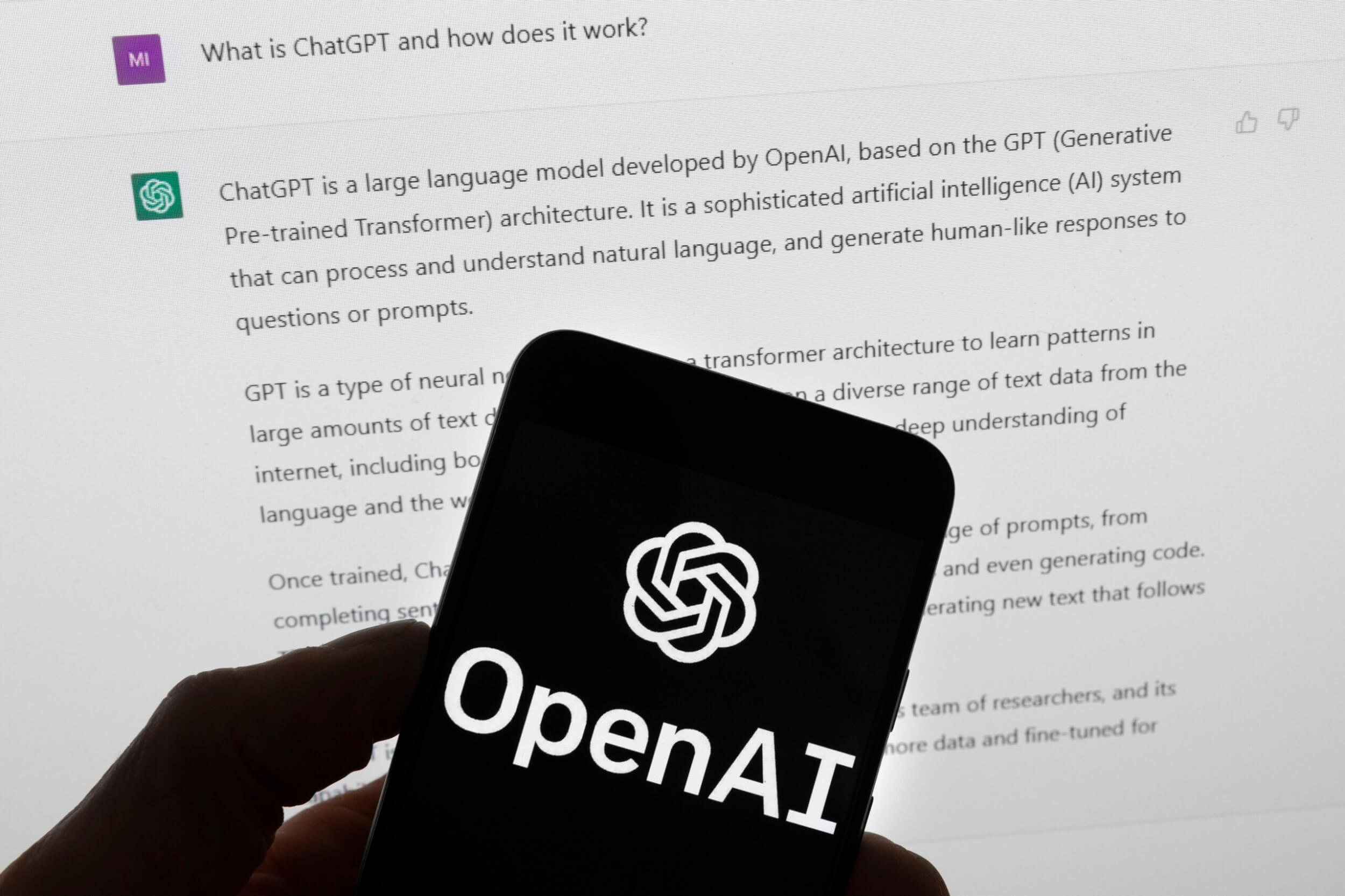
News consumers have real concerns about how artificial intelligence is used in journalism, and for good reason. There are many examples of newsrooms misusing AI.
People think AI is dangerous, harmful, and creepy. They worry that AI will hallucinate or make things up. And many worry that journalists’ jobs will be replaced by AI. They also worry that AI will flood them with so much noise and clutter that they won’t be able to find information they can trust. People hate AI.
I’m also concerned about these things. Indianapolis newsrooms are in the early stages of experimenting with AI. That’s why we thought it might be a good idea to consider how local newsrooms are using this technology and what ethical guidelines consumers should expect from their news providers.
Indy newsrooms are taking different approaches to AI
Of all the news organizations in Indianapolis, Black Indy Live has been the most experimental in its use of AI. Laron Anderson, the platform’s editor-in-chief, said the platform has used AI in many tasks, including designing logos, generating graphics, polishing news articles and devising promotional campaigns. He sees AI as a strategy to compete with larger news organizations that have more resources. He even used the technology to create an AI avatar called “Rae” to report the news when Black Indy Live first started in 2017. Rae was loved (and hated) by audiences, and Anderson says the only reason he stopped using Rae was because OpenAI discontinued Sora, its platform for creating avatars.
Most local newsrooms in Indy are far more conservative in their use of AI. Here is a summary of their policies:
- Indystar: IndyStar journalists are expected to follow strict internal guidelines that require transparency and human oversight.
- For reference: Use AI for transcription and captioning. Reporters follow the department’s AI policy. This is “people first, people second.” This means a real person starts the report and reviews the article at the end before it’s published.
- Indiana Capital Chronicle: We use AI to transcribe recordings and have reporters personally verify quotes.
- Mirror Indy: Transcribe notes using AI. The outlet is developing a broader policy outlining other acceptable uses.
- Chalkbeat Indiana: Use AI as a tool to transcribe some meetings while attending key meetings in person. We have an internal AI policy, but an external AI statement is still in development.
- Axios Indianapolis: As a state-owned company, Axios has an AI policy on its website and a formal partnership with ChatGPT, an open AI used by reporters to analyze data and classify documents.
- Indianapolis Business Journal: does not have a publicly available AI policy on its website.
- FOX59 and CBS4: As a Nexstar company, its AI policy states: “All writing and reporting must be the work of the writers, producers, and reporters involved in publishing or broadcasting the story. AI and AI tools should not be used to replace human judgment or critical thinking. Our newsrooms’ use of AI must be transparently disclosed to our audiences.”
Every newsroom leader I spoke to (with the exception of Black Indy Live’s Laron Anderson) described a cautious approach. Some already have formal policies that they share with their audiences, while others are refining their approaches.
For example, Chalkbeat has internal guidelines for reporters that foster innovation while staying true to Chalkbeat’s values, said bureau chief MJ Slavy.
“It is never acceptable to write stories to AI and make it look like your own, or to use AI to create or modify images,” she said, citing the guidelines. Internally, Chalkbeat’s guidelines call for using only company-approved tools that are more secure, understand the limitations of AI, are transparent, maintain human oversight, and embrace innovation that fulfills our mission. The organization is working on ways to educate the public on how to use AI tools.
Mirror Indy has established a news editorial board to consider this issue, as well as what community members want to know before adopting an AI policy. Amanda Kingsbury, Editor-in-Chief of Innovation at Mirror Indy, assured me that the outlet would provide training opportunities for staff once the policy is complete, as well as explaining how and when to use AI.
“AI will not replace our journalists,” Kingsbury said. “We do not use generated AI to write entire articles or portions of articles; we do not use AI to create or modify photos, videos, illustrations, or graphics; we do not use AI to fact-check articles or create social media posts.”
Mirror Indy is considering using AI to create audio versions of written stories, and Kingsbury said this aligns with the company’s mission to make its work accessible to a wider audience. Many trusted news organizations are already doing this, including the New York Times and the Washington Post.
Experts promote the use of human-centered AI and highlight popular applications
I asked two journalism ethics experts about their views on the industry and how Indianapolis newsrooms are using AI tools.
Benjamin Toff is an associate professor at the University of Minnesota’s Hubbard School of Journalism and Mass Communication and director of the Minnesota Journalism Center. As a senior fellow at the Reuters Institute for Journalism at the University of Oxford, he led the Trust in News project, which concluded in 2023. Alex Mahadevan has trained nearly 4,000 journalists, creators, and communicators in AI, both in-person and virtually.
He is a faculty member at the Poynter Institute and director of MediaWise, the institute’s media and AI literacy division.
According to Mahadevan, the most popular AI tools for journalists are tools such as Otter, which transcribe interviews into text documents.
Well-known chatbots such as ChatGPT, Claude, and Google’s Gemini are becoming popular, says Mahadevan. And Google’s NotebookLM is pushing to become the newsroom chatbot. “It’s used quite a bit by reporters, but rather to organize notes, interviews, and documents related to individual stories,” Toff said.
How to read news in the AI era
The use of AI in journalism is increasing day by day. Here’s how to avoid degrading your experience as a news consumer. You don’t need to read 15 versions of the same story to know the truth. AI has a lot of overlap and doesn’t offer the substantive quality that regular news outlets do. Toff advises that scrutinizing several news sources to understand who to trust and why can save you time and make your life easier.
“I think people should at least look at the nature of the organizations that are getting the information,” he says. “In my view, there are still some very good, high-quality news organizations that are investing in their own reporting and newsgathering, verifying information, and doing the hard work of journalism.”
Look for disclosures about how newsrooms use AI. For example, WRTV and WISH-TV post disclosures at the end of news articles.
Mahadevan said WRTV’s disclosure in this article by reporter Greg Montgomery is a great example because it adheres to journalistic standards of accuracy and fairness, with particular reference to the editorial team. This WISH-TV article is another good example, as it describes exactly how the content was created for broadcast and then reformatted by AI for the station’s website.
Expanding access, such as when AI translates articles into another language or reformats articles from one platform to another (such as text-to-speech), can be extremely beneficial to communities by allowing newsrooms to accommodate different abilities and preferences for accessing articles. WFYI often provides links to audio versions of stories, like this article by Briana Herron.
Look for news organizations that promise that humans will constantly monitor the accuracy of the AI’s work. For example, Indiana Capital Chronicle reporters personally verify quotes transcribed by AI from recordings, per policy.
WFYI has a similar policy. News Director Sarah Neal Estes explains the station’s People First/People First policy. “We’re not just letting AI do the job, we’re using it as a tool,” she said. “For example, I’ll do an interview with the person first. I’ll enter it into Otter, then I’ll modify that transcript, and then I’ll do the person last. OtterAI always makes mistakes.”
Learn how to read AI disclosures. Be wary of confusing or ambiguous disclosures. If AI is being used to create something that is not authentic, such as a photo, video, or entire reporter, you should be suspicious.
“When it comes to using AI to imitate humans, that’s a bridge too far and it’s ethically questionable because even if you make the disclosure very clear, someone is going to think it’s a real human,” Mahadevan said. “So even if you’re doing your best not to be fooled, you’re still fooling people, and viewers don’t like that.”
We want journalists to develop better uses for AI, such as better tools to sift through data for investigative reporting and analyze public meeting minutes and documents to monitor government. We want news organizations to be transparent about how they use these tools. There are many bad actors out there who use AI to trick, distract, and embarrass us. While leveraging the power of AI, objective journalistic content is needed to cut through the noise and make its quality stand out.
We would love to hear your thoughts. Questions about Indy’s media ecosystem should be directed to: indypubliceditor@pointer.orgor if you would like us to come and speak to your community group, please contact us. Your voice helps strengthen local journalism in Indianapolis.
Sign up for our newsletter here.
Indy Public Editor is a grant-funded pilot project run by the Poynter Institute. This column was edited by Kelly McBride, with copy editing by Lauren Klinger. This project is managed by Nicole Saughter Graham with support from Amaris Castillo.