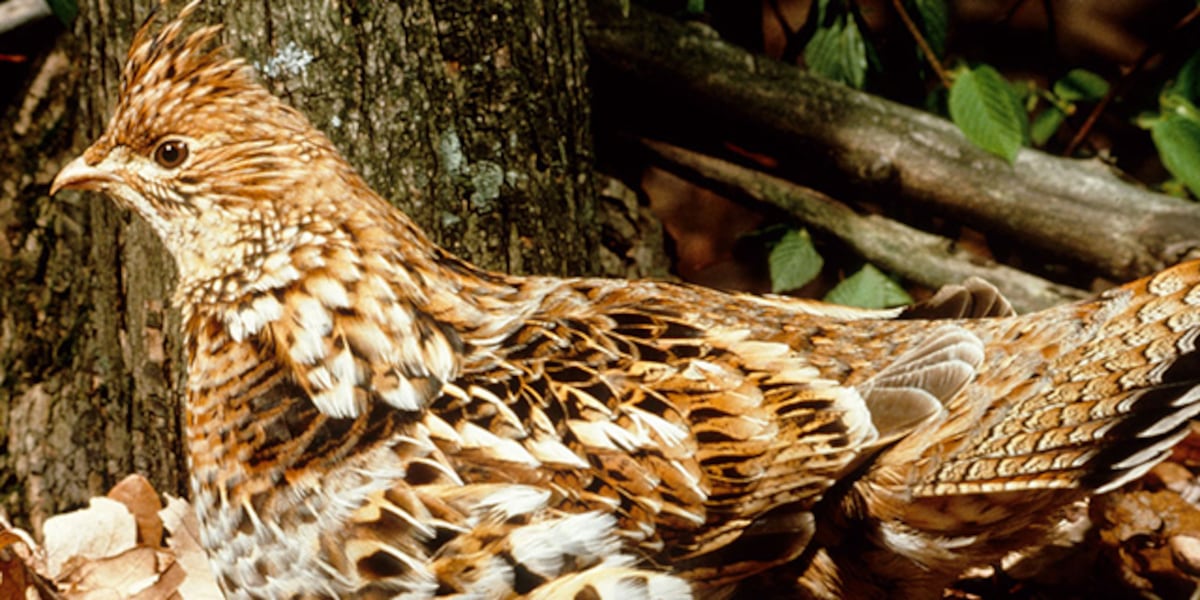
HINESBURG, Vt. (WCAX) – Vermont Fish and Wildlife biologists are using new AI audio technology to track ruffed grouse populations.
Ruffed grouse are in decline in some parts of the Northeast, including New York and Pennsylvania. Vermont Fish and Wildlife biologists have launched a new study to track birds in the Champlain Valley to learn more about what the birds are doing in Vermont.
“We don’t actually know if they’re in decline,” VTF&W’s Katie Gieder said during a recent visit to the Fred Johnson Wildlife Management Area in Hinesburg. There, recordings are being made to record the mating calls of ruffed grouse and the sound of drums like lawnmowers.
“There’s a little microphone here, there’s a motherboard in this part of the recorder, and there’s basically a Bluetooth section where you can connect it to your phone and set up a recording schedule,” Gieder said.
Once set up, Gieder connects it to her phone and adjusts the sample rate and recording length. All audio is input into a database and classified by an AI processing model to classify noise.
“Without this, we really wouldn’t be able to do this study because we’re taking terabytes of data from these audio files and trying to manually process and identify calls from those terabytes of data. That’s just not possible,” Gieder said.
Although still in its infancy, this type of technology could become a valuable conservation tool, Gieder said. “We’re testing and refining the model and making sure it’s really, really the most effective at enabling this work,” she said.
The study is funded through this year, but Fish and Wildlife researchers are looking for more funding to continue monitoring through 2028.
Copyright 2026 WCAX. Unauthorized reproduction is prohibited.