
SALT LAKE CITY – Artificial intelligence relies on two things: large amounts of data and the computing power to process it.
For many researchers, accessing such power is difficult.
A new AI supercomputing system managed by the University of Utah is designed to change that, expanding access across the state through a single, shared resource.
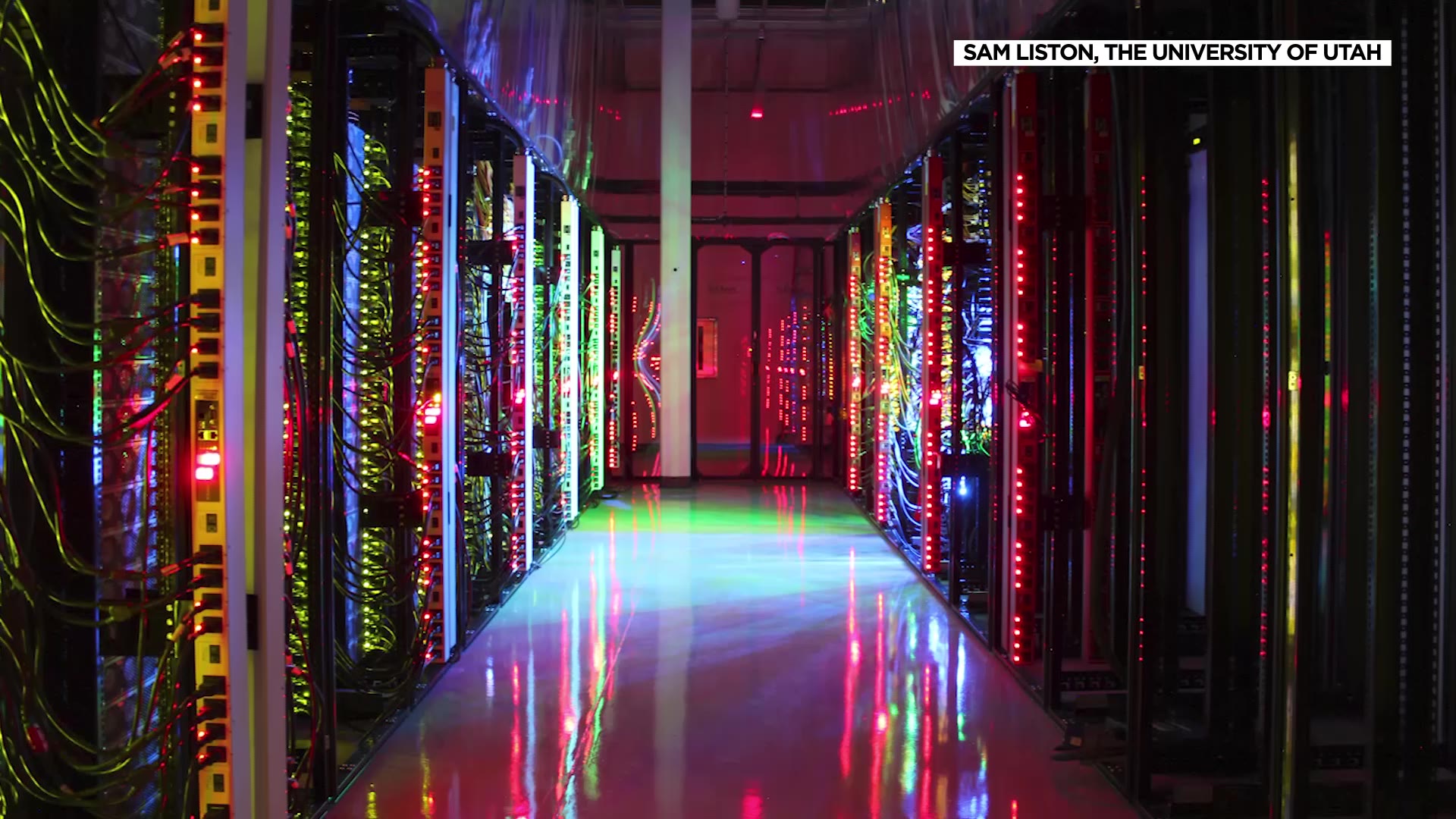
“AI needs to be effective because it relies on compute and data to work. AI requires a lot of compute and a lot of data,” said Manish Parashar, chief AI officer at the University of Utah. “A supercomputer is a computing infrastructure, consisting of a large number of interconnected computing systems, graphics processing units, and data storage units that collectively execute models that enable AI applications to operate.”
University leaders said the system will allow researchers to build much larger AI models and run them much faster than before.
This speed is important in a wide range of fields.
“As our researchers seek to use AI to solve important health, environmental, and workforce problems, they need to be able to build and run models at scale,” Parashar said. “By enhancing this capability, researchers will be able to really leverage AI in their research.”
These applications range from medicine to environmental science and even education itself.
The system will expand the University of Utah’s computing power by 3.5 times, allowing more people to work on more projects at the same time.
“How big can the models be and how fast can they run? This allows researchers to process larger amounts of data faster,” Parashar said.
This speed represents a major change from previous research methods.
The model runs much slower. “Sometimes it takes months, sometimes it takes hours, sometimes days. This gives you better insight across more dimensions,” he said.
The system is intended as a shared resource that goes beyond the university and helps level the playing field for researchers, students, and organizations across Utah.
“By making these resources accessible to students and researchers across the state, we will ensure that researchers anywhere in the state can access this capability.”
State leaders are pairing infrastructure investments with a broader push known as Utah’s Pro-Human AI Initiative, which aims to align research, workforce training, policy and public accountability.
“The way we connect academic research with government, industry and the innovation ecosystem gives us a unique advantage in this country,” Parashar said.
He said the system is designed to reflect Utah’s priorities and address issues that directly impact people across the state.
“We are working on issues that are important to the people…but it also puts us in a leadership role at the state level,” Parashar said.
Early access to the supercomputer is expected to begin by mid-summer, and the system will be installed in a dedicated data center built to support power and cooling needs.
University leaders say the investment represents a long-term commitment and is meant to help Utah remain competitive as artificial intelligence continues to evolve.


