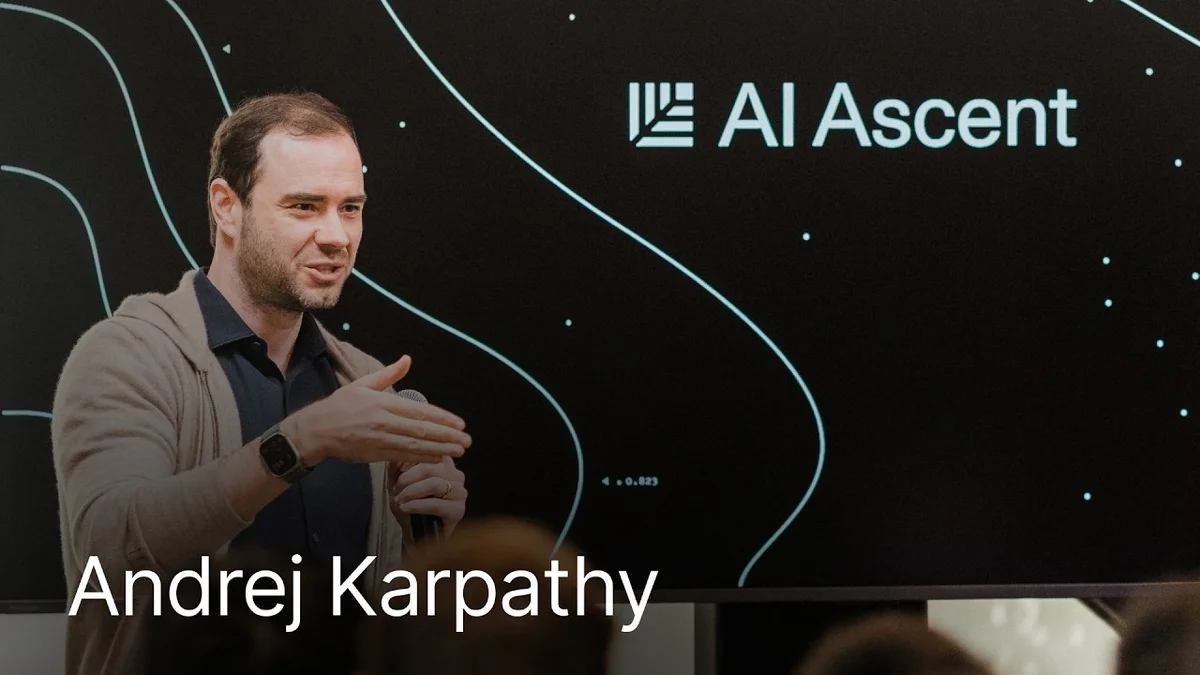
In a recent discussion at the AI Ascent event, Andrej Karpathy, a prominent figure in the AI research community and former AI director at Tesla Inc., provided a compelling perspective on the current state and future trajectory of artificial intelligence. Karpathy, known for his fundamental research in deep learning and his ability to clearly explain complex AI concepts, spoke to the audience about the evolving relationship between humans and AI, particularly the shift from traditional programming to prompt-based interactions.
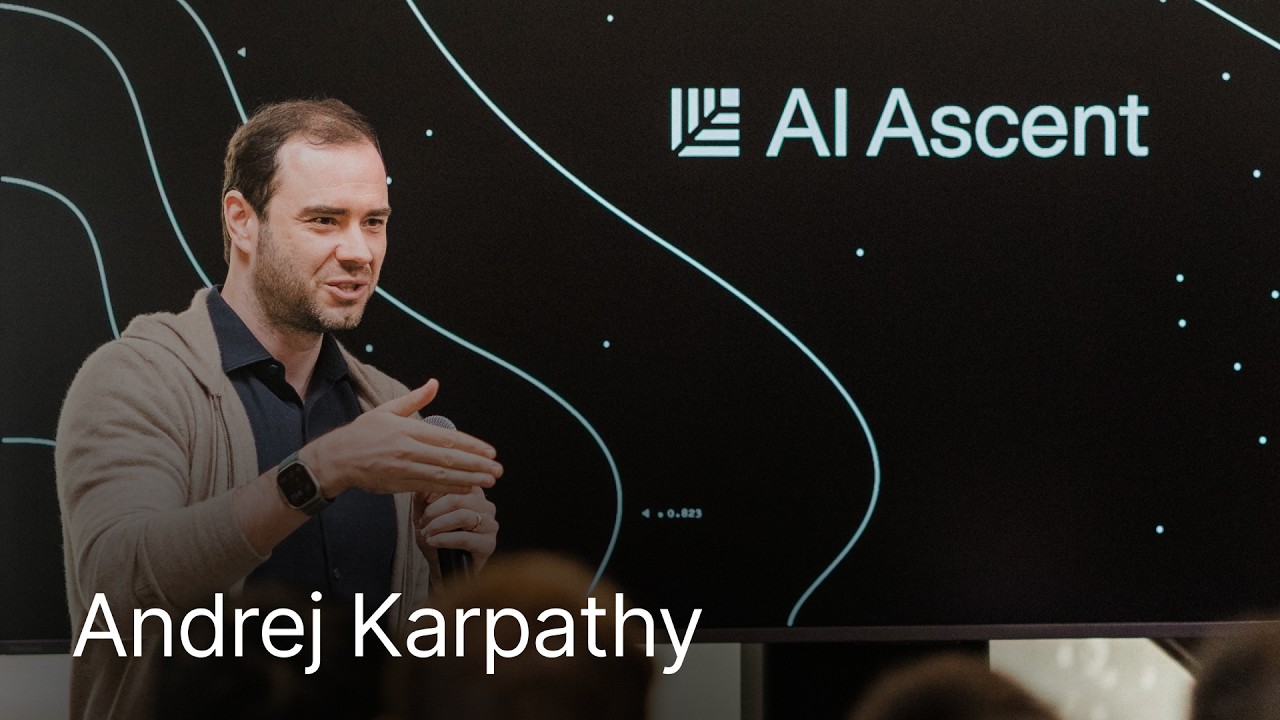
Biography of Andrei Karpathy
Andrej Karpathy is a well-known researcher in the field of artificial intelligence, particularly deep learning and computer vision. He played a central role in Tesla’s AI development and led the Autopilot team. Before joining Tesla, Mr. Karpathy was a student of Fei-Fei Li at Stanford University, where he made significant contributions to computer vision research, including the seminal ImageNet dataset. His research has helped push the boundaries of what AI can achieve in real-world applications.
Moving from programming to prompting
Karpathy began by drawing parallels between traditional software engineering and the emerging paradigm of interacting with large-scale language models (LLMs) through prompts. He clarified that software development used to require explicit coding of rules and logic. However, with the advent of models like GPT-3 and its successors, approaches have shifted toward creating effective prompts to elicit desired behaviors from AI systems. This change represents a fundamental shift in the way we interact with and build intelligent systems, he noted.
The need for deeper reasoning
A central theme of Karpathy’s discussion was the current limitations of AI models, particularly in their ability to demonstrate true understanding and inference. Although LLMs can produce highly coherent text and perform a variety of tasks, Karpathy argued that in many cases, LLMs behave more like sophisticated pattern-matching machines than true understanding entities. He noted that these models can struggle with tasks that require deep causal reasoning, common sense, and nuanced understanding of context, which are fundamental aspects of human intelligence.
Karpathy elaborates on this as follows: “We’re still in the realm of pattern matching. We need to close the gaps toward true inference.” He emphasized that while current AI is good, it often lacks the fundamental understanding that humans have, sometimes leading to meaningless output and failure at important reasoning tasks.
The future of AI development
Looking ahead, Karpathy suggested that the next frontier in AI development will include building models that resemble human cognition and can reason more efficiently. He emphasized the importance of understanding how humans learn and reason and how these principles can be incorporated into AI architectures. This, he believes, is critical to developing AI systems that are not only powerful, but also reliable and trustworthy.
He elaborated further on this vision. “I think the future lies in bridging the gap between pattern recognition and true understanding. We need models that can not only process information, but reason about it, learn from experience, and adapt to new situations in a more human-like way.”
Karpathy’s insights provided valuable insight into the ongoing challenges and exciting possibilities in the field of artificial intelligence, and highlighted the critical need for continued research into AI reasoning and understanding.