
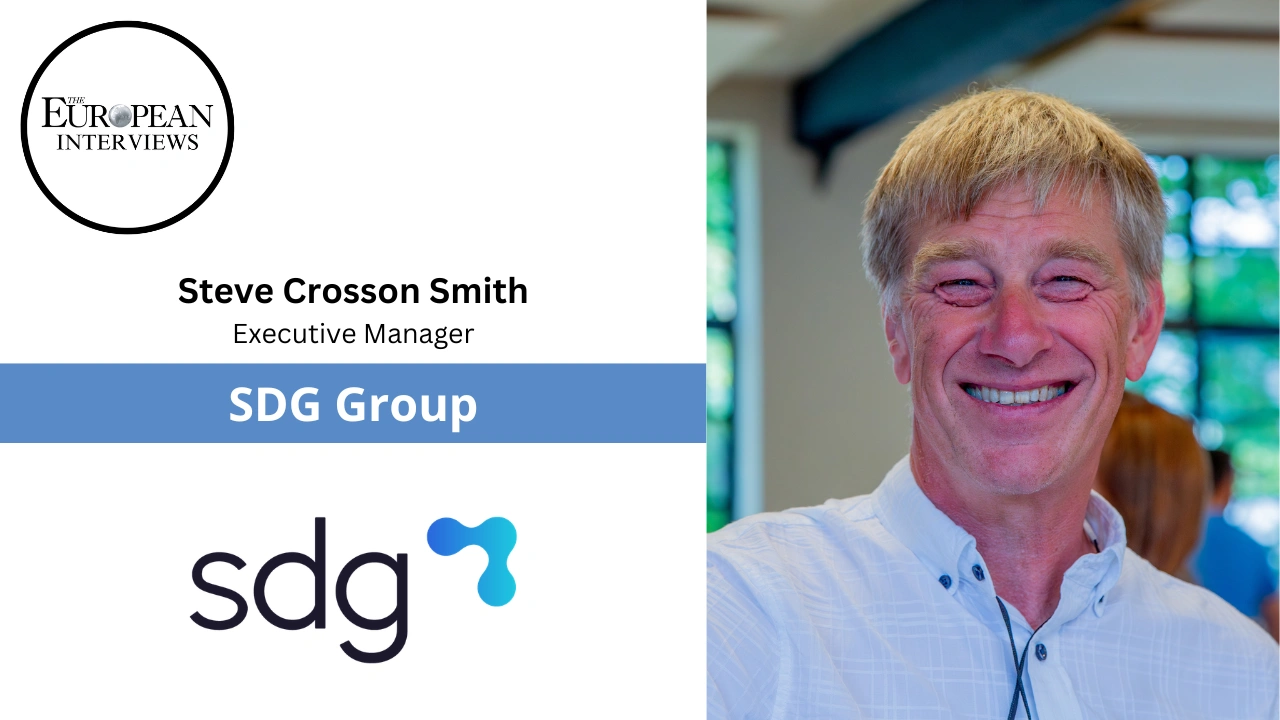
Steve Crosson-Smith of SDG Group says that beyond immediate productivity gains, companies need to leverage AI to connect siled data, uncover bottlenecks and give leaders clarity on where to take action.
Businesses are underutilizing artificial intelligence by using it to speed up old ways of working rather than creating smarter ways to get things done, experts have warned.
Steve Crosson-Smith from SDG Group said many companies still take a too narrow view of AI, focusing on improving individual productivity rather than making better decisions across the business.
Companies across Europe are applying it to fragmented systems, siled data, and outdated workflows, rather than connecting information across the organization and using it to improve subsequent decision-making.
While this helps companies create reports, dashboards, and analytics faster, it doesn’t give leaders a clearer view of where the real problem is or what action to take.
Crosson-Smith said there is a huge opportunity in using AI to reimagine how businesses function, from how data is shared and interpreted to how decisions are made and work is moved between teams.
In an exclusive interview with europeanHe said businesses need to move beyond “traditional approaches to data” and leverage AI to create a more integrated view of the organization.
This means going beyond departmental KPIs and using AI to integrate information from different systems, teams and sources, he said, to ensure the broader commercial picture is not lost in separate data pockets.
Crosson-Smith told Juliet Foster:
“It’s true that many companies are applying AI to improve individual productivity, but they don’t take a step back and ask whether that individual productivity improvement has a positive impact on the entire end-to-end process.”
To harness the full potential of AI, companies should instead look at their entire process, identify bottlenecks and barriers that are holding it back, and use technology to redesign how that process works.
“We don’t just try to make individual parts of the process faster; we step back, rethink and redesign the process as if the bottleneck or barrier never existed, and use AI to enhance that redesign,” he added.
“When you start rethinking how your processes work, that’s where you start to see significant benefits from AI.”
Crosson-Smith, head of data strategy, governance and architecture at SDG in the UK, linked the issue to the increasing volume and complexity of data available to businesses, which needed to process, check and prepare that information before supporting appropriate analysis, drawing on internal systems and external sources.
“Data doesn’t come from sources or source systems that are ready for analysis. It requires some processing,” he said. To get real value from AI, companies needed “high-quality, trusted data” readily available through a modern, scalable data platform.
AI can also help companies analyze information that has traditionally been difficult to use at scale, such as documents, videos, and other unstructured materials.
Its real commercial value lies in providing useful interpretations beyond the raw numbers, he said. SDG Group has developed InsightGen, an AI-powered platform designed to turn enterprise data into actionable business insights.
Crosson Smith said that by adding narrative explanations to dashboards, automatically generating reports, and acting as a “human consultant,” non-technical staff can ask questions about company data in plain language.
“People aren’t looking for metrics or numbers; they’re looking for insights,” he added. “Why did something happen? And most importantly, what can we do to alleviate the negative outcome or create a positive outcome?”
Looking to the future, Crosson-Smith said businesses will increasingly move towards hyper-automation, where AI can make decisions and take action within agreed guardrails, including in areas such as procurement.
The next generation of AI-driven tools was also moving toward self-healing software that could diagnose issues, write and test code, and deploy fixes. “This is no longer science fiction. The possibilities are enormous,” he said.
The full conversation with Steve Crosson Smith is available on The European’s YouTube channel.
See more: As threats intensify, UK exposed for cyber inaction in spring statement, ISF chief warns. Ministers are being urged to direct funding to boosting cyber resilience after Middle East tensions and risks linked to Iran prompted fresh warnings for UK organizations, after the threat was not mentioned in the Spring Statement.
Do you have news to share or expertise to contribute? European countries welcome insights from business leaders and sector experts. Please contact our editorial team for more information.


