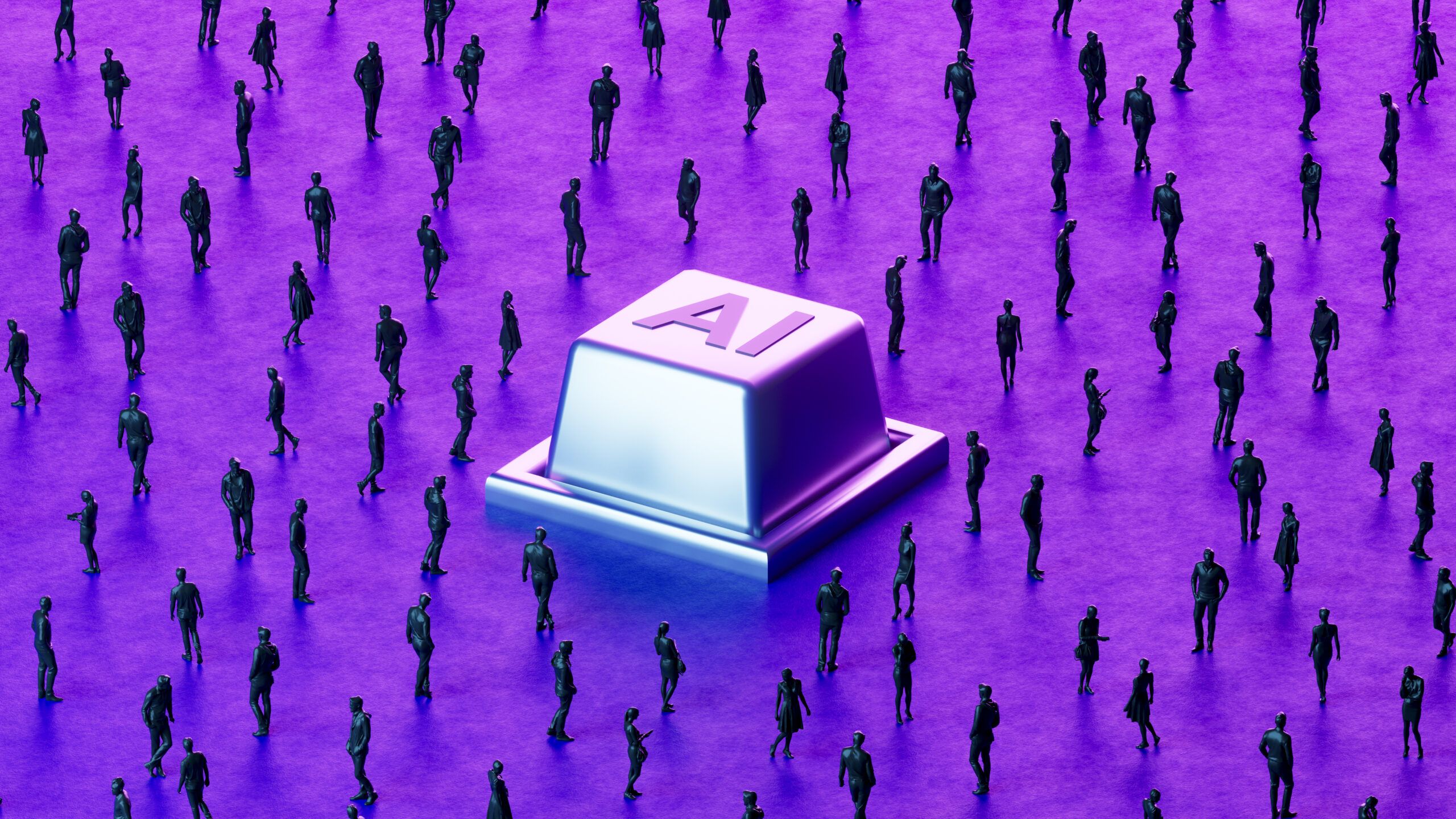
As companies rush to adopt artificial intelligence, a growing body of research suggests that many executives are making costly mistakes. That means abandoning the human relationships that make AI work in the first place.
As Stanford psychology professor Jamil Zaki writes: harvard business reviewwarns that despite CEOs’ retreat from empathy, the business case for empathy is stronger than ever. According to Businessolver’s 2025 State of Workplace Empathy Report, 59% of CEOs now believe empathy is not essential, up 12 points from last year, and nearly half say they don’t have time to connect with employees.
Zaki writes that the impact is measurable. Executives vastly overestimate their employees’ enthusiasm for AI adoption, with 76% believing their employees are actively engaged, compared to the actual number of 31%. This disconnect stems directly from leaders who don’t understand how their employees feel. Workers gripped by what researchers call “FOBO,” or the fear of becoming obsolete, are less likely to support alternative tools. A 2026 study found that nearly one-third of employees and 44% of Gen Z workers admit to actively sabotaging their company’s AI strategy.
Zaki’s prescription starts with replacing announcements with conversations. Rather than dictating an AI strategy from the top, we encourage executives to identify how AI can enhance meaningful work, rather than eliminate it, and engage employees to co-create an AI strategy. He also highlighted investing in front-line managers as the most important driver of workplace empathy by 2025.
Zaki writes, “The fastest and most effective way to get better at technology is to work with, rather than around, the people who ask you to use it.”
The rest of Zaki’s recommendations for a successful adoption are available at: harvard business review.