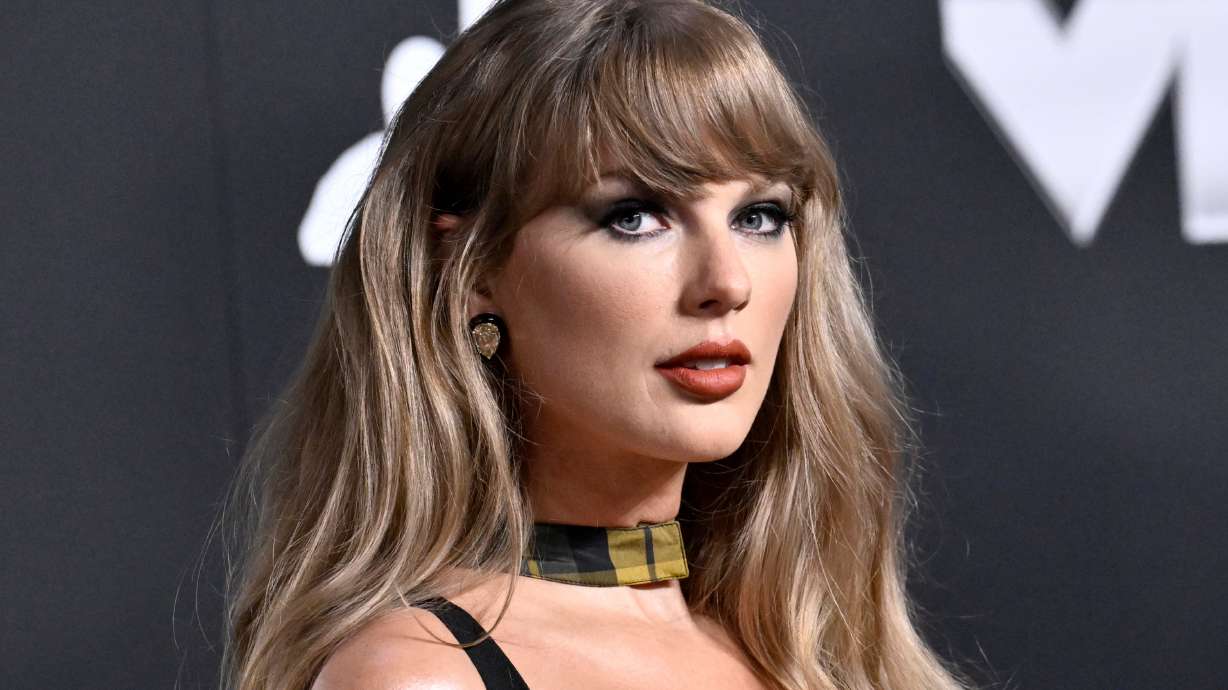
NEW YORK — Taylor Swift has filed three new trademark applications with the U.S. Patent and Trademark Office, legal experts theorize to protect her voice and image from potential misuse by artificial intelligence.
Two of the applications filed Friday are for sound trademarks covering her voice, one for her “Hey, Taylor Swift” and the other for “Hey, Taylor.”
The third application is for a visual trademark, and the filing describes it as “a photo of Taylor Swift holding a pink guitar, wearing a black strap, and wearing a multicolored iridescent bodysuit and silver boots. She is standing on a pink stage in front of a multicolored microphone against a backdrop of purple lights.”
This application was made on behalf of Swift’s TAS Rights Management. All three cases have been approved and we are currently awaiting the appointment of an examiner.
The Associated Press has reached out to Swift’s representatives and Rebecca Liebowitz, a partner at the law firm Venable, who is listed as her attorney in the filing. A request for comment was not immediately returned.
News of Swift’s new trademark application broke on Monday after it was first brought to the attention of intellectual property attorney Josh Gerben. In a blog post shared on Monday, Gerven theorized that the trademark was “specifically designed to protect Taylor from threats posed by artificial intelligence” following growing concerns that AI could challenge celebrities’ ability to control their voices and likenesses without their consent.
In his post, Gerben explained that “right of publicity” laws, which protect celebrities from having their image or likeness used to sell products without permission, provide some protection against unauthorized use of a celebrity’s likeness, but trademark applications like Swift’s could provide additional protection.
Swift has been the target of AI abuse in the past. After pornographic deepfake images of her surfaced online, the singer has become the most high-profile victim of a scourge that tech platforms and anti-abuse organizations are struggling to solve. In another example, a superstar was shown falsely endorsing President Donald Trump during the 2024 election campaign, which the then-candidate reposted and shared as real.
“The Life of a Showgirl” singer isn’t the only celebrity pursuing this type of trademark. In January, lawyers for actor Matthew McConaughey secured eight trademarks from the U.S. Patent and Trademark Office, including a sound trademark for his catchphrase “It’s okay, it’s okay, it’s okay.”
An attorney at the entertainment law firm Yorn Levine, who represented McConaughey, told Variety that the trademark application was aimed at protecting McConaughey’s voice and likeness from misuse by AI and protecting him as he exploits AI to develop new opportunities.
Last year, McConaughey signed a deal with voice-cloning company ElevenLabs to use the company’s artificial intelligence technology to replicate his voice.
The key points in this article were generated with the help of an extensive language model and reviewed by our editorial team. The articles themselves are only written by humans.