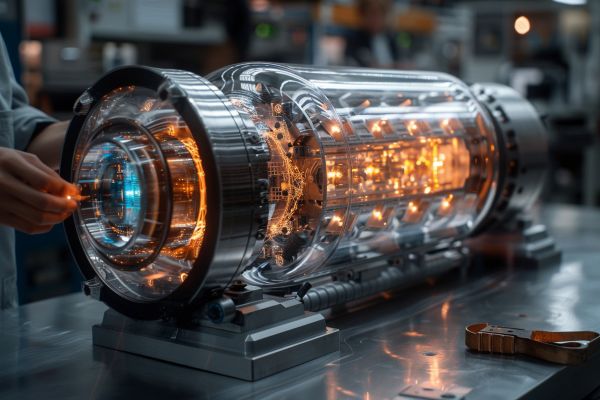
The global battery industry is undergoing a major transformation due to the fusion of advanced manufacturing technology and intelligent technology. As global battery demand continues to grow rapidly, exceeding 1 terawatt hour (TWh) in 2024, manufacturers are under pressure to improve performance, reduce costs, and extend battery life. In this context, machine learning (ML) is emerging as a key enabler, redefining the way batteries are designed, manufactured, and optimized.
Battery manufacturing is becoming more complex
Battery manufacturing is inherently complex, involving hundreds of process parameters spanning material preparation, electrode manufacturing, cell assembly, and testing. Even small changes in temperature, pressure, and chemical composition can have a significant impact on battery performance and lifespan. Traditional trial-and-error approaches are no longer sufficient to manage this complexity at scale.
As production capacity expands rapidly, reaching over 3 TWh worldwide by 2024, many manufacturers struggle to achieve consistent quality and optimal yields. This gap between production capacity and actual performance highlights the urgent need for smarter, data-driven manufacturing systems.
Machine learning as a game changer
Machine learning leverages vast datasets generated across the manufacturing lifecycle to identify patterns, predict outcomes, and optimize processes in real-time. From raw material selection to final quality inspection, ML models can continuously learn and improve decision-making.
One of the most important applications is predictive analytics. ML algorithms can predict battery performance and degradation based on historical production data, allowing manufacturers to proactively tune parameters to avoid defects. Research shows that data-driven approaches can significantly improve manufacturing quality while reducing costs at the same time.
Improve performance with intelligent optimization
Battery performance is closely related to precise control of materials and processes. Machine learning enables rapid optimization by analyzing multidimensional data that is impossible for humans to process manually.
Advanced ML frameworks are now being used to accelerate materials discovery and design. Instead of relying on lengthy experimental cycles, algorithms can predict optimal material combinations and processing conditions. In some cases, ML-driven experimentation can significantly reduce the number of required testing cycles and accelerate innovation.
Additionally, intelligent systems can fine-tune electrode composition and cell architecture to improve energy density, charging efficiency, and thermal stability. As a result, manufacturers will be able to produce higher performance batteries without significantly increasing costs.
Longevity and improved lifecycle management
Battery life remains a critical issue, especially for electric vehicles and energy storage systems. Machine learning plays a vital role in extending battery life by enabling early detection of degradation patterns.
Physics-based ML models can predict long-term battery behavior with high accuracy even in the early stages of production. These models analyze electrochemical signals to identify potential failure points, allowing manufacturers to intervene before defects spread. Such an approach significantly reduces waste and increases reliability.
Additionally, ML-powered lifecycle analysis enables optimization of charging cycles and usage patterns, further improving battery durability. This not only benefits the end user, but also contributes to sustainability by reducing the frequency of battery replacement.
Reduce defects and manufacturing costs
Defect detection is another area where machine learning has a measurable impact. AI-powered systems monitor production lines in real time and identify anomalies that could lead to cell defects.
Recent research has demonstrated that integrating AI into the production of battery materials reduces reject rates, increases efficiency, and results in significant annual cost savings. Such improvements are critical in industries where even small yield increases can lead to large economic benefits.
Additionally, ML increases overall equipment efficiency by minimizing downtime and optimizing throughput. This is especially important as manufacturers expand their gigafactories to meet growing global demand.
The road ahead
With the battery industry expected to reach nearly 6.7 TWh capacity by 2030, operational excellence will be a key differentiator. Machine learning will be central to achieving this, allowing manufacturers to bridge the gap between scale and efficiency.
In the future, the integration of ML with digital twins, robotics, and IoT systems will create fully autonomous manufacturing environments. These smart factories not only produce high-performance batteries, but also continuously evolve through self-learning systems.
In conclusion, machine learning is transforming battery manufacturing from a process-driven industry to a data-driven ecosystem. ML is not only powering batteries, but driving the future of energy itself by improving performance, extending lifespan, and reducing cost.