
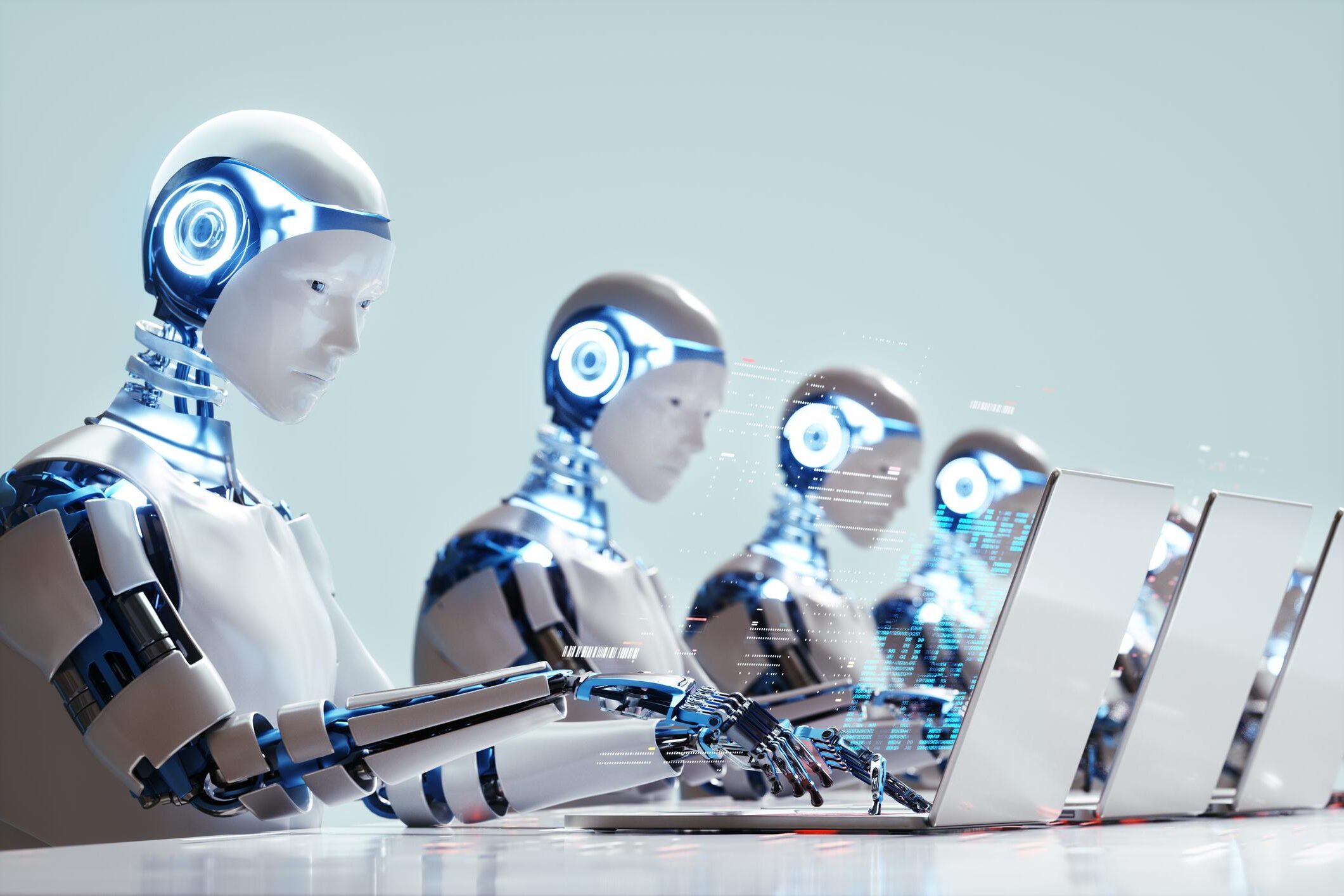
Artificial intelligence (AI) is increasingly supporting businesses, but most companies are still in the adoption phase and it will take time to see a real return on investment. The key question is not whether AI will work, but where and under what conditions it will begin to create value.
Employers are closely monitoring market trends, analyzing the potential of new technologies and gradually introducing them into their organizational structures. However, this process is still in its early stages of development, meaning that the return on investment for AI-based solutions is not yet widely realized.
Additionally, poor implementation can result in costs that exceed the expected benefits. Inadequate workforce skills readiness is also a major challenge, compounding employee concerns about technological change.
– Artificial intelligence is increasingly supporting creativity, education, problem solving, and teamwork. This is changing the profile of the desired employee. Experis’ Paweł Łopatka points out that there is a shift from being experts in a single technology to having people with soft, digital and business competencies.
So where is the “sweet spot”? This point is partially addressed in the report “AI in the Enterprise: Applications, Limitations, and Skills Challenges.” Prepared by Experis.
Benefiting from AI takes time and organizational maturity
Experis experts emphasize that the level of return on investment (ROI) for artificial intelligence solutions is highly dependent on an organization’s digital maturity, scale of capital investment, and access to data. In the situation of the Polish market, many companies are still in the experimental phase, which limits the prospects for short-term financial results.
– The return on investment in AI is not widely visible today as most companies are still in the implementation stage. In reality, tangible business benefits typically emerge after 12 to 36 months. During your first year, you’ll work on experimentation, data integration, and teaching organizations how to work with artificial intelligence. ROI is fastest when technology automates repetitive processes and slowest in areas that require significant changes to the operating model. Many companies continue to incur the costs of transformation before achieving economies of scale – said Adam Jakubowski, IT labor market manager and Experis expert, in an interview with XYZ.
He points out that one of the biggest mistakes organizations make is treating artificial intelligence only as a technology project. It has also been critically assessed that coverage has focused primarily on cost and headcount reductions, as well as inadequate levels of management capacity in implementing and managing change.
According to EY research, the financial sector is currently a leader in artificial intelligence adoption, with 52% of companies already having completed initial implementation. “How Polish companies are implementing AI” This is followed by services (37%) and manufacturing (32%). Although AI adoption remains lowest in retail and energy (22% each), retail (66%) is the sector most likely to report achieving expected benefits.
Security concerns remain the biggest barrier, cited by 39% of businesses and as many as 46% in the energy sector.
– It’s no surprise that the financial sector is a leader in AI adoption. AI is based on processing vast amounts of data. However, these are particularly sensitive data sets, so companies must operate under strict regulations and the highest security standards. Ensuring compliance with these requirements remains a challenge – says Marcin Sadek, Partner at EY Poland.
XYZ based on EY data
Where are companies using AI most often?
According to respondents to the Experis survey, Polish companies are implementing artificial intelligence most widely in areas related to idea generation and supporting the creative process. They also play an important role in employee education and training, customer service and operational problem resolution.
Aleksandra Żak, Head of Development and Partnerships at Experis Academy, says the introduction of AI-based solutions in the workplace will have the greatest impact on competencies related to information processing. This primarily concerns data analysis, idea generation, communication, and technical expertise.
In practice, this means there is an increasing need to integrate domain-specific knowledge and the ability to use AI tools effectively. At the same time, it is becoming increasingly important to use technology consciously and critically, including assessing output quality and understanding its limitations.
Initial expectations regarding the use of AI in recruitment, onboarding, and training turned out to be partially unrealistic, especially in terms of technological autonomy. In reality, AI cannot independently perform processes or reliably assess candidates in areas that require context or soft skills.
Companies have also revised their assumptions that AI will replace humans. Some organizations conclude that its true value lies in increased productivity, and that its effectiveness depends primarily on the quality of the data and its integration with existing processes. As a result, the implementation is now seen as an operational change rather than a workforce revolution.
The labor market is increasingly focused on the ability to marry technology and business understanding, moving from overly optimistic narratives to more realistic approaches.
IImplementation challenges and employee concerns
“From the perspective of Experis Academy, our brand dedicated to future skills development, this shows that the market is not looking to replace humans with AI, but rather to augment it to improve work efficiency,” said Alexandra Żak, quoted in the report.
At the same time, data shows that the majority of companies in Poland face difficulties in implementing AI-based solutions. These issues affect as many as 93% of businesses and are primarily driven by concerns about data privacy and regulatory uncertainty. Only 7% of respondents said they faced no barriers.
– In the short term, developments in artificial intelligence will increase employee concerns. These are primarily driven by narratives that focus on uncertainty, lack of clear communication, and the replacement of humans by technology. However, in the long run, these concerns are alleviated in organizations that manage change well. AI is starting to be seen as a support tool rather than a competitor – says Adam Jakubowski.
He acknowledged that employees’ concerns are partially justified.
– Some roles, especially those based on routine information processing, will shrink or disappear. At the same time, new capabilities and roles will emerge related to AI oversight and decision-making responsibilities. The problem isn’t the technology itself, Adam Jakubowski adds, but the pace of change, which is often faster than companies’ ability to reskill their employees.
AI as an operational change, not just a technical one
Effective AI implementation requires a process-oriented approach rather than a purely technical one. This includes ensuring high-quality data, defining measurable performance indicators, and integrating AI tools into your team’s daily work. Without these elements, data-driven solutions remain experimental and cannot translate into real business value.
– A safe environment for employees is created through transparency and a hands-on approach. Clearly defining the intended use of AI, training based on real-world examples, and involving employees in pilot programs will significantly reduce resistance. Adam Jakubowski emphasizes that artificial intelligence should be presented as a decision support tool rather than a control mechanism.
Paweł Wopatka points out that from an employee perspective, openness to the use of AI is becoming an important element of job security. This doesn’t require an immediate overhaul of competencies, but it does require a willingness to test tools, attend training, and ask the right questions. However, a negative or negative attitude can have a negative impact on both career development and organizational functioning.
- The biggest challenges related to AI adoption revolve around regulatory issues, data privacy, and skills shortages. These issues are reported by 93% of companies. At the same time, technological developments are reshaping the profile of the workforce. The importance of combining technical, business and soft skills is increasing, along with the need to use AI consciously and critically.
- The implementation of artificial intelligence in Polish companies is still in its early stages, with limited short-term return on investment. As Experis experts point out, tangible business benefits typically only emerge after 12 to 36 months. The initial period is primarily spent experimenting, data integration, and learning how to operate the technology.
- AI is most commonly used in areas that support creativity, training, customer service, and operational problem solving. At the same time, initial expectations regarding its application, particularly in the area of recruitment, have been revised. This technology does not replace people, but it increases their productivity and requires high-quality data and integration with business processes.


