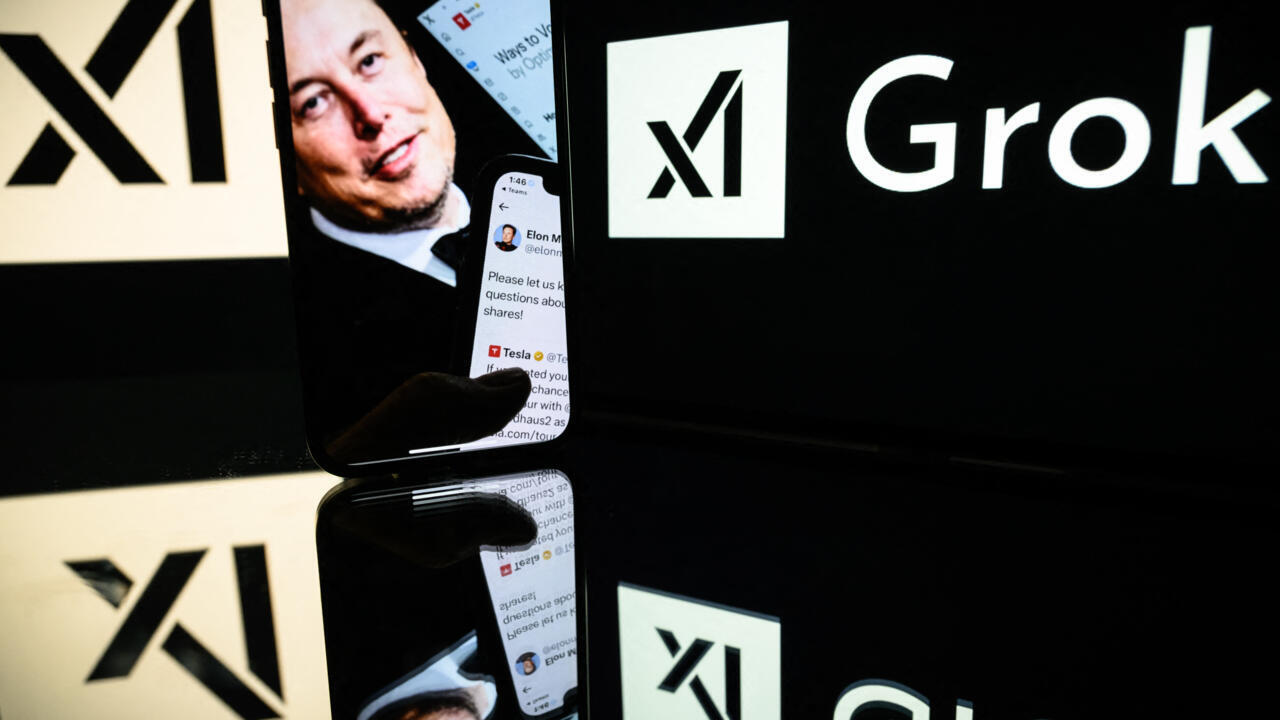
The European Parliament on Thursday approved a ban on artificial intelligence tools that generate sexual deepfakes without consent, with lawmakers also voting to postpone key parts of the EU’s landmark AI law. The move follows outrage over blatantly fake images generated using Elon Musk’s chatbot Grok.
Publication date:
2 minutes reading time
The measure, adopted by an overwhelming majority, targets so-called “nudification” systems that use AI to create or manipulate explicit or intimate images of real people without their consent.
The ban forms part of broader changes to the Artificial Intelligence Act, the bloc’s main effort to regulate the rapidly growing technology. EU member states have already supported similar measures, and negotiations will now begin to agree on a final version of the law.
The European Parliament said in a statement that the new rules define de-denudation systems as systems that use AI to “create or manipulate sexually explicit or intimate images resembling an identifiable real person” without consent.
Systems with safeguards are not affected. Lawmakers said AI tools with “effective safeguards to prevent users from creating such images” would still be allowed.
Can France really keep children away from social media, and will it make them even safer?
Deepfake backlash
The European Parliament passed the bill with 569 MEPs in favor and 45 against.
EU countries had already approved a similar ban in early March, paving the way for negotiations between member states and parliaments on the final text.
The move follows widespread outrage earlier this year after Grok, an AI chatbot available on X, was used to generate hyper-realistic fake nude images of women and children from real photos.
The controversy triggered an ongoing investigation by the EU. In January, X announced that it would introduce changes to prevent the creation of sexual deepfakes of children and women.
Is AI sexist? How artificial images actually perpetuate gender bias
Delay AI rules
Lawmakers also supported delaying enforcement of rules regarding high-risk AI systems considered to pose a potential threat to safety, health, and people’s fundamental rights.
These rules were originally scheduled to take effect in August. Under the proposal, compliance deadlines for standalone high-risk systems would start on December 2, 2027, and compliance deadlines for AI tools embedded in other products would end on August 2, 2028.
Parliament cannot change EU law on its own, so negotiations with the European Council, which represents the 27 member states, will determine the final outcome before the rules are formally adopted.
(with news wire)