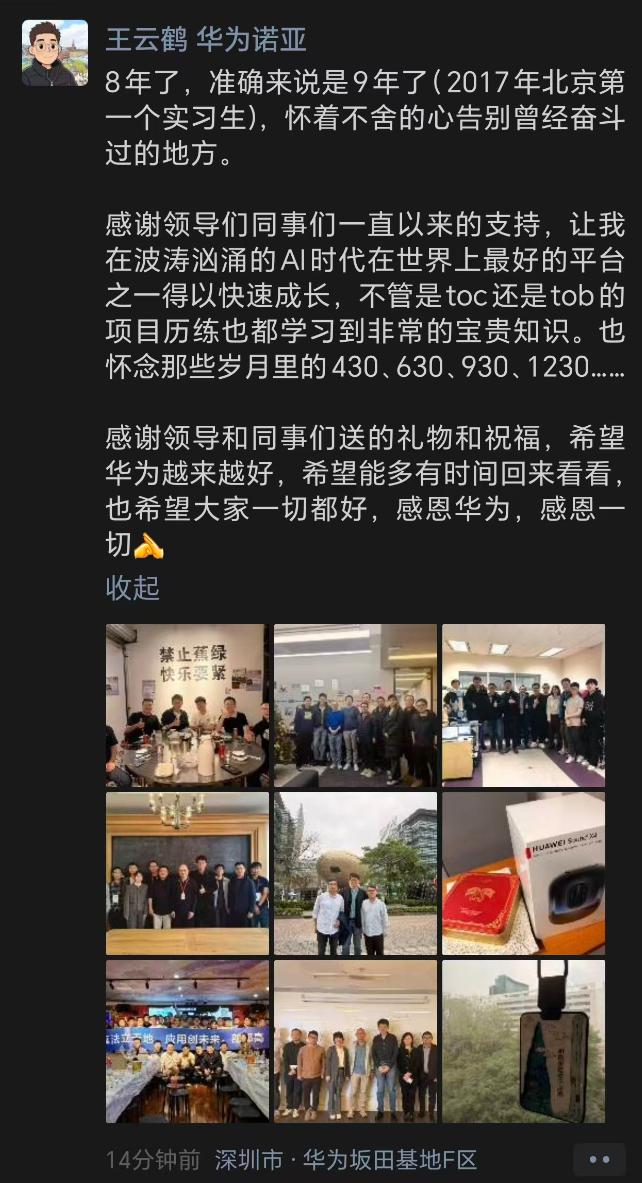
Today, Wang Yunhe, director of Huawei’s Noah’s Ark Research Institute, officially announced his resignation on his WeChat Moment.
From 2026 onwards, a series of high-level personnel changes in the domestic AI industry make it clear that the entire industry is undergoing a significant structural transformation.
Wang Yunhe: Huawei veteran
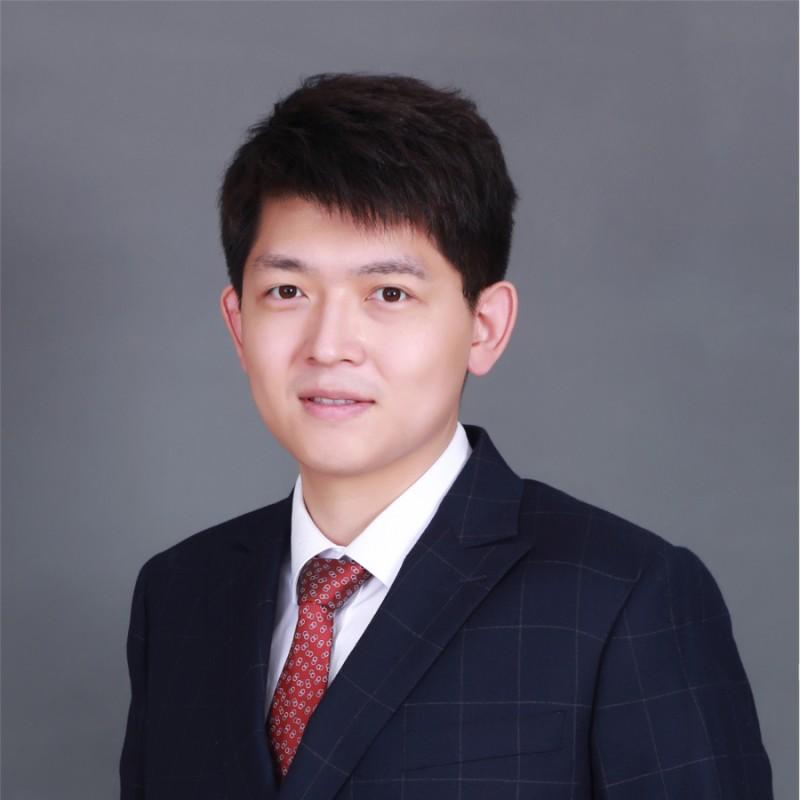
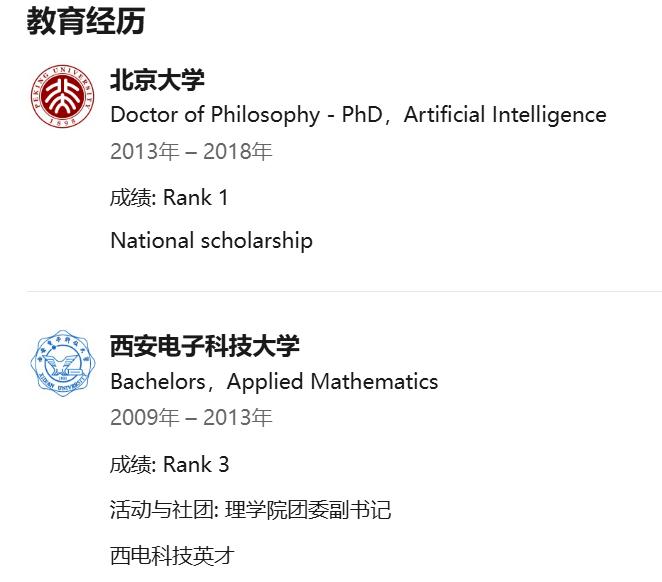
Wang Yunhe was born in 1991. He studied Mathematics and Applied Mathematics at Xidian University and received his PhD from the School of Intelligent Sciences at Peking University in 2018. His main research areas include deep learning, model compression, machine learning, and computer vision.
Before graduating from Peking University, he interned at Huawei’s Noah’s Ark Research Institute, and after graduation, he naturally joined the company and served as a senior engineer. After that, he served as chief engineer and technical expert.
In 2021, he assumed the position of Head of Huawei’s Algorithm Application Department, where he was responsible for the innovative research and development of efficient AI algorithms and their application in Huawei’s business. He was named in Huawei’s fourth “Top 10 Inventions” for his “high-performance multiplier and additive neural network that significantly improves computing power.” In March last year, Wang Yunhe was appointed director of Huawei’s Noah’s Ark Research Institute, replacing Yao Jun. Currently, Wang Yunhe is a veteran with more than 8 years of working experience at Huawei.
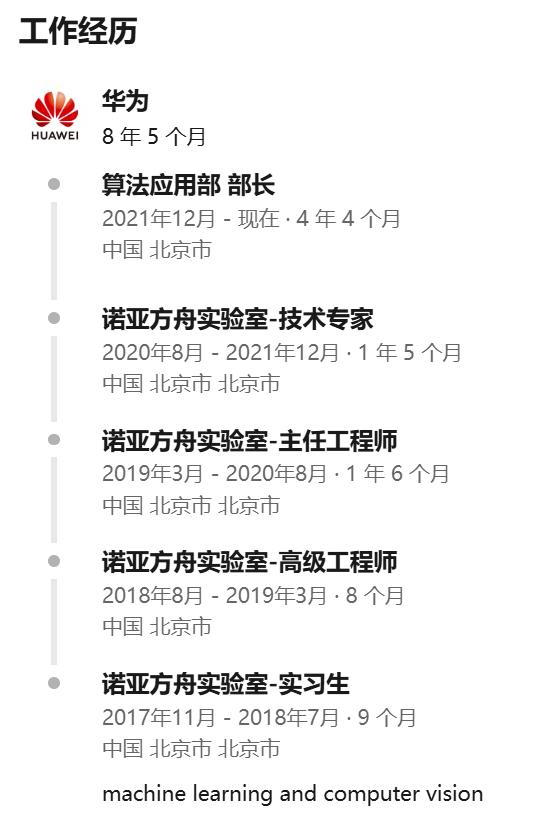
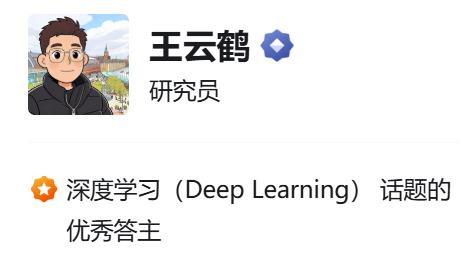
Additionally, Wang Yunhe is a very active answerer on Zhihu and a good answerer on deep learning topics.
Research and exploration of Wang Yunhe
As a senior researcher and engineer, Wang Yunhe has a very impressive academic history, with more than 33,000 Google Scholar citations.
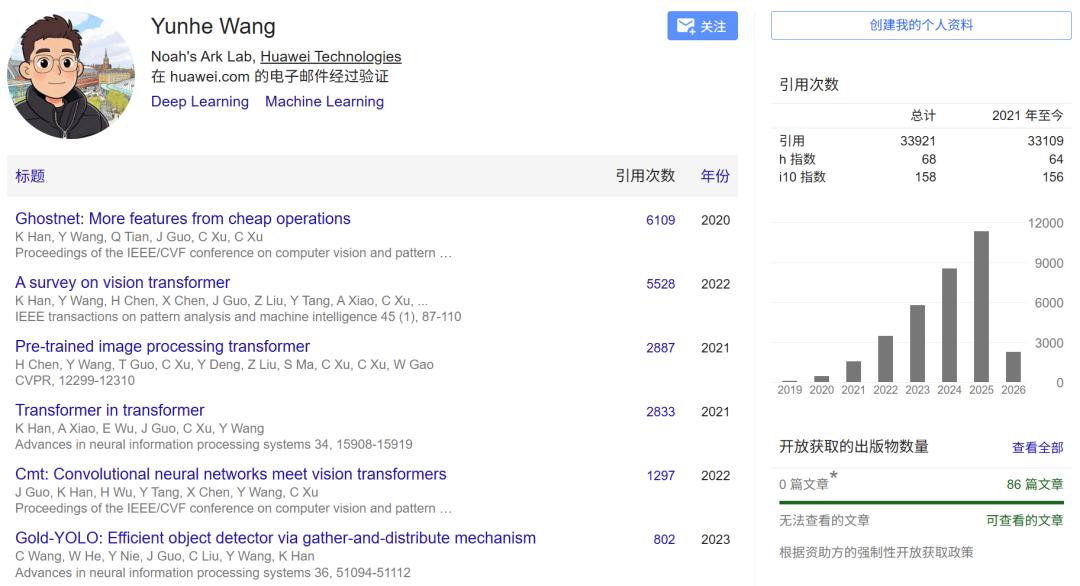
The most cited paper is GhostNet, a new type of edge-side neural network architecture co-developed with Han Kai et al.
In this CVPR 2020 paper, Han Kai, Wang Yunhe, and colleagues proposed a completely new Ghost module that aims to generate more feature maps through inexpensive operations. Based on a set of original feature maps, the authors applied a series of linear transformations to generate a number of “ghost” feature maps that can extract the required information from the original features at a very low cost. Ghost modules are plug-and-play. By stacking Ghost modules, we obtain a Ghost bottleneck and build a lightweight neural network GhostNet.
On the ImageNet classification task, GhostNet achieved a top-1 accuracy of 75.7% with a similar amount of computation, outperforming MobileNetV3’s 75.2%.
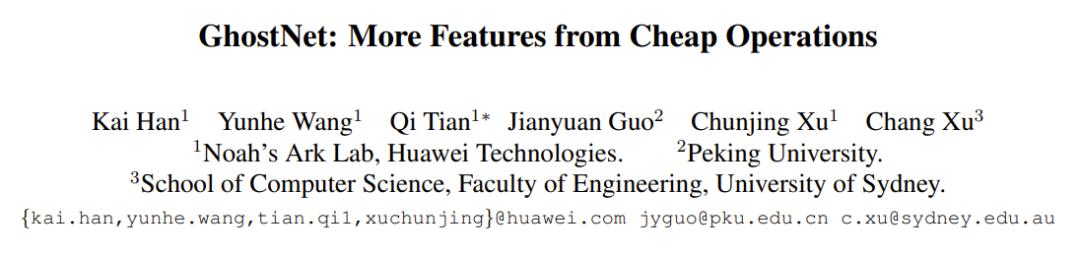
Paper address: https://arxiv.org/abs/1911.11907
Wang Yunhe has also made notable achievements in the field of cutting-edge computer vision, including Vision Transformer, as evidenced by his list of papers on Google Scholar. In the current wave of vision transformer research, the review article he participated in publishing, “Research on Vision Transformers,” has been cited 5,528 times and is an important reference in the field.
At the same time, two important studies he and his team co-founded, Pre-trained image process Transformer and Transformer in Transformer, are both nearing the 3,000 citation mark. This body of work systematically optimized the computational efficiency of self-attention mechanisms in visual feature extraction, and greatly facilitated the application and popularization of the Transformer architecture in visual tasks.
A great answerer on Zhihu’s deep learning topics, Wang Yunhe also frequently shares his insights on topics such as core architecture of AI. For example, on January 24 of this year, he published an article titled “Deep Thoughts on Diffuse Language Models” on his personal Zhihu account. In this article, he took a closer look at the potential and technical bottlenecks of diffuse language models in the field of text generation.
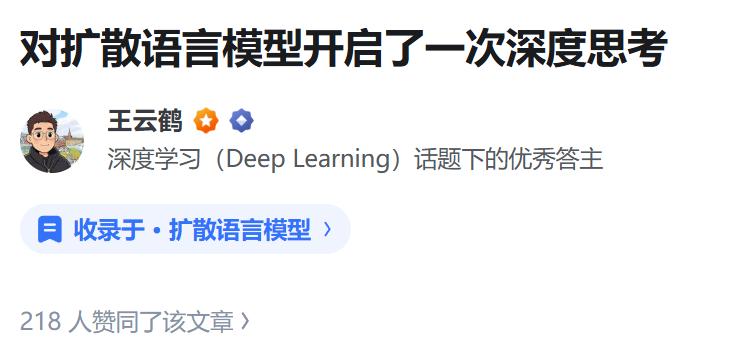
In the face of the mainstream technical route in the era of large models, Wang Yunhe put forward unique insights. He recalled a discussion many years ago about “What is the next move for Transformers?” and pointed out that “Transformers are a paradigm that has been obtained through the long-term accumulation of quantitative change to qualitative change.” Regarding diffusion models, which are currently a hot topic of concern, he believes, “Diffusion itself is not the next step after Transformer, but it could have a significant impact on autoregression in terms of modeling methods.”
In this technology share, he systematically organized 10 core challenges and optimization directions currently facing popular language models, covering multiple aspects such as efficient architectural design for inference, the search for better vocabularies, and better optimization paradigms. Especially regarding the model design concept, Wang Yunhe emphasized that “the most ideal dissemination model should not follow the existing paradigm of AR, but should be structured in the same way as human thinking.”
He proposed that future AI model designs could learn from the characteristics of human multiscale thinking and explore hierarchically connected lexical structures. Furthermore, we expect that more unified model structures and training paradigms will be explored by integrating discrete diffusion models with visual, language, and action modules in scenarios such as embodied intelligence.
In a recently published paper, “DLLM Agents: See Further, Run Faster,” led by Wang Yunhe, his team discussed a fundamental but often overlooked problem. That is, how does the underlying language model generative paradigm (diffusion-based DLLM vs. autoregressive-based AR) influence the agent’s planning, tool usage behavior, and overall decision trajectory, given the exact same agent framework, supervised data, and interaction budget?
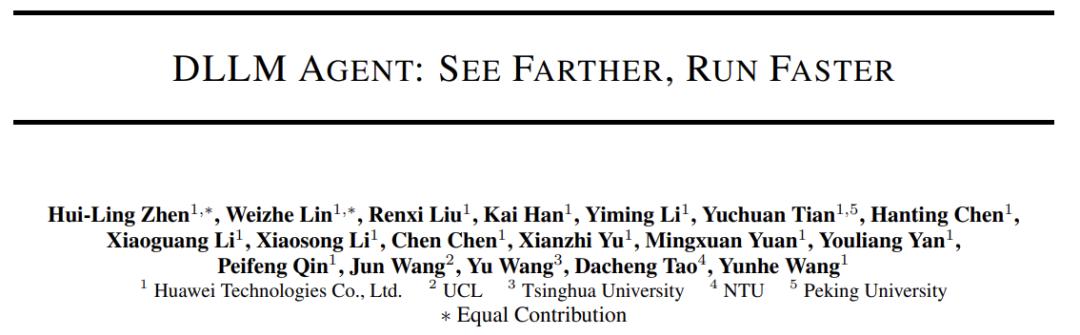
Paper address: https://arxiv.org/abs/2602.07451
His proposed DLLM agent can achieve more efficient global planning. Equivalent final accuracy increases end-to-end speed, reduces interactions and tool calls, and reduces redundancy and backtracking.
conclusion
As an AI leader who has worked at Huawei for more than eight years, Wang Yunhe’s departure is undoubtedly a major focal point in the industry. He rose from intern to director of Noah’s Ark Research Institute, leading numerous foundational algorithm innovations with international impact.
Now, with his deep thoughts on diffuse language models and unified architectures for artificial intelligence in general, where his next career journey takes him remains worthy of continued attention from across the industry.
This article is written by WeChat official account “Machine Intelligence” (ID:mosthuman2014). Author: People who are interested in AI. Republished with permission by 36Kr.