
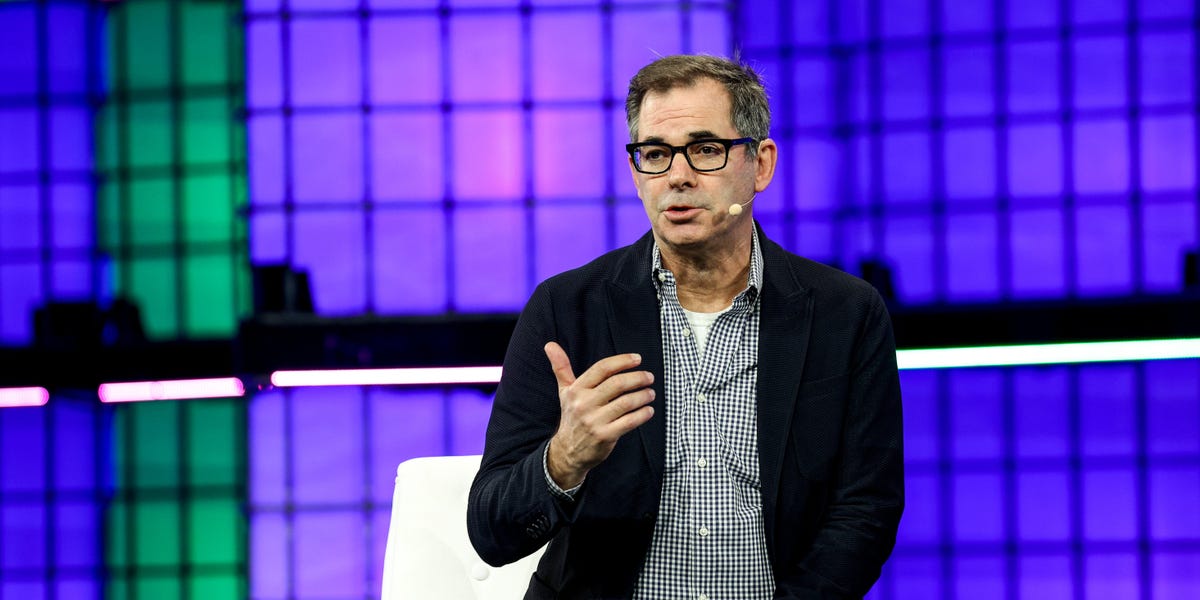
CoreWeave is a cryptocurrency mining company turned $43 billion AI company. The company’s CEO says being a “nerd” helped him make the change.
Michael Intrater, the company’s co-founder and CEO, said CoreWeave had an advantage in the early days of the cryptocurrency space in understanding how to use GPUs, which are now powering the AI boom.
“We’re pretty geeky and we’re looking under the hood,” Intrater said on an episode of the All-In podcast recorded at NVIDIA’s GTC conference and published Monday.
CoreWeave got its start mining Ethereum and has weathered multiple crypto recessions, including the 2018 crash that sent Bitcoin plummeting from nearly $20,000 to around $3,000 in just 12 months.
“We weathered the crypto winter well and immediately started looking for other use cases,” Intrater said.
This approach, by treating computing power as flexible infrastructure rather than a single-purpose cryptocurrency-specific bet, positioned the company to take advantage of the surge in demand for AI following the release of ChatGPT in 2022. CoreWeave currently sells massive GPU capacity to AI companies and cloud providers, calling itself the “first true hyperscaler.”
The company quickly scaled to meet demand and raised tens of billions of dollars to fund infrastructure development. The company’s market capitalization was $43.6 billion as of Tuesday afternoon, according to Yahoo Finance.
Some investors are skeptical of the model, which relies heavily on debt to finance expansion. Kerrisdale Capital took a short position in CoreWave last year, saying the company was “not pioneering the future of AI, but an open-ended GPU rental business powered by debt.”
The company has voiced its opposition publicly, including by launching its first major advertising campaign called “Ready for anything, ready for AI,” starring Chance the Rapper.
Intrators are also pushing back. In an interview Monday, he described the company as an “innovator” in how it finances its operations. He described a structure that combines customer contracts, GPUs, and data center contracts into one vehicle to manage cash flow. Customers such as Nvidia and Microsoft pay into the structure, which covers costs such as power, debt and operations, and then returns profits to CoreWeave.
“It’s called a box,” he said. “But the important thing to understand is that the economics of this box are that we paid for everything within two and a half years of a five-year contract.”