
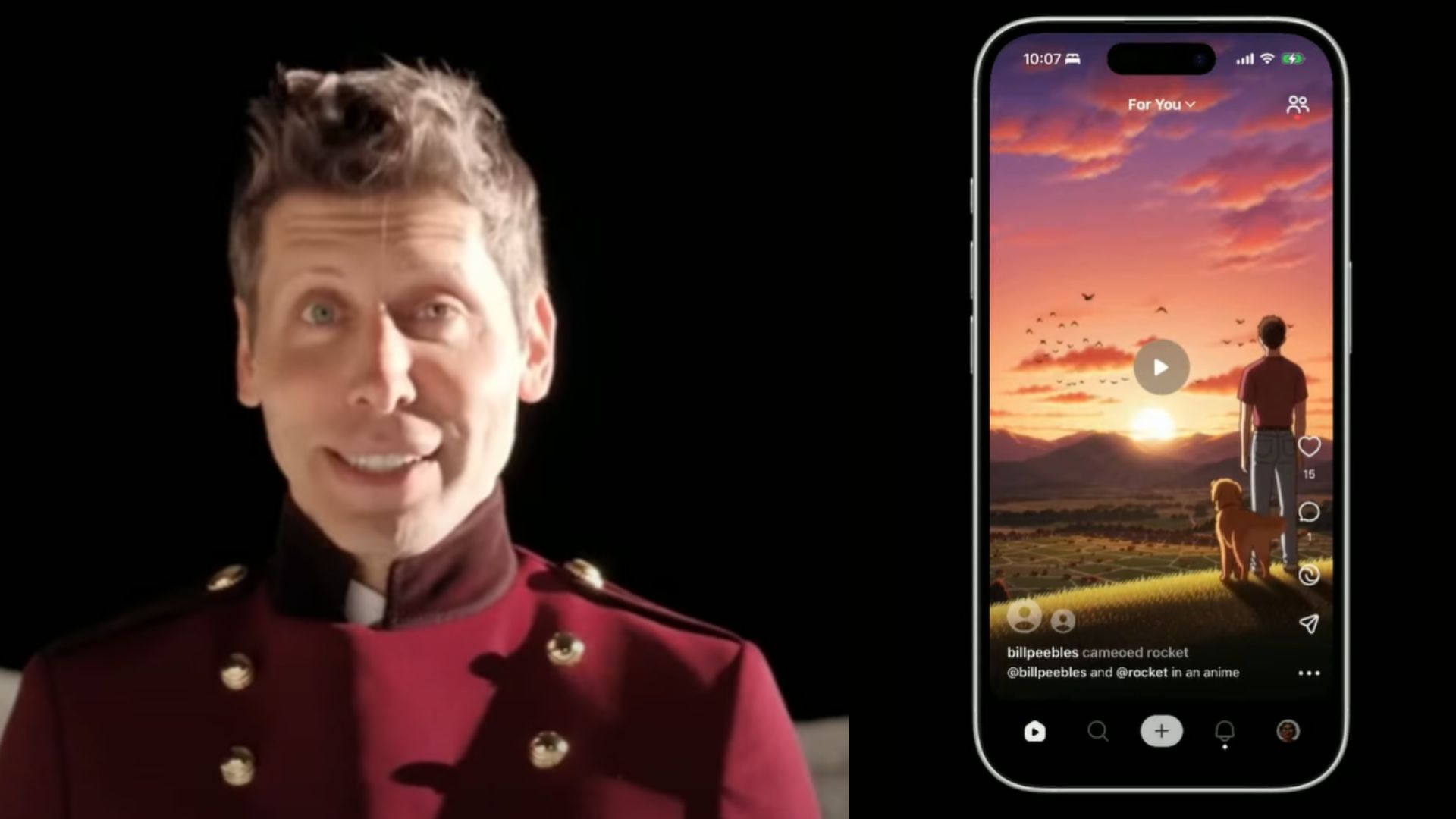
OpenAI is retiring its standalone AI video app, Sora, less than two years after its debut.
Touted as an AI TikTok moment, Sora had a Vine-like arc, but while the latter became a cultural phenomenon, Sora struggled to move beyond its initial burst of hype.
“We say goodbye to Sora. We thank everyone who created with Sora, shared it, and built a community around Sora,” the company said in a statement.
“What you made with Sora was important, and we know this news is disappointing.”
Sudden shutdown raises questions
OpenAI has not explained why it is discontinuing Sora.
The company said it will share timelines and data storage details soon. “We’ll be sharing more details soon, including app and API timelines and details about saving your work.”
The lack of clarity leaves creators and developers at a loss.
Sora was released to the public in late 2024 and quickly gained attention for its realism. The second version, released in September 2025, took video generation even further.
The platform also experimented with user-driven storytelling tools and social-style sharing features.
These additions were intended to increase engagement, but did not reach critical mass.
Still, standalone apps appear to have been sacrificed. OpenAI isn’t completely abandoning AI video.
Instead, they seem to be building those features into broader products like ChatGPT.
The contract with Disney is broken.
The closure comes just months after a major partnership with Disney.
The deal was aimed at incorporating licensed characters into AI-generated videos.
Sora would have used over 200 masked or animated characters across the main series.
The deal also included plans to stream select AI-generated clips on Disney+.
This rollout was scheduled for early 2026 and will no longer be brought forward.
That deal is now falling apart. Disney ended the partnership and canceled plans to invest $1 billion in OpenAI.
A Disney spokesperson said: variety. “As the nascent field of AI advances rapidly, we respect OpenAI’s decision to exit the video generation business and shift its priorities to other areas.”
The company added: “We appreciate the constructive collaboration between our teams and the learnings we have learned.”
Disney has indicated it will continue to explore AI tools elsewhere. He emphasized the protection of intellectual property and creators’ rights as a priority.
Sora’s rapid rise immediately caused concern throughout Hollywood. Studios and creators raised the alarm over how AI models were trained on existing content.
The Sora 2 system used an opt-out model for copyrighted material.
Rights holders had to request removal rather than giving permission in advance. That approach drew strong criticism.
In November, a Japanese industry group representing major animation studios demanded that OpenAI stop using the content.
The backlash highlighted growing global resistance to AI training practices.
Disney has also taken aggressive legal action against other AI companies.
The company issued a cease-and-desist letter and filed a lawsuit for alleged copyright infringement. These actions signaled an industry-wide backlash.
Meanwhile, competitors in AI video generation continue to operate.
Some platforms still face similar legal scrutiny from media companies.
Sora’s closure reflects more than a product decision. This shows how legal, creative, and business pressures can quickly reshape AI development.
For OpenAI, the next step could be moving towards integrating video tools into its core ecosystem.
For Hollywood, the battle over AI and intellectual property is far from over.


