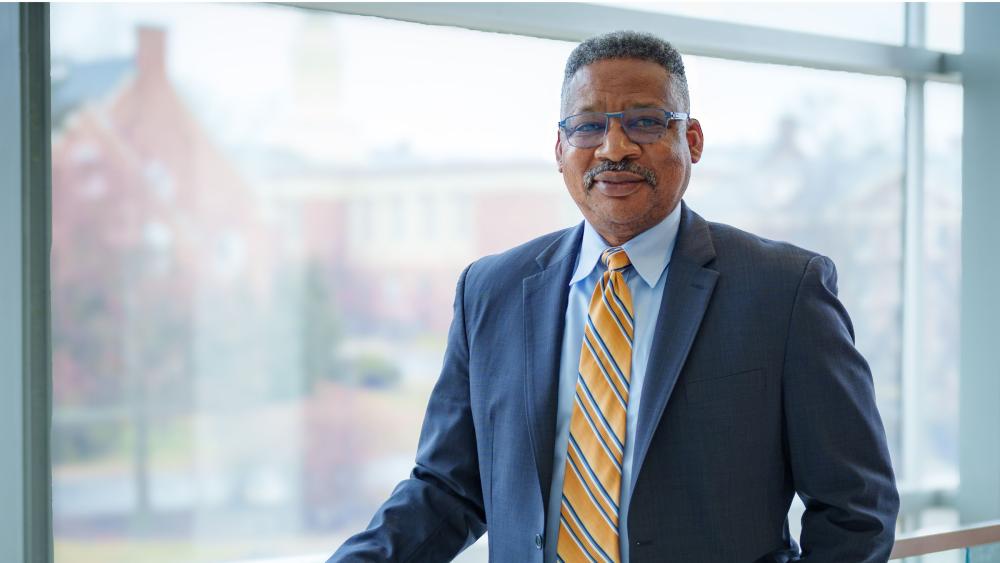
UNIVERSITY PARK, Pa. — The Computing Research Association (CRA) has selected Penn State College of Information Sciences (IST) associate professor Roderick Lee as the first of 25 National Artificial Intelligence Research Resource (NAIRR) AI Education Fellows. The one-year fellowship supports faculty efforts to expand access to high-quality artificial intelligence (AI) educational resources and foster a national community of practice focused on effective AI training.
Funded by the National Science Foundation (NSF), the fellows will leverage the resources of the NAIRR Pilot Classroom to pilot courses, support faculty across the country in integrating these materials into their courses, and help shape the strategic direction of the NAIRR AI EDU Research Coordination Network.
Fellows will lead monthly seminars, participate in strategic working meetings, and drive the adoption of AI educational resources on and off campus. Lee will receive a $5,000 stipend, travel support, professional development, and the opportunity to lead an AI initiative within the Penn State Harrisburg IST College and national community of practice.
“This important fellowship was created especially for Roderick,” said IST College Dean Andrea Tapia. “Throughout his career, he has been deeply committed to advancing ethical, inclusive, and interdisciplinary computing and AI education. He will be an excellent ambassador and champion for the deployment of NAIRR resources at Penn State.”
Lee is an associate professor of information systems and associate professor in the College of Education at Penn State Harrisburg. He has contributed to the University’s AI strategic priorities through his service on the AI Coordinating Council’s AI Tools Ecosystem Task Force, as a member of the Intercollegiate Artificial Intelligence Curriculum Committee, and in his previous roles as Executive Vice President for Commonwealth Campuses and Executive Director Administrative Fellow.
“The NAIRR AI Education Fellowship is a natural fit with my trajectory and provides a powerful opportunity to scale this effort at scale,” Lee said. “I look forward to deeply integrating and expanding the reach of NAIRR’s resources across Penn State’s disciplines, departments, and campuses, while also contributing to the national strategy to expand access to advanced AI education.”
Lee led major efforts to shape the future of AI education on the Harrisburg campus, serving as program coordinator for IST’s new BS program in Artificial Intelligence Methods and Applications and co-chair of the Campus AI Council. He has contributed to efforts to strengthen interdisciplinary curricula, promote human-centered AI literacy, and expand access to new AI workforce pathways.
Mr. Lee’s national activities include participation in the NSF LEVEL UP Workshop and AI Education Roundtable. He served on the American Talent Initiative Summer Institute Leadership Advisory Board, supported the national Summer Institute on Equity in the Academic Experience, and served as a site leader for Penn State University. Additionally, through a Howard Hughes Medical Institute Inclusive Excellence grant, we launched a faculty learning community focused on advancing inclusive education and culturally sustaining STEM curricula.
“I am committed to expanding meaningful and impactful participation in computing and AI education,” Lee said. “As a scholar and practitioner at the intersection of technology, education, system change, and equity, I will use this fellowship to build a sustainable interdisciplinary community of practice at Penn State that leverages the resources of the NAIRR pilot classroom to improve AI literacy and expand participation in AI education.”
Penn State University is shaping the future of higher education in the age of artificial intelligence. We are focused on human-centered, ethical AI innovations that have a meaningful impact on Penn State and the broader community. Through visionary planning, strategic partnerships, targeted hiring, and strategic investments, we will equip every Penn State student, staff, and faculty member with the AI knowledge, experience, and confidence they need to succeed in an AI-powered future. For more information, visit psu.edu/ai.