Supply chains are undergoing a structural transformation that goes far beyond the wave of automation of the past decade. Across distribution centers, planning systems, and logistics networks that span dozens of companies, artificial intelligence (AI) is moving from a tool that supports human decision-making to systems that make decisions and, in some cases, execute them without waiting for human approval. Changes are uneven and far from complete.
Intelligent supply chain architecture
Most companies are still in the early stages of this transition, focusing more on basic digital integration than autonomy. The World Economic Forum’s analysis describes a three-stage progression from digitalization to AI-assisted adaptability to full autonomy, with each stage dependent on the one before it.
In Stage 1, companies replace manual processes with cloud systems to achieve real-time visibility. Stage 2 uses machine learning and simulation to predict disruption. Few organizations have reached Stage 3, where AI operates autonomously in real-time.
In April, McKinsey senior advisor Knut Alicke compared AI’s potential impact on supply chains to the invention of the shipping container, which fundamentally changed global logistics and routinized previously impossible tasks. This analogy is useful because it positions AI not as an additional feature, but as a change to the underlying infrastructure of how goods move and decisions are made.
Alberto Oca, a partner at McKinsey and North America co-leader of digital warehousing, estimated at the time that AI could create approximately $190 billion in value across travel and logistics, and an additional $18 billion in direct supply chain operations, through applications ranging from automated shipping documentation to AI systems that help dispatchers manage large fleets of vehicles.
A more difficult question is whether those benefits will actually materialize. A report released in February by Boston Consulting Group (BCG) found that most companies fall somewhere in the middle of the capability spectrum, and those that try to move ahead with AI-driven automation without first modifying their planning processes tend to underperform those that build in stages.
Advertisement: SCROLL TO CONTINUE

We want to be your favorite news source.
Add us to your preferred sources list to see our news, data, and interviews in your feed. thank you!
BCG found that the performance gap between leading and laggard companies boils down to four factors: They are: clarity about what decisions the planning process needs to support; how well the process is designed based on those decisions; the quality of the underlying data; and whether the technology actually fits the workflow. Technology itself is rarely the bottleneck.
When intelligence enters the physical world
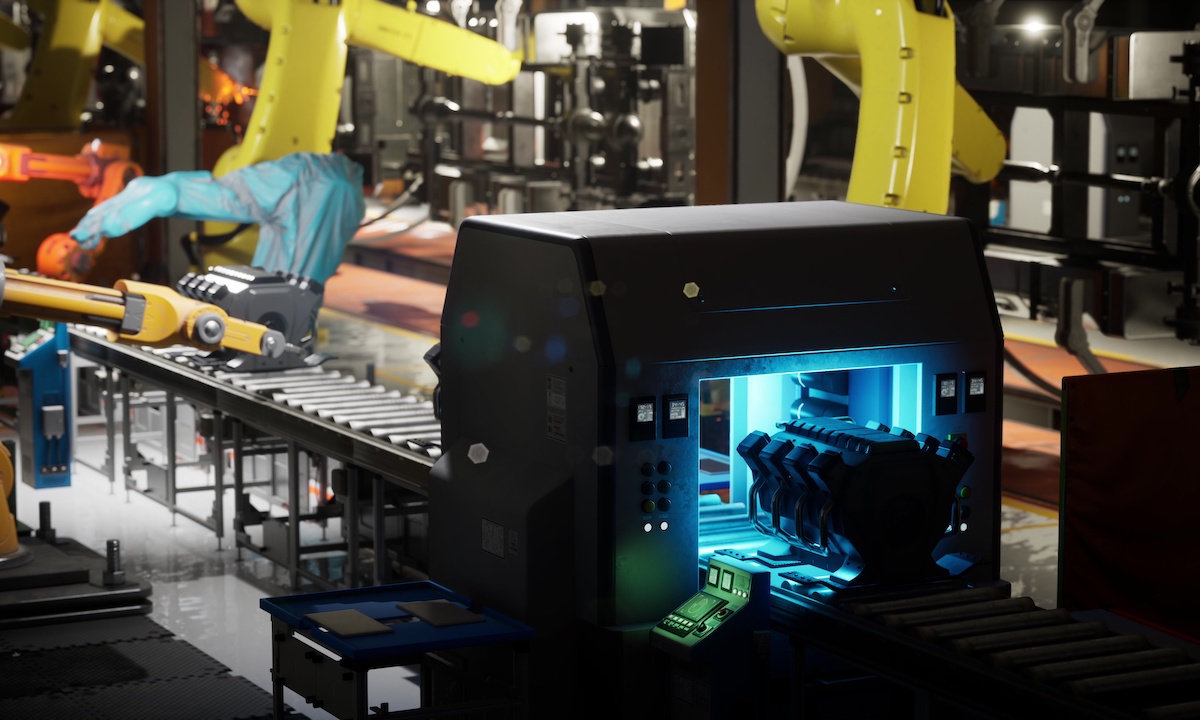
A separate but related shift is occurring within warehouses, with AI moving from servers to the machines themselves. In January, the World Economic Forum distinguished between traditional warehouse automation, which is fast and accurate but rigid and hard-coded, and physical AI, which allows robots and other machines to perceive and adapt to their surroundings in real time, rather than simply repeating preset actions.
The practical implication is that a warehouse running physical AI functions not as a collection of automated machines, but as a single, coordinated system with a central layer that manages the movement of all robots, all items, and all workers simultaneously. Such systems can run simulations to test how inventory reallocation impacts throughput, predict in advance when products will run out, and send signals to upstream suppliers without human intervention.
ecological issues
Even sophisticated AI within a single facility encounters limitations at the edges of the organization. Supply chains involve dozens of companies, most of which still operate on incompatible systems and cannot share what is happening across the network.
In December, IDC predicted that by 2028, half of large enterprises’ supply chains will have network-level visibility beyond their direct suppliers, reducing the time to respond to disruptions by 25%. The enabling technology here is agent AI, a system that not only alerts humans to problems that need to be addressed, but can also take action across enterprise boundaries.
IDC also predicted that by 2029, nearly half of the world’s largest enterprises will use AI agents to manage partner and channel relationships, resulting in measurable increases in revenue and satisfaction scores.
For all PYMNTS AI and digital transformation coverage, subscribe to our daily newsletter. AI and Digital Transformation Newsletter.