
The state government plans to introduce artificial intelligence (AI) tools across revenue administration with the aim of making land records, mutation processing and other citizen services faster, more transparent and less prone to errors and fraud.

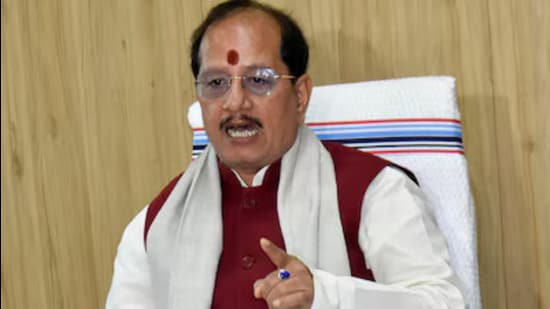
Deputy Chief Minister Vijay Kumar Sinha, who is also the Director of Revenue and Land Reforms, on Wednesday said the move is an important step towards modernizing the ministry and improving day-to-day governance for the common man. “We are promoting advanced technologies such as AI to make revenue management faster, more open and truly citizen-centric,” Sinha said. The ultimate goal is to provide reliable services quickly and contribute meaningfully to the state’s ‘ease of living’ goals under the Saat Nischay (Part 3) programme, he added.
Based on new guidelines issued by Additional Secretary Ajib Vatsalaj to all divisional commissioners and district judges, each district will soon form a dedicated AI cell of five members. The cell is chaired by the Additional Collector (Revenue) and includes the District IT Manager, Deputy Collector of Land Reforms (DCLR), Circle Officers and Revenue Officers.
This group will serve as the primary decision-making body at the district level for rolling out AI operations, but final approval will rest with the district magistrate. Each cell will meet every Saturday afternoon at the Additional Collector’s Office to review progress, discuss plans, and address implementation challenges.
Training will be the main focus. The AI cell will identify and appoint officials and staff for a phased AI training program. Each station conducts structured courses, conducts examinations and issues certificates approved by the district judge to those who meet the necessary standards.
The goal is to start actual AI-based operations at tax offices from April 1st. Chief Secretary Pratyai Amrit has already cleared a set of AI tools, which will be shared with district-level officials and used for faster and more transparent applications for land and revenue-related matters on the ground.
Sinha said in a statement that the ministry is encouraging the use of AI assignments such as ChatGPT for meetings, memo-taking and routine administrative tasks without extra costs. The ministry has been urged to deploy AI applications in accordance with the India AI Mission launched by the central government in March 2024 with a focus on better decision-making, automation of public services and finding fraud and gaps through technology. The state government has also launched its own AI mission coordinated by the Information Technology Department.
Earlier, three senior IAS executives from the revenue sector attended the World AI Conference in New Delhi last month to explore the application of AI technology in day-to-day revenue functions, from land mutation and dispute resolution to record verification.
Officials said the changes are part of a broader effort to digitize and streamline Bihar’s revenue system, which processes millions of land-related transactions and inquiries from residents every year. By reducing manual delays and introducing data-based checks, the government hopes to reduce the risk of corruption and increase public confidence in land administration.


