
It would be nice to meet someone old fashioned way: Passing each other on the street, meeting at a restaurant, interacting at a party.
But the modern dating experience is dominated by apps, and kismet encounters have been replaced by scrolling and DMs.
222 is a startup focused on building relationships with AI, believing that AI can restore spontaneity when making new friends or falling in love.
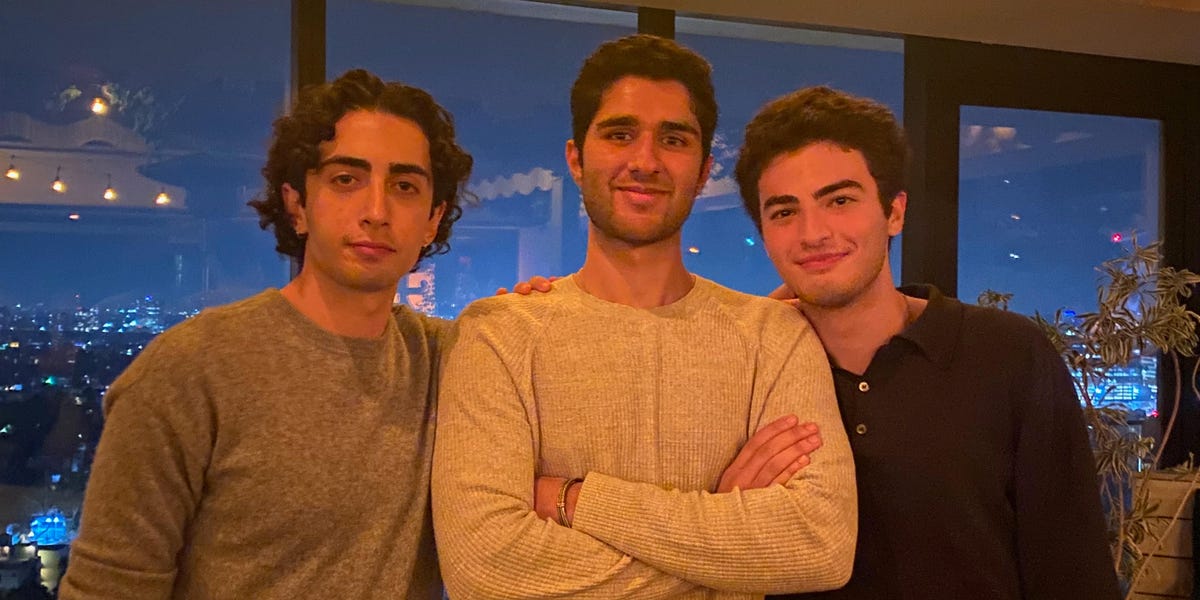
“We try to be as close as possible to where you’re walking into somewhere with other people there, and the connections happen naturally,” CEO Keyan Kazemian told Business Insider.
At a high level, 222 uses machine learning and open-source AI models trained by its team to match people with strangers for experiences like dinner or a night out after taking a robust personality quiz.
COO Danial Hashemi said, “When you walk into the store, all of those people are people we predict are going to have a good conversation and are going to love it.”
222 released the app in 2024 and has added more features since then. 222/Screenshot/Apple
When 222 launched in 2021, it began as a dinner series in Los Angeles for young people coming out of the COVID-19 pandemic to help them meet new people. The project has since grown into a company. The company was accepted into Y Combinator, raised funding, relocated to New York City, and launched a mobile app that facilitates IRL interactions.
People who join 222 are often new to the city, Kazemian said, but they’re now pretty evenly split on why they’re using the platform: They’re either looking for new friends or a potential romantic connection.
The 222 experience has evolved since we launched the app in 2024. It’s no longer just about meeting strangers, having fun nights out, and building new relationships.
“We are very focused on going beyond that,” Kazemian said.
The platform is now digging even deeper into the connections people have made since the first encounter that 222 started. It can help build romantic relationships by making plans to follow up on relationships with friends, or by arranging dates if the feelings are mutual.
Meet cute simulation
After 222 experiences, the platform asks participants if they would like to hang out or date the person they met.
When two people say they want to go on a date, “we completely set up the next date for them,” Hashemi said, taking care of everything, including making reservations.
“If you think about it right before dating apps, before all this happened, how do people meet each other?” Hashemi said. “It’s about you being in the same physical space and not having any preconceived notions of who this person is.”
Hashemi said that some of the “joy” of deciding for yourself how you feel about new people in your life “has gone away because of dating apps.”
Meeting people in ways that feel more natural, such as at social gatherings or through friends, will have more staying power. A 2025 survey of 7,000 U.S. adults by health company Hims found that 77% of Gen Zers have met a partner IRL. Even Partiful, the Gen Z alternative to Facebook Events, is making its way into the IRL events-to-dates pipeline.
222’s New York City office has a prop newspaper on display called “The Serendipity Times.” Sydney Bradley/Business Insider
222 believes that AI can make “meet-cute” more familiar.
Kazemian said 222’s founding team focused on “labeled data,” which comes from feedback users get after meeting people.
The company is encouraging subscribers who pay $22 a month to try multiple experiences, as it knows the first combination may not be the ultimate combination. Instead, its AI can handpick better matches from a network of 222.
Armand Roshanai, 222’s chief technology officer, said there are many layers to this, including similar musical tastes and origins.
“The signal we’re training for is that you meet the person, then you spend two hours together eating dinner, and then you spend a few hours together. Were you guys actually compatible with each other?” Roshanai added.
Kazemian added that training this proprietary data from user feedback is a “laborious, difficult and long process” but gives the startup a “technical moat” to stand out from some of its competitors.
AI’s new role in relationships
222 isn’t the only startup or public company betting that AI can improve how we connect.
Several startups have launched on this premise and raised millions of dollars touting their AI-powered matchmaking solutions. Meanwhile, Bumble, Tinder, and Facebook Dating are testing the realm of AI and rethinking swiping. Hinge’s founder recently left the Match Group-owned dating app to build an AI dating alternative.
The startup’s new office is located in New York City’s bustling SoHo neighborhood. Sydney Bradley/Business Insider
After raising an additional $10.1 million from venture capital investors in 2025, bringing the startup’s total funding to $13.7 million, 222 is doubling down on expanding its offering with tools that keep jobs and relationships alive.
222’s next move is to deepen those relationships by giving users a way to reach their “next offline moment” together.
The startup wants to be in the business of both building and maintaining relationships.
“They need to show up at the same place together, whether it’s a hangout, a date, or a restaurant reservation,” Kazemian said. “We can help them understand what the place is.”


