
highlights
- Pax Silica represents a strategic shift that brings together AI, semiconductors, energy, and critical minerals into a unified U.S. economic and security framework that targets China’s control of 85% to 90% of rare earth processing.
- While the diagnosis is correct, this initiative remains a declaration without large-scale domestic separation capacity, magnet manufacturing, price stabilization mechanisms, or permission for the necessary reforms to be implemented.
- Success will require synchronization of capital mobilization and industrial scale across the alliance, moving from strategic alignment to real throughput of separation plants, magnet production, and semiconductor output.
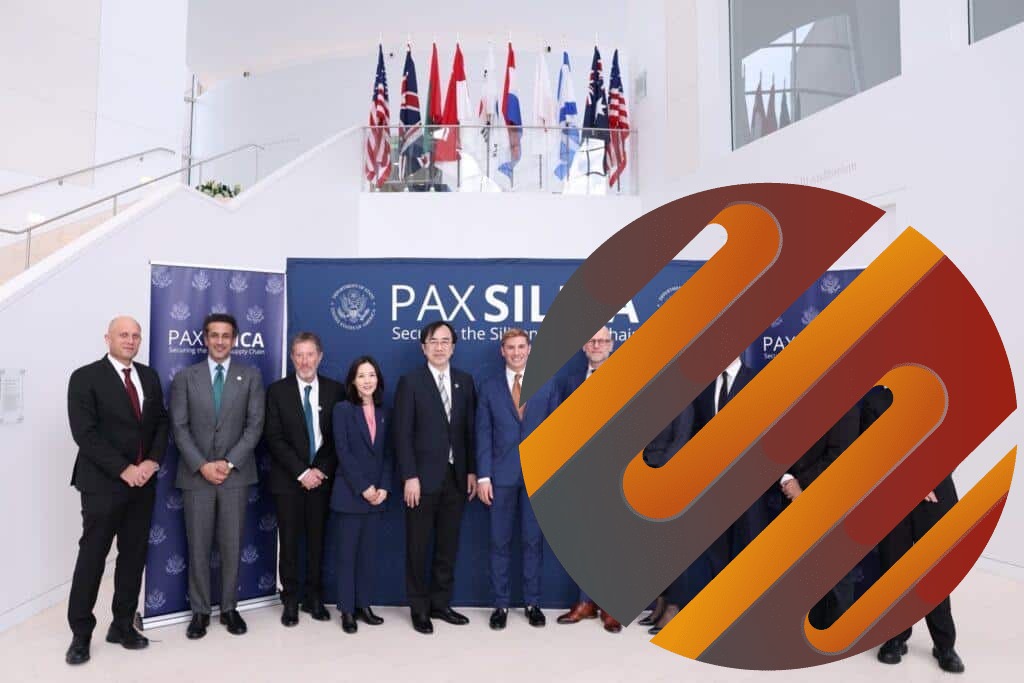
If the 20th century ran on oil and steel, the 21st century runs on computing and the minerals that make computing possible. That’s the premise of the animation behind Pax Silica (Opens in new tab)the U.S. Department of State’s flagship economic security initiative that unites artificial intelligence, semiconductors, energy, and critical minerals into a unified strategic framework. Are we entering what Rare Earth Exchanges™ calls the Great Power Era 2.0?

This language is ambitious. Reduce “forced dependencies”. Coordinate export controls. Coordinate investment screening. Protect your entire technology stack, from mineral refining and advanced manufacturing to data centers and frontier AI models.
On paper, Pax Silica reads like industrial realism finally catching up with geopolitical realities.
diagnosis is correct
Pax Silica clearly identifies structural weaknesses. China controls approximately 85-90% of the world’s rare earth processing capacity, dominates the production of permanent magnets, and holds dominant influence over midstream manufacturing inputs essential to AI hardware and electrification.
AI models require computing. Computing requires semiconductors. Semiconductors require special materials and rare earths. The strength of a chain is equal to the strength of its most concentrated link.
By emphasizing reliable supply chains, refining capacity, advanced manufacturing, and energy infrastructure, Pax Silica signals a shift in U.S. economic diplomacy. This is no longer about trade liberalization in the abstract. It’s supply chain architecture.
The list of unions, including Japan, South Korea, Australia, Israel, Singapore, the UAE, and the United Kingdom, reflects deliberate industry complementarity. Mining, processing, capital, logistics, manufacturing, and AI development are combined into a common framework.
It’s a strategic advance.
The hard truth: Declarations do not build capacity.
Here’s an unpleasant reality.
Pax Silica is a manifesto, not an industrial plan. Align your incentives. We have not yet funded large-scale capacity.
The United States still lacks:
- Large-scale heavy rare earth separation capacity (although there is competition until delivery)
- Fully integrated domestic magnet manufacturing in meaningful quantities
- A permanent price floor mechanism to stabilize private capital across the nation
- Comprehensive permitting reform and government streamlining both in the U.S. and with partners
- Synchronized federal and state industrial execution strategies, including all critical talent/workforce development
Allies face similar constraints. Europe is debating strategic autonomy as energy costs undermine competitiveness. Australia remains primarily a miner and exports value-added manufactured goods overseas. Japan and South Korea are heavily dependent on Chinese midstream inputs.
Without synchronized tax credits, demand guarantees, stockpiling programs, coordinated capital deployment, and long-term procurement commitments, Pax silica risks becoming a strategic umbrella over a thin industrial base.
China’s advantage is not rhetoric. It’s throughput.
From vision to vertical integration
The declaration refers to a “strategic stack” of software, semiconductors, refining, logistics, and energy. That framework is correct. The AI economy is vertically integrated from mine to model.
But vertical integration requires synchronized scaling. Permitting and constructing rare earth separation plants takes years. Magnet factories require a reliable supply of oxides. Semiconductor factories require stable energy density and material flow. Each node must be expanded in parallel.
Coordination without execution creates vulnerability.
If Pax Silica evolves into coordinated capital mobilization and harmonized industrial incentives, it has the potential to redefine economic national strategy in the AI era. If it remains in aspirational language, China’s midstream advantage will persist beneath the surface of its allies’ declarations.
Opinion of the Rare Earth Exchange
Pax Silica mirrors ours. Great Power Era 2.0 Theme: Economic security blocs are replacing traditional post-World War II military alliances as the organizing principle of world power. Industrial capability, not ideology, is the currency of influence.
But the impact on our objectives is measured in separation plants, magnet tonnage, gigawatts of energy, and semiconductor production.
The Alliance has diagnosed this vulnerability.
Now we must fund, enable, build, and scale treatments.


