
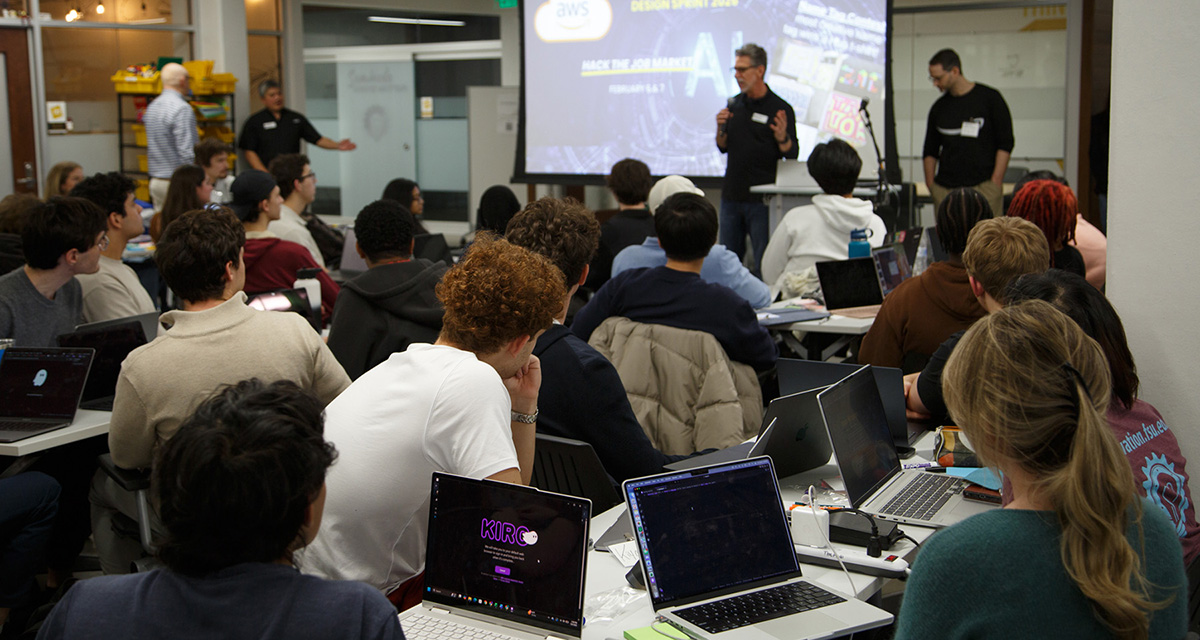
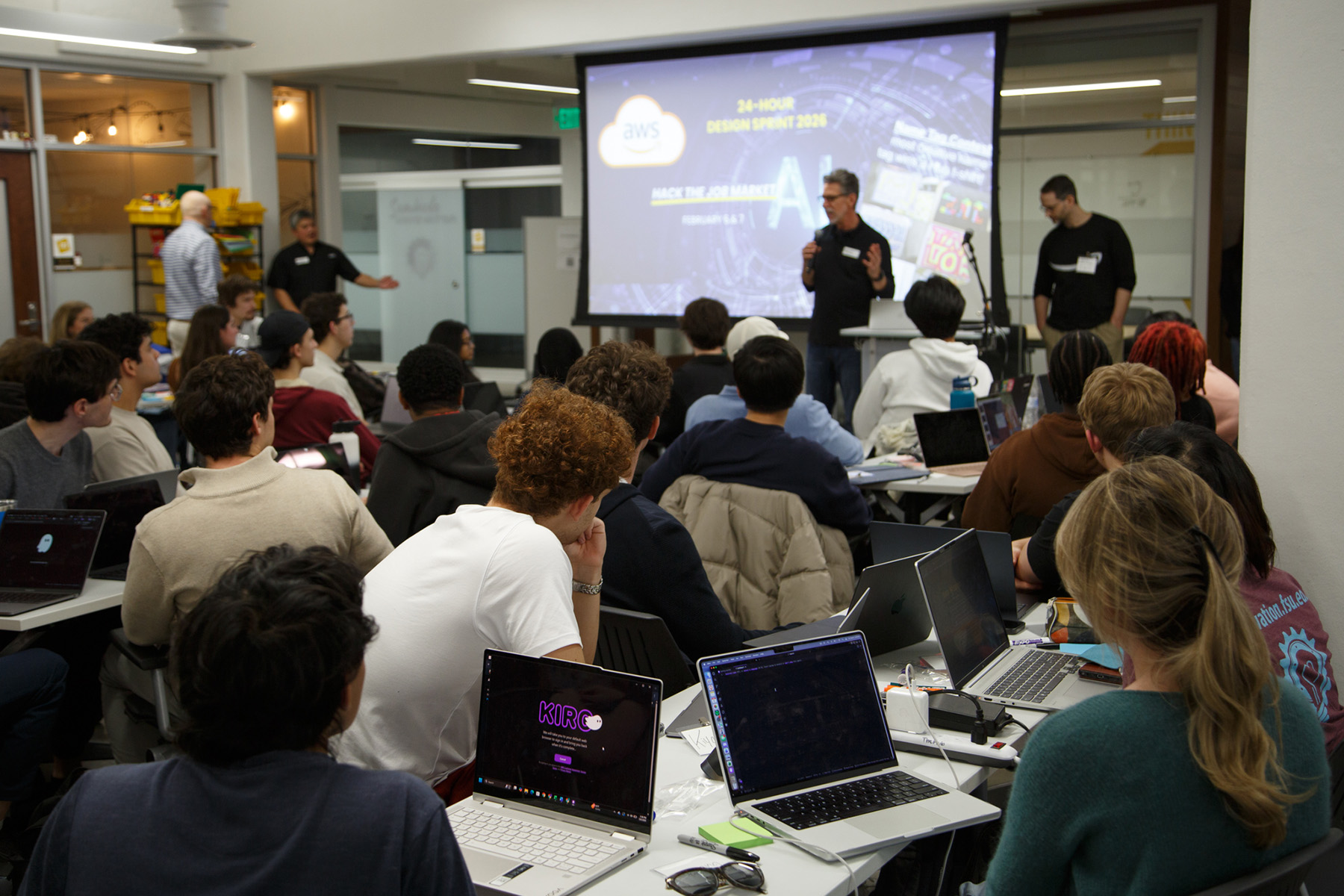
Florida State University students spent 24 hours building an AI-powered tool to solve one of the toughest challenges in higher education: connecting students to the right internships and early career opportunities.
Sponsored by FSU innovation hubThe university’s 10th 24-hour design sprint, “Hack the Job Market,” brought together interdisciplinary student teams and industry mentors from Amazon Web Services (AWS) to design, prototype, and propose new technologies to simplify and personalize the job search process.
The event showcased a new partnership between FSU and AWS that allows students to take advantage of advanced generative AI tools, hands-on technical support, and ongoing mentorship to move their best ideas beyond 24-hour prototypes and into production-ready solutions.
“Events like this Design Sprint hosted by the Innovation Hub provide unique and invaluable opportunities for students to work closely with industry, university, and community partners to apply what they learn in the classroom to design innovative solutions to difficult real-world problems.”
— Paul Marty, Vice President for Academic Innovation
“Higher education is at a critical inflection point and must move beyond traditional instruction to meet the needs of today’s lifelong learners,” said Paul Marty, vice provost for academic innovation. “Events like this Design Sprint hosted by the Innovation Hub provide unique and invaluable opportunities for students to work closely with industry, university, and community partners to apply what they learn in the classroom to design innovative solutions to difficult real-world problems.”
During the event, 10 interdisciplinary teams competed in an initiative led by the FSU Career Center. Using AWS methodology and AI technology, we have developed a system to better match students with their ideal internships, but this process is currently complex and time-consuming.
To guide the innovation process, students used Amazon’s proprietary “Working Backwards” framework. This framework requires teams to define the ideal customer experience and draft hypothetical press releases and FAQs (PRFAQs) before technology development begins. This process is designed to ensure that the final product is rooted in human empathy and user needs.
“At Innovation Hub, we teach ‘design thinking’ as an innovation framework adopted by companies around the world,” said Ken Baldorf, Founding Director of Innovation Hub. “AWS’ Working Backwards methodology is AWS’ own version of design thinking and what they call their ‘secret sauce’ for developing innovative, human-centered solutions. ”
The team then used AWS Kiro, an agent coding platform powered by Amazon Bedrock, to translate these visions into reality. The tool allows students to input suggested ideas and FAQs along with other natural language prompts to autonomously generate working code, documentation, and tests, enabling rapid prototyping of advanced AI-driven solutions.
The event led to a high-stakes pitch competition in which each team presented their prototype and fully functional app to a panel of experts. The winning solutions, from AI-driven networking assistants to personalized career path mapping tools, provided new perspectives on navigating the modern hiring landscape.
The first place was Spear carrier AIan interdisciplinary team of FSU students: Naman Bajpayee, Shiv Sudha Behera, Jajib Damani, Ryan Nagia, and George Quintans. The group developed an internship dashboard that gamifies professional development using AI-driven tools like automatic cover letter generation and real-time job scraping to help students track marketable skills and bridge them to ready-to-work career opportunities.
“Everything moved fast, ideas were always changing, and we had to solve a lot of problems on the fly, which made the experience so rewarding,” said Jajib Damani, a freshman at the university. Herbert Wertheim College of Business. “It was a huge accomplishment to see something come together in such a short period of time.”
The second place was chosen by Nord Passa team consisting of Colin Garbutt, Bomine Jayasinghe, Daniel Miranda, Carlos Rodriguez Gonzalez, Katia Serechenko, and Hermite Tyrska. Their project featured an AI career strategist that personalizes the professional development journey by scraping live job ads and provides students with real-time, data-driven insights about their career readiness.
The third place was chosen by App RLdeveloped by the team of Avery Dasher, Samir Kanbar, Ryan Kurfirst, Darya Pylypenko, and Gabrielle Vays. The group designed an AI agent that bridges the gap between campus and career by transforming traditional networking events into interactive “scout combines.” There, students can showcase their technical skills directly to recruiters.
“In just 24 hours, we learned from our users how to think backwards and clearly move forward,” said Naman Bajpai, a senior at the university. Faculty of Arts and Sciences. “When building a product, we’ve learned that the fastest way to move forward is to work backwards.
As part of the partnership, the winning teams will receive continued support and guidance from AWS to further develop their solutions and bridge the gap between 24-hour concepts and production-ready applications.
Approximately 500 students have participated in 24-hour design sprints, more than 4,000 have completed courses in design thinking and systems thinking, another 1,000 have taken Emerging Tech classes, and hundreds are active in the Seminole Innovator RSO.
“Students learned the value that humans bring in an increasingly automated world,” Baldauf said. “How to empathize with others and leverage the latest technology to frame problems, generate ideas, and prototype solutions.”
The 24-hour design sprint was supported by the FSU Career Center and sponsored by various colleges and departments.
“When students from different fields come together to tackle complex challenges, they not only solve problems, but discover new possibilities for themselves,” said Rob Liddell, assistant vice president for career services. “Interdisciplinary teams spark curiosity, build confidence, and are a powerful springboard for career development and discovery.”
For more information about the Innovation Hub and upcoming events, please visit: innovation.fsu.edu.


