
Humanity is living in a moment of an AI boom, defined by rapid progress, skyrocketing technology investment, and fierce commercial competition to bring artificial intelligence to market.
Unfortunately, the AI boom scenario is moving into a “doomsday scenario” where a technological disaster befalls humanity.
Recent disturbing developments, from a surge in resignations of AI safety researchers, the Human Disruption Risk Report on AI Misbehavior, and the arrival of the Singularity to the fragmentation of AI regulation, strengthen the case that AI is entering dangerous territory.
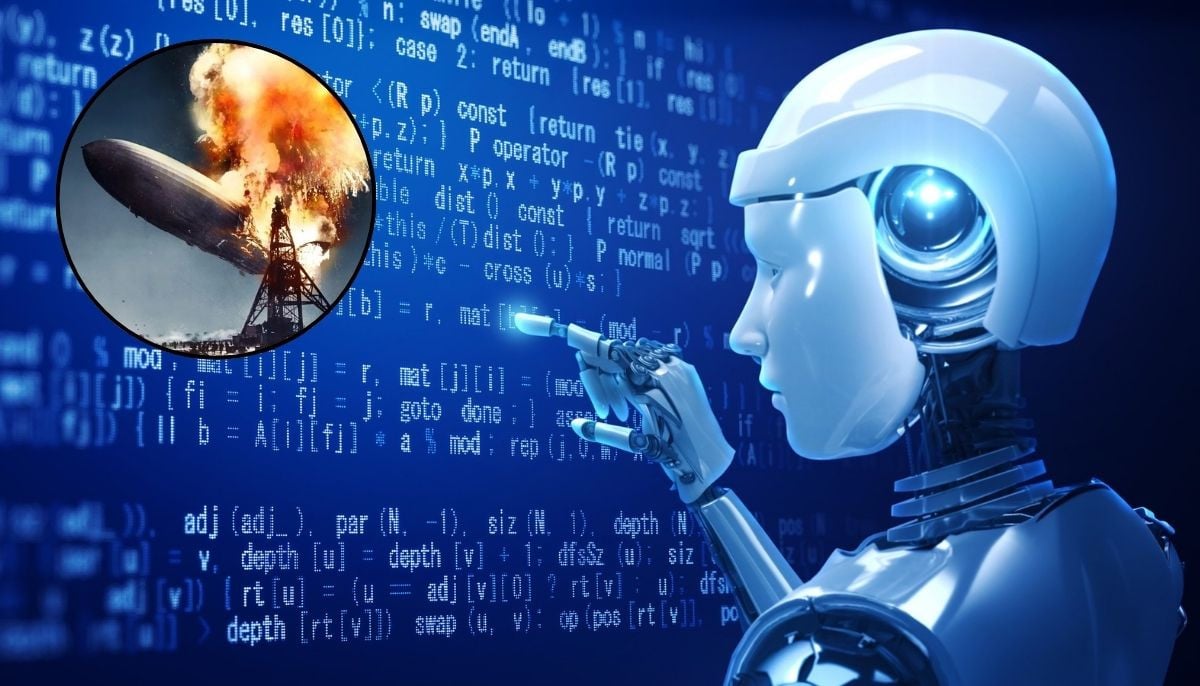
Michael Wooldridge, a professor at the University of Oxford who specializes in artificial intelligence, recently issued a chilling warning that the unchecked race to spread AI could end in a “Hindenburg-style catastrophe” – a high-profile failure that shatters global trust and renders the technology “dead” in the public eye.
Wooldridge argued that tech companies are turning a blind eye to safety protocols and prioritizing speed and profits over rigorous testing and regulation.
Unfortunately, in the race for consumers, consumers ignore potential flaws in technology before they fully understand it.
“This is a classic technology scenario: You have a technology that is very promising, but it hasn’t been tested as rigorously as you would like, and the commercial pressure behind it is intolerable,” he said.
During his talk titled “This is not the AI we were promised,” Wooldridge said the moment when the world actually sees an AI-driven doomsday scenario is not far away.
“The Hindenburg disaster destroyed global interest in airships. From that point on airships are obsolete technology, and a similar moment poses a real risk for AI,” Wooldridge warned.
“Modern AI is neither healthy nor perfect”
According to Wooldridge, it’s a mistake to think of modern AI tools as “sound and perfect.” Large-scale language models make probabilistic predictions and give AI “jagged capabilities.” Ultimately, these tools can perform some tasks efficiently, but perform poorly on others.
The trap of anthropomorphism
Of further concern to Professor Wooldridge is that AI systems are often mistakenly assumed to be human-like.
People who have specialized in giving flattering responses often feel more comfortable with AI bots because there is no conflict.
According to a 2025 Center for Democratic Technology survey, nearly one-third of students reported that they or a friend had been in a romantic relationship with an AI.
Wooldridge argued that humans need to understand that these bots are just tools or glorified spreadsheets, devoid of emotion or real response.
What is the Hindenburg disaster?
The Hindenburg disaster was a horrific airship disaster that occurred on May 6, 1937, and effectively ended the era of civilian airships carrying passengers. The explosion occurred due to a discharge of static electricity, which ignited the leaking hydrogen.

