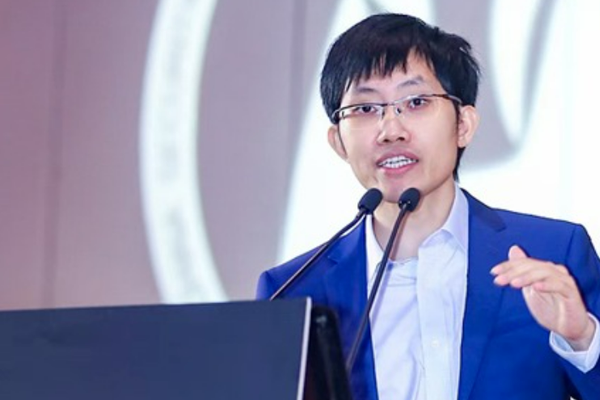
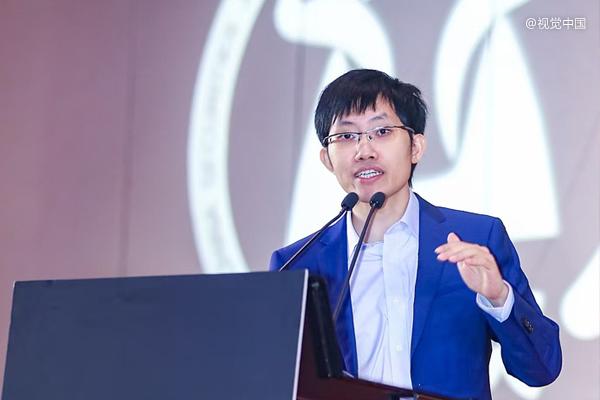
Liang Wenfeng
Author/Feng Yuchen
At this moment, the gods established themselves.
Internet giants are scrambling to get a seat at the competitive table, and their ambitions are clear. They all want their big AI models to be the strongest traffic entry point. In the field of large AI models, that man used to be the leading man.
Just a year ago, he rose to fame. Back in the week before Chinese New Year 2025, Liang Wenfeng led DeepSeek to release the large-scale inference model R1. We achieved performance equivalent to the world’s top models at an unexpectedly low cost. Since then, mystical forces from the East have managed to conquer the technological world of the world.
Posted by – 85’s from Zhanjiang City, Guangdong Province, rarely appears in public and has a net worth of more than billions of dollars. The situation with the company he founded, DeepSeek, needs no further explanation. However, DeepSeek seems to have disappeared amidst the fierce competition for large Chinese AI models. On February 11th, DeepSeek was quietly updated and upgraded. When the outside world speculated, “Maybe there will be a new version of DeepSeek?”, Liang Wenfeng and DeepSeek remained silent.
In some cases, the calmer you are, the more afraid the other person will be.
Liang Wenfeng remains silent as the AI battle heats up
This is a very sensitive moment in China’s AI history.
First, let’s look at the most tangible thing for citizens: cash gifts. At the end of January, Tencent distributed 1 billion yuan in cash hongbao to incentivize users, and at the same time Baidu invested 500 million yuan in cash hongbao to promote Wenxin Assistant. Soon, Alibaba’s Qianwen arrived with 3 billion yuan in a red envelope, which was a bombshell for the milk tea shop industry. ByteDance, the so-called “space factory,” also took action. Users who participate in Doubao APP’s Chinese New Year Lottery may win up to 8,888 yuan in cash.
As funds burn and users fall into ecstasy, the game reflects the future fate of top AI large models.
On the product side, ByteDance has lit a big fire. On February 14th, ByteDance officially announced the release of Doubao Large Model 2.0. And before that, on February 7th, ByteDance’s video model Seedance 2.0 went viral on the Internet. Netizens exclaimed with joy, saying, “The moment has come when renaissance and technological revolution will occur at the same time.” At about the same time, Alibaba launched a new generation of Image – generation basic model Qwen – Image 2.0. Zhipu and MiniMax also participated and released new models together.
This kind of “every move” suggests a rather strange tacit understanding of competition. And in retrospect, DeepSeek, which once sparked an open source revolution in large-scale models, seems to have settled down considerably.
In fact, some news was leaked earlier.
According to overseas media outlet The Information, DeepSeek was planning to release a new generation of its flagship artificial intelligence model, codenamed V4, around the Chinese New Year in mid-February, aiming to take the coding AI crown. But soon there were reports that V4 might not be released on time, and it was mentioned that DeepSeek had been silent on the release date.
On February 11th, DeepSeek was quietly updated to directly increase the context window length from the previous 128,000 tokens to 1M (one million) tokens. When the outside world speculated that this version might be a V4 preview, officials remained silent.
However, this mysterious dark horse who “doesn’t care about fighting” always attracts the attention of the outside world.
In January 2026, the DeepSeek team published two papers signed by Liang Wenfeng: mHC (Manifold – Constrained Hyper – Connection) and Engram (Conditional Memory). At that time, the market began to speculate that this was related to the core technology of DeepSeek V4.
During the Lunar New Year period, when many companies suspend their recruitment activities, DeepSeek is still recruiting continuously on various platforms. For example, on February 5th, DeepSeek’s official account updated recruitment information for multiple positions, including product managers and client-side R&D engineers.
“Most of our companies are used to following rather than innovating,” Liang Wenfeng once said. Now, amidst the chaos of the “Battle of the Gods,” the outside world has high hopes for Liang Wenfeng, the destroyer who once created miracles through innovation.
China’s deep-seeking moment with county’s top scorer
Mirling Village in Zhanjiang City, Guangdong Province, the southernmost tip of mainland China, was once crowded with tourists.
Liang Wenfeng, born in 1985, is from here. Both his parents are local elementary school teachers. He was an excellent student since childhood. He completed high school mathematics in middle school and began studying further university level mathematics. However, when Liang Wenfeng was a teenager, what his parents were most concerned about was “what kind of questions did he solve today?” rather than his rank on the exam.
This upbringing complements the fact that many years later he is considered a “pure technical idealist” in the AI world.
Liang Wenfeng received the top score in the university entrance exam at Wuchuan First Junior High School and entered Zhejiang University to major in electronic and information engineering at the age of 17. In 2007, he continued his graduate studies at the Department of Information and Communication Engineering at Zhejiang University under the guidance of Xiang Zhiyu, mainly working on machine vision research.
Actually, computer science was a fairly niche major at the time. Civil engineering, electrical automation, finance and international trade were the more popular choices. There was a stereotype that people who studied computer science would end up repairing or selling computers at a computer mall after graduation, “just to earn a wage.”
However, Liang Wenfeng chose this path. Personal interests and major changes in time laid the foundation for the future of this genius teenager.
In 2008, the global financial crisis spread across the world. Liang Wenfeng, a student at the time, was acutely aware of the opportunity behind the crisis. He formed a team with his classmates and began researching fully automated quantitative trading using technologies such as machine learning. In 2015, Mr. Liang Wenfeng and his Zhejiang University classmate Mr. Xu Jin officially established Hangzhou Magic Square Technology Co., Ltd. This later became the famous Magic Square Quantification Company.
The AI ran through the magic square from start to finish. Almost all early magic square quantitative strategies used AI models for calculations. Magic Square invested more than 1 billion yuan in 2019 and 2021 to build self-developed deep learning training platforms “Firefly One” and “Firefly Two”.
Things went well, and by 2021, Magic Square Quantitative had joined the ranks of 100 billion level quantitative private funds. This year, Magic Square Quantitative acquired NVIDIA A100 graphics cards, bringing the number of graphics cards in its AI cluster to the “tens of thousands” level. It is worth noting that at this time, there were only a few companies in China with more than 10,000 GPUs. With the exception of Magic Square Quantitative, the rest were almost all Internet giants.
At the age of 38, financial magnate Liang Wenfeng made the decision to found DeepSeek and develop general artificial intelligence.
In his eyes, this may be part of satisfying his curiosity about the world of technology. DeepSeek doesn’t just want to replicate the already famous GPT. Instead, like our company name, we want to do true research on large-scale models and deeply pursue leadership in the industry ecosystem.
That vision quickly became a reality, and the debut was quite shocking. In January 2025, one week before Chinese New Year, DeepSeek, with a team of nearly 100 people, released the DeepSeek R1 version and generously released the source directly. Its inference ability was comparable to the world’s top models, but the cost was only a few hundred thousand dollars, completely overturning the image that top-level models required investments of tens of millions of dollars.
In this way, Liang Wenfeng left a valuable footprint in the history of China’s AI process, the DeepSeek moment.
Battle of the Gods and a new era of Chinese AI
“AI should still be used by humans,” and this is now even more urgent.
Similar to DeepSeek’s constant pursuit of efficiency and focus on research, it is also starting to focus on specific users on the consumer side. A recent job opening for a Product Manager position states the following in the Responsibilities section:
· Lead the feature planning and experience design for DeepSeek’s consumer end products. We are keenly aware of user needs and continuously drive product innovation and experience optimization.
· Identify and resolve problems, reduce user usage costs, and focus on user growth to increase usage depth, persistence, and conversion.
·……
For the past year or so, many DeepSeek consumers (end users) have suspected that DeepSeek doesn’t have a product manager. A private user of DeepSeek said, “The page and entrance are so simple, it’s as if we don’t need to make any money,” and even joked, “We as consumers, the end users, are finally realizing that we have a key role to play in achieving AGI.”
In contrast to DeepSeek’s modesty and modesty, big companies eager to commercialize are coming up with new strategies.
It’s like Alibaba spending 3 billion yuan on a red envelope to make Qianwen order milk tea. While it may seem like you’re wasting money to buy traffic, it’s actually a necessary step to foster user awareness in the age of AI. Through the subsidy method of free ordering, which is very familiar to the public, it is trying to first encourage the general public to use Qianwen, and then make them aware that the AI can order and even “do something for you.”
Similarly, ByteDance’s Doubao, which gives presents during Chinese New Year celebrations, has already found a foothold in many life scenes: teaching people how to dress as handsome men in Korean style, taking artistic photos of pets, teaching children homework… Amid these role-plays and emotional conversations, Doubao has already attracted more than 200 million monthly active users.
All of this indicates that we are nearing a point where the demand for AI consumer end applications will explode in the post-massive model competition era.
This also brings competition back to its most basic essence. This means that people who can solve users’ real needs and problems will become super entry points in the AI era.
The battle is even more significant for Internet giants, which constantly need traffic. We have an opportunity at hand to define the Internet order for the next decade.
This article is from the WeChat official account “Investment Circle”. Author: Feng Yuchen. Republished by 36Kr with permission.