
While GDP is growing at breakneck speed thanks to massive AI demand, Taiwan is increasingly putting all its economic eggs in one basket.
Taiwan’s exports reached a record US$640 billion in 2025, driven by insatiable global demand for cutting-edge semiconductors, servers and other data center hardware used in AI applications. The Taiwanese government predicts that the economic growth rate will reach 7.37% in 2025, up from 4.27% the previous year.
Looking ahead to Taiwan’s growth in 2025, this will be the fastest pace since 2010, when the economy recovered from the global financial crisis, and is unusually strong for a developed economy. From 1981 to 1995, Taiwan grew at an average annual rate of about 7.5%. At that time, GDP per capita was less than one-third of the current level of approximately $38,000 to $40,000.
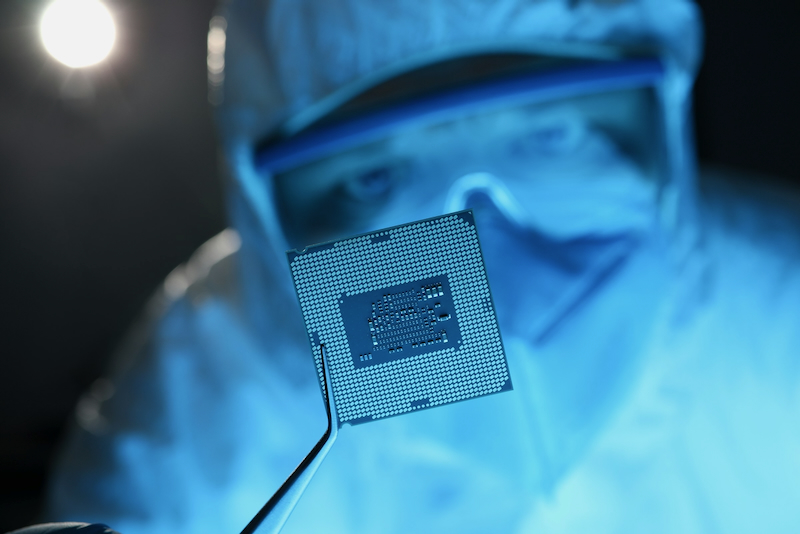
The Taiwanese company benefiting most from the AI boom is Taiwan Semiconductor Manufacturing (TSMC), the world’s largest contract chipmaker. The Hsinchu-based company manufactures about 90% of the world’s most advanced semiconductors. Approximately 40% of Taiwan’s exports are semiconductors.
TSMC achieved record sales in 2025, with full-year sales reaching approximately NT$3.81 trillion, an increase of 31.6% from the previous year. The company said profit rose 46.4% to NT$1.72 trillion, with AI demand and high-performance computing accounting for 55% of total sales.
“Recent developments in the AI market continue to be very positive,” TSMC Chairman and CEO CC Wei said during the fourth quarter earnings call. “Looking to the future, we observe an increase in the adoption of AI models across the world. [the] Consumer Enterprise and Sovereign AI Segment. This drives the need for more and more computing, supporting strong demand for cutting-edge silicon. ”
In response to an analyst’s question, Wei said the key question is determining “whether the demand for AI is real or not.” He admitted he was “very nervous” about the outlook, given that TSMC plans to spend $52 billion to $56 billion in related capital investments.
However, based on conversations with customers over the past few months, Wei said he now believes the demand for AI is real. He added that TSMC’s customers “have shown us evidence that AI can really help their business.”

Analysts at the semi-governmental Market Intelligence Consulting Institute (MIC) say orders for cutting-edge foundry processes continue to grow, driven by increased shipments and soaring prices of AI accelerator chips from companies like NVIDIA and AMD. This supports the sustainable growth of Taiwan’s semiconductor production and contributes significantly to Taiwan’s overall GDP growth.
Expansion to the US
As demand for AI hardware soars, TSMC is expanding capacity at its Arizona manufacturing facility. What started as a US$12 billion plan for a single manufacturing plant announced in 2020 has since grown to a US$165 billion investment that includes five manufacturing plants.
Under the U.S.-Taiwan tariff agreement announced in January, Taiwanese semiconductor and other technology companies will receive a total of $250 billion in new direct investments “to build and expand advanced semiconductor, energy, and artificial intelligence production and innovation capabilities in the United States,” according to a U.S. Department of Commerce fact sheet.
The Commerce Department also said the Taiwanese government will provide $250 billion in credit guarantees to encourage additional investment by Taiwanese companies and “support the establishment and expansion of a complete semiconductor supply chain and ecosystem in the United States.”
TSMC is expected to account for the bulk of the $250 billion in direct investment into the U.S., but the company has not yet disclosed the amount invested.
“TSMC is looking to diversify its global footprint and strengthen its relationships with key backers,” said J. Travis Mosier, a nonresident fellow at the Center for a New American Security (CNAS) and a former Commerce Department official. “They’ll always keep the crown jewels in Taiwan, but a larger and larger share of the ever-growing pie will definitely end up in the Arizona desert.”
Analysts at the Ministry of Internal Affairs and Communications note that Taiwan has long been a strategic partner of the United States in the field of AI. Beyond the manufacturing and advanced packaging of cutting-edge AI accelerator chips, the collaboration also extends to the design, development, and assembly of AI servers and data center equipment. The relationship builds on decades of close collaboration on smartphones, personal computers and servers and demonstrates the deep alignment between the two technology ecosystems, analysts said.
This interdependence was highlighted during TSMC’s recent earnings call, when Wei said, “All my AI customers are in the United States,” adding that the concentration of demand is prompting the company to expand its factory in Arizona. NVIDIA, Apple, Broadcom, Amazon, Qualcomm, and Intel are TSMC’s major customers for advanced AI-enabled chips. Apple has long been TSMC’s biggest customer, but analysts expect NVIDIA to overtake it this year, reflecting soaring sales of AI chips and heavy investments in AI infrastructure.
Data center demand
As the power consumption of AI chips continues to increase, servers and rack-level infrastructure must be upgraded in parallel to ensure stable and energy-efficient operation. This need for upgrades is accelerating the demand for advanced liquid cooling solutions and high-capacity power systems in server and data center racks.
Chen Yi-ling, senior industry analyst at MIC, points out that Taiwanese data center equipment manufacturers have long specialized in high-end server components and system integration. They offer comprehensive capabilities across critical technologies such as liquid cooling systems, power supplies, and rack-level designs, making them key partners for global cloud service providers.
As liquid cooling rapidly penetrates the AI server market, Taiwan’s supply chain is benefiting from increased demand for in-rack liquid cooling components such as cold plates, manifolds, and quick disconnects, Chen explains. On the power side, the growing demand for high-end power supply units is also driving data center facility-level power system upgrades, “strengthening Taiwan’s competitive advantage in providing one-stop solutions for data center infrastructure,” she says.
NVIDIA is widely recognized as a leading supplier of chips for AI-driven data centers, with over 90% of the AI-specific GPU market. While companies like Amazon Web Services (AWS) and Microsoft Azure lead the way in owning and operating physical cloud-based data centers (measured by facility), NVIDIA is the foremost provider of the critical technology, hardware, and AI chips that power them.
Quanta Computer, a Taiwanese contract electronics manufacturer focused on the data center market, expects its AI-related business to grow by at least triple-digit percentages this year. For this reason, the company is considering increasing capital investment primarily in the United States and Thailand. Quanta predicts that AI servers will account for approximately 80% of total server revenue in 2026.
Over the next three years, AI will not only continue to grow rapidly, but will also “enter an era of bloom,” Quanta chairman Barry Lam told the Taipei Times in January, adding that Quanta had secured a competitive edge by moving from air-cooled AI servers to liquid-cooled supercomputers. The New Taipei City-based manufacturer plans to start shipping servers based on NVIDIA’s latest Rubin platform in August, but its revenue contribution this year is likely to be limited given the early stages of the rollout, he said.

unbalanced growth
The AI boom has been a windfall for Taiwan’s information and communications technology exporters, but overall growth has been uneven and the benefits have failed to spread throughout the economy. The struggles of traditional manufacturers demonstrate this imbalance.
Exporters of products such as machine tools, chemicals and metals were not able to benefit from the broad tariff exemptions granted to Taiwan’s technology hardware sector. The United States is one of its most important markets, and many traditional manufacturers were hit hard as double-digit tariffs reduced sales and compressed profit margins.
Machine tool maker Ritz High-Tech told the Taipei Times in January that exports had fallen by 30% because of the tariffs. Although the U.S.-Taiwan trade agreement lowered tariffs to 15%, the company’s profit margins are still nearly three times higher. “I don’t think there is a single Taiwanese machine tool manufacturer that can negotiate an acquisition. [the tariff] Probably 2-3%,” Ritz Hitech sales director Chris Wu told the newspaper.
Beyond the recently imposed U.S. tariffs, Taiwan’s non-high-tech manufacturing sector has long been disadvantaged by Taiwan’s exclusion from multilateral trade agreements, said Ross Darrell Feingold, a Taipei-based lawyer and political risk consultant. These include the Comprehensive and Progressive Agreement for Trans-Pacific Partnership (CPTPP), the Regional Comprehensive Economic Partnership (RCEP), the ASEAN Free Trade Area (AFTA), and the ASEAN-China Free Trade Area.
“Taiwanese [non-tech] “But if the destination country assesses products made in Taiwan at higher tariffs than products made in other countries, the obvious choice for Taiwanese manufacturers is to move production elsewhere,” Feingold says. Higher labor and land costs in Taiwan compared to other potential manufacturing locations are also important factors. ”
Traditional manufacturing industries are also being squeezed by the strong Taiwan dollar. Taiwan’s currency appreciated by 4.27% in 2025, the largest annual increase in five years. This reflects Taiwan’s record US$157.14 billion trade surplus, primarily due to AI-related ICT exports, as well as large foreign inflows into Taiwanese stocks and a sharply weaker US dollar. On a trade-weighted basis, the new Taiwan dollar depreciated by about 8% in 2025 and by about 10% against other major world currencies.
Double down on technology hardware and AI
Taiwan’s government has tried to cushion the blow to traditional manufacturing with subsidies, export promotions and support for industrial upgrades, but there appears to be no appetite to significantly diversify away from reliance on technology hardware exports. ICT products, including semiconductors, will account for 74% of Taiwan’s exports in 2025, the largest share ever.
In the short to medium term, Taiwan will continue to face significant pressure from President Donald Trump’s administration to promote semiconductor manufacturing in the United States. Commerce Secretary Howard Lutnick said in a mid-January interview with CNBC that the trade deal’s goal is to bring 40% of Taiwan’s entire semiconductor manufacturing supply chain to the United States by the end of President Trump’s term.
“Given the typical time period required to build a semiconductor factory, it is unlikely that 40% of Taiwan’s current semiconductor production will be produced in the United States by the end of the Trump administration on January 20, 2029,” Feingold said.
He said acquiring land, regulatory approvals, construction, hiring and training employees, pilot production and ramping up production capacity all take time. “TSMC built an initial factory in Arizona impressively and quickly, but was frustrated by federal, state, and local regulatory approvals and other challenges.”
Taiwanese economists object to the 40% figure. Less than 15% of TSMC’s advanced manufacturing processes are expected to be transferred to the United States by the end of President Trump’s second term, Lian Xianming, director of the China Economic Research Institute, said in a Facebook post in January.
Analysts say the economic rationale for closer U.S.-Taiwan semiconductor cooperation is likely to prevail in the end, even if the two countries disagree about where production should take place. CNAS’s Mosier simply stated:
“Taiwan-made silicon enables AI, so we expect the U.S.-Taiwan strategic partnership will encourage TSMC to expand its advanced capabilities in the U.S. while continuing to focus on bilateral monetary and diplomatic investments centered on securing supply of cutting-edge chips in Taiwan.”


