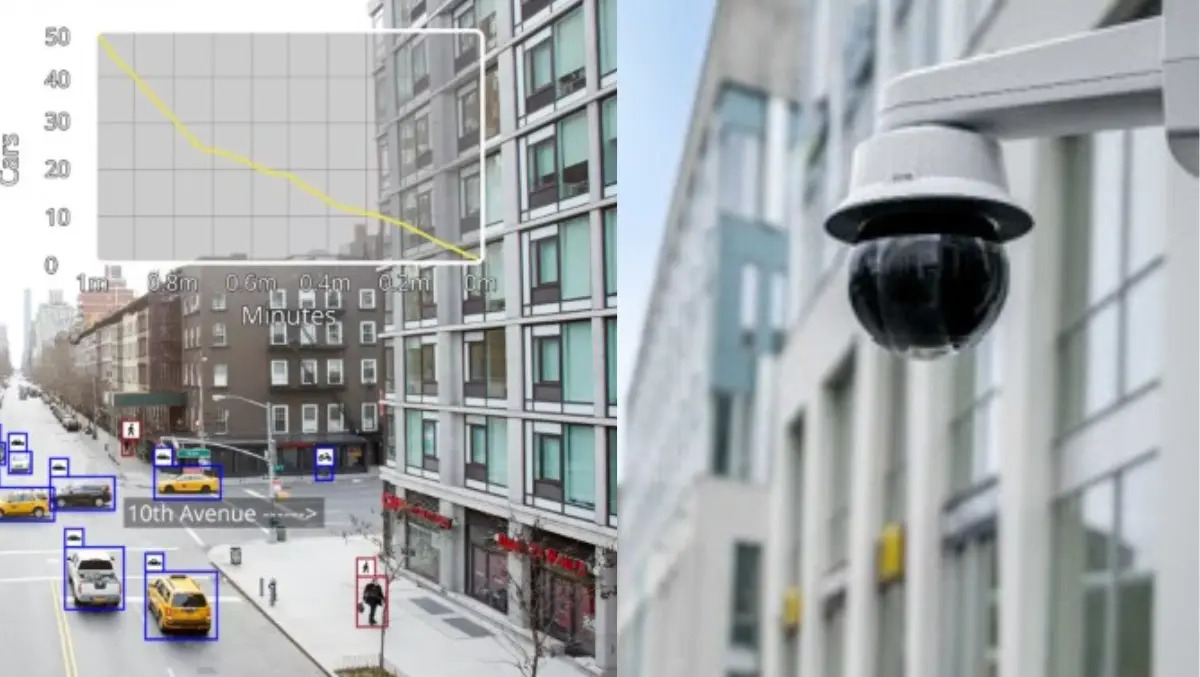
Axis Communications has announced three additions to its network video portfolio, including an AI-powered PTZ camera, an anti-ligature corner camera for custody and clinical settings, and new AV1 functionality that supports switchable overlays in a single stream.
The company positioned its updates around edge processing and how video systems display information during live monitoring and subsequent review. Axis says this approach reduces reliance on individual streams and moves more analysis and security controls to the camera.
“As security operations become more data-driven and environments become more complex, Axis’ latest innovations bring edge intelligence to everyday security workflows. This provides users with many powerful benefits, including increased access, reduced bandwidth and storage overhead, and greater trust in what they share with their audience,” said Lynn Stoering, Regional Director for Northern and Eastern Europe at Axis Communications.
PTZ camera
One of the products is AXIS Q6325-LE, an outdoor-ready PTZ camera. Axis explained that it leverages AI and is designed for use in difficult lighting conditions. This camera uses a 0.5-inch sensor along with Lightfinder 2.0 and Forensic WDR. Also includes OptimizedIR.
The camera supports on-device analytics. According to Axis, it ships with AXIS Object Analytics pre-installed. This software detects, classifies, tracks, and counts people and vehicles. This camera also supports Autotracking 2 for active tracking.
According to Axis, AXIS Q6325-LE uses Zipstream, which supports AV1, H.264, and H.265. The company has tied this to lower bandwidth and storage requirements.
AXIS Q6325-LE runs on ARTPEC-9 system-on-chip. Axis said it includes Axis Edge Vault for hardware-based cybersecurity. The company also highlighted FIPS 140-3 Level 3 certified secure key storage and operations.
corner camera
Axis also launched the AXIS Q9227-SLV corner camera for environments where operators require a compact unit designed to reduce the risk of self-harm. The company cited prison cells and psychiatric wards as examples of installation environments.
The camera records at 5 MP resolution. Axis says it offers a wide field of view designed to eliminate blind spots. The device includes AI-powered video and audio analytics. Also includes a hidden speaker and microphone for two-way communication.
In dark or no light environments, the device uses 940nm invisible IR. The axis also contains an additional white LED. The company said it can provide color details if required.
Axis says the unit uses deep learning processing units to perform edge-based analysis. AXIS Object Analytics and AXIS Audio Analytics are preinstalled. The camera also comes with AXIS Live Privacy Shield for dynamic masking. Axis Edge Vault is included for hardware-based cybersecurity.
AV1 overlay
The third announcement describes AV1 functionality that supports switchable overlays in a single stream. Axis says users can switch between an operational view, which includes overlays such as bounding boxes and text, and a clean forensic view across live and recorded video.
Axis says this feature eliminates the need to run two separate streams for operational monitoring and evidence review. The company also said that the overlay comes from the camera itself, which has implications for image integrity.
Axis described the feature as a workflow change for operators who regularly switch between live incident response and subsequent reviews. The company said operators can turn on the overlay for daily monitoring and then turn it off to review or share a clean evidence view without having to manage multiple video feeds.
These announcements also highlight the role of on-device processing in video surveillance. Axis has linked edge processing to bandwidth usage and storage overhead, and how quickly operators can find relevant footage during investigations.
Axis said the product and AV1’s capabilities reflect its focus on embedding analytics, privacy controls and cybersecurity capabilities within the device, rather than relying solely on downstream systems.