
Artificial intelligence is quietly making inroads into places most people would never think of, such as cow pastures.
Sick cows will not raise their hooves or wave for attention. It just stands there, eating less, moving slower, waiting for someone to notice.

For ranchers managing hundreds or even thousands of animals, it's easy to overlook that silent suffering.
Monitor cow body temperature
For decades, monitoring cow body temperature has relied on a single well-known method: the rectal thermometer.
It gets the job done, but it's slow, labor-intensive, and requires a trained handler and an animal you'd rather keep elsewhere.
This process increases stress levels, increases safety risks, and can spread health problems before they are discovered.
Now, another option is on the horizon that doesn't require touching animals at all.
Spot early signs of disease
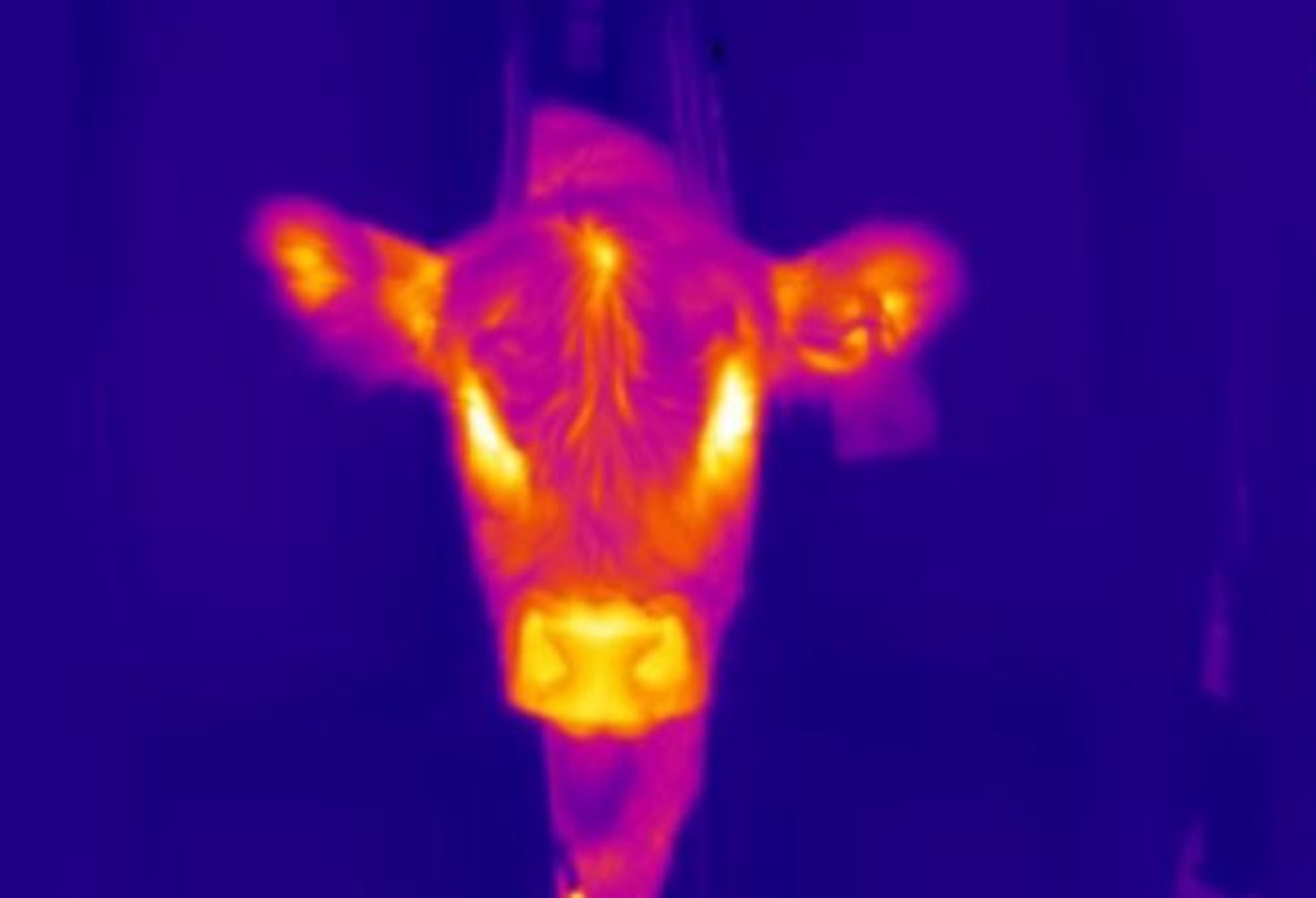
The new system uses thermal cameras and artificial intelligence to estimate a cow's body temperature just by looking at its face.
The idea is simple. Warm-blooded animals emit heat from specific areas of their bodies. If the camera can detect that heat, the computer can learn what it means.
The tool, called CattleFever, is designed to help ranchers spot early signs of disease before visible symptoms appear.
Early treatment reduces the number of sick animals and reduces losses. It may also reduce stress on the herd and reduce work for those caring for the herd.
The research was led by Trong Thang Pham, a doctoral student at the University of Arkansas in a lab focused on artificial intelligence, computer vision, and robotics.
The goal is not to replace veterinarians, but to provide ranchers with a practical way to monitor animal health more often and with less disruption.
Read body temperature with image
Animals have traditionally been studied using thermal cameras. Dogs, cats, horses, and sheep all have image datasets available to researchers.
Most existing images of cows were taken from above, and were intended to track herds rather than read body temperatures. Thermal data was also lacking. So the team built their own dataset from scratch.
Researchers temporarily confined thousands of calves in cages while recording 20 seconds of regular video and thermal images of each calf.
At the same time, each calf's body temperature was measured using a rectal thermometer. This number later became a reference point for computers to learn from.
Data collection took place at a research facility operated by the state Agricultural Experiment Station. It was slow and careful work. Researchers needed precision, not shortcuts.
Training AI to recognize cows
Cow faces may seem simple to humans, but computers need guidance. The researchers marked 13 specific landmarks on each face.
They manually labeled 600 frames and then trained an artificial intelligence system to independently label over 4,000 additional frames.
This process allowed the system to match the normal image with the thermal image and understand where the main facial features are located.
The final dataset was named CattleFace-RGBT, reflecting the combination of color and thermal information.
Once the face was mapped, the next question became important. What parts of your face actually tell you the truth about body temperature?
Use AI to predict fever in cows
The researchers tested different combinations of facial features to see which ones best matched the thermometer readings.
The eyes and nostrils were prominent. In these areas, the surface temperature closest to the animal's actual internal temperature was measured.
Using that information, the system focused on those areas and applied various machine learning techniques to predict body temperature.
The most accurate method turned out to be random forest regression. It works by combining many small decision models and averaging their results to reduce errors.
The results were impressive. The system was able to estimate the calf's body temperature to within 1 degree of the thermometer reading.
Take the system outdoors
All images used so far were taken in-pen with the calf facing the camera. Real ranches aren't that pretty.
“We probably need to take more photos in real-world situations, such as running around, to capture movement in the field,” Pham says.
The next challenge is to teach the system to recognize cow faces from different angles, distances, and positions. Cows that graze, turn their heads, or walk past the camera are very different from cows that are stationary in a pen.
The team published the CattleFace-RGBT dataset to allow other researchers to solve the problem and bring the technology closer to real-world use.
“When you discover something new, share it with the world. That's the spirit,” Pham said.
How to take care of animals quietly
Technology like this doesn't make headlines like flashy gadgets. But it's important. It has the potential to make animal care gentler, faster, and more humane.
Stress is reduced if ranchers can check the temperature of animals without touching them. If the disease is detected early, suffering will be alleviated. And if we can stop the outbreak before it spreads, everyone benefits.
Sometimes progress comes with noise. In some cases, it appears as a warm spot on the screen, telling someone it's time to take a closer look.
The entire study was published in the journal smart farming technology.
Image credit: AICV Lab
—–
Like what you read? Subscribe to our newsletter for fascinating articles, exclusive content and the latest updates.
Check us out on EarthSnap, the free app from Eric Ralls and Earth.com.
—–

