
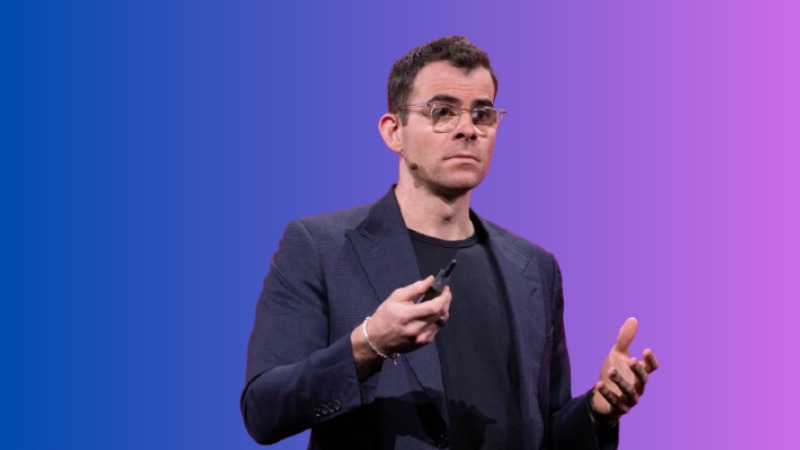
As artificial intelligence rapidly reshapes digital content creation, authenticity is emerging as the most valuable and contested currency online. Looking ahead to 2026, Instagram chief Adam Mosseri believes the internet is entering a phase where authenticity is no longer rare but infinitely reproducible, a paradox that will fundamentally redefine creators, platforms, and trust.
Mosseri takes a close look at the future of social media, arguing that the very characteristics that once distinguished creators: original voice, empathy, and human imperfection are now increasingly easier to simulate using AI tools. From hyper-realistic deepfakes to AI-generated photos and videos that are indistinguishable from the captured media, synthetic content is rapidly becoming more popular.
“Feeds are starting to become synthetic of everything,” Mosseri said, warning that the biggest risk for platforms like Instagram isn't competition, but rather not adapting quickly enough to a world where authenticity can be manufactured at scale.
The importance of creators is even more important
Despite concerns that AI will dilute the creator economy, Mosseri takes the opposite view. As trust in institutions such as governments, corporations, and traditional media continues to decline over time, individuals are becoming the primary source of trust and connection.
The near-zero distribution costs of the Internet are already shifting power from organizations to individuals, a trend we see across journalism, sports, and entertainment. In a future saturated with AI-generated content, Mosseri argues that creators who can maintain trust will be even more valuable.
Authenticity is becoming rare, he says, and scarcity is driving demand.
But the challenges are steeper than ever. Once everyone can simulate relevance, the bar moves from “Can you create one?” “Can you make something that only you can make?” According to Mosseri, that's the new gatekeeper to success.
The rise of raw aesthetics
Mosseri also points out that major aesthetic changes are already underway. The highly polished, professional images that were once the hallmark of Instagram have lost their appeal. Personal sharing has largely moved from public feeds to Stories and private DMs, where blurry photos, shaky videos, and unfiltered moments dominate.
This “raw aesthetic”, characterized by imperfection and immediacy, is increasingly permeating public content. In a world where AI makes polishing cheaper, imperfections signal truth.
“Flattery images are cheap to produce and boring to consume,” Mosseri argues. Rawness is no longer just a style choice, but a protective sign of authenticity.
Ironically, he suggests that hardware innovation may be chasing the wrong goals. As smartphone cameras race toward higher and higher megapixels and computational perfection, creators and viewers alike are gravitating toward content that feels unproduced, human, and incomplete.
fall into skepticism
As AI tools mature and become capable of reproducing not just the sophisticated but also the imperfect, Mosseri predicts deeper psychological changes. Viewers will begin to assume the media is authentic by default and begin to be skeptical.
He points out that humans are evolutionarily hardwired to trust what they see. That instinct is now colliding with a digital environment where visual evidence cannot be taken at face value.
In response, social platforms will come under increasing pressure to label AI-generated content. While Mosseri expects the platform to improve AI detection, he acknowledges that this will become more difficult as synthetic media becomes more sophisticated.
Rather than tracking fakes, he suggests, a more scalable solution might be to do real-world fingerprinting, or cryptographically signing images and videos at the point they are taken to establish provenance and chain of custody.
Context over content
Mosseri argues that just putting a label on something is not enough. In a world of infinite content and infinite suspicion, platforms need to surface richer context around the accounts themselves. Factors such as account history, location, posting patterns, and transparency will play an increasingly important role in how viewers decide who to trust.
According to him, the future is less about what is said than about who is saying it and why.
What this means for Instagram
For Instagram, the impact is existential. Mosseri outlined several priorities for the platform heading into 2026. We're building best-in-class creative tools that blend AI and traditional creation, clearly labeling AI-generated content, collaborating with manufacturers to verify authenticity at the time of capture, and improving how authenticity signals are displayed.
He also acknowledges that ranking uniqueness and addressing concerns about algorithmic transparency remains important, but these discussions may require their own calculations.
In a digital ecosystem defined by abundance, imitation, and suspicion, Mosseri's central theme is clear. Creators who persevere are not the most sophisticated or the most technologically advanced, but they are the ones who can consistently prove that they are real, even when reality itself can be convincingly faked.


