Nick Shiffrin:
Perhaps the most important business and economic topic this year will be developments and spending related to artificial intelligence.
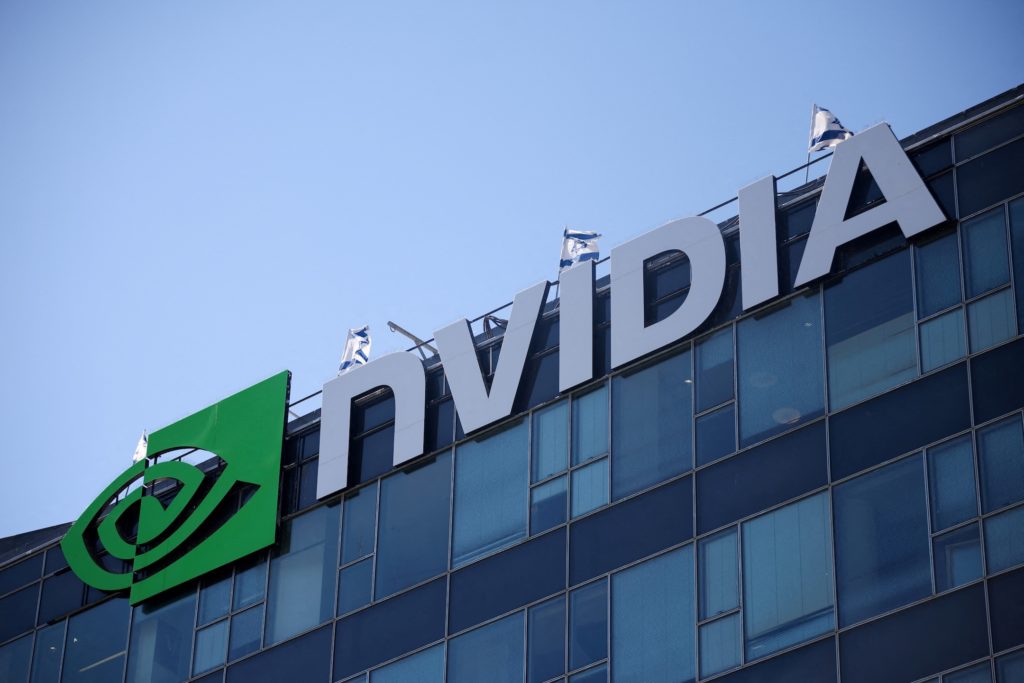
Spending on AI is driving one of the most explosive periods in the technology industry and plays a major role in the overall growth of the U.S. economy. Some companies have made huge profits, including Nvidia, which posted record profits of $32 billion in one year, a 65-fold increase. However, there are very big questions as to whether this is a bubble or not.
Jeff Bennett delved into that in a recently recorded conversation.
Jeff Bennett:
Experts say this boom has outpaced almost anything else imaginable, with spending exceeding the amount spent on the Manhattan Project or the Apollo mission to space.
But many experts worry that trillions of dollars in spending and fierce competition will create an AI bubble that won't be able to sustain revenue growth to match all that investment. And if the bubble bursts, it could have an impact beyond Silicon Valley.
For more, we're joined by New York Times technology reporter Cade Metz, who covers the world of AI.
Thank you for joining us.
Cade Metz, New York Times technology reporter:
I'm glad to be here.
Jeff Bennett:
So let's start with the basics. What's driving this explosion in AI investment? Why do all these companies seem to be jumping in at once?
Cade Metz:
Since the introduction of the chatbot ChatGPT about three years ago, we have seen this technology steadily advance and slowly make its way into people's lives and the lives of office workers.
In many ways, this is a revolutionary technology. This helps people search the internet in new ways. It can also help transcribe meetings in the office, potentially making doctors and other professionals work a little faster.
But Silicon Valley is looking to a much bigger future. They see this technology continuing to improve and becoming more and more powerful in the coming years. So they are investing hundreds of billions of dollars into data centers to not only improve this technology, but also to enable it to serve a larger population.
Jeff Bennett:
And all in all, trillions of dollars are flowing into AI. Is this growth sustainable or are we in bubble territory?
Cade Metz:
It's a question everyone is trying to answer, but no one can fully answer.
This is a huge expense to say the least. And it is also a bet on the future. These data centers aren't just expensive; It takes years to build. Therefore, all companies that do not want to miss out on this boom have to bet on whether they will be able to reap the profits commensurate with this boom in the next 2, 3, or 4 years.
Maybe it can be done. Probably not. No one can completely agree. It's really a matter of timing. Many of these companies are already profitable. The question is how quickly that revenue can be realized and how many companies can tap into it. Many companies are participating in this competition. Many believe that not everyone can win.
Jeff Bennett:
Is that why it is so difficult for these companies to establish an AI advantage?
Cade Metz:
In part.
There are a lot of big players. The Googles, Microsofts, and Amazons of the world are doing this. And more nimble startups like OpenAI and Anthropic have sprung up. Meta, which owns Facebook and Instagram, recently doubled down on this. They built a new AI lab. Elon Musk is among them.
People in the Valley talk here about FOMO, the fear of missing out. No one wants to miss out on this technology. So the race has expanded even this past year.
Jeff Bennett:
Let's go back to the data center that you mentioned. Because the expenses there are enormous. What risks does it pose to markets, energy systems and the economy as a whole?
Cade Metz:
For the broader economy, the concern here is that large amounts of debt are being taken on to build these data centers. For years, the big companies I mentioned, Google, Amazon, Microsoft, have been building these huge data centers primarily with cash on hand, or essentially cash on hand.
These are companies that generate billions of dollars in annual revenue. They can afford to build these facilities. But the demand for this additional computing power is so high that many other companies are now building these data centers, either for themselves or for their partners, for a variety of reasons.
And those companies have far more debt than we've seen in the past. And therein lies the risk. Eventually, that debt will have to be repaid. If no revenue is coming in from these companies by then, there's a problem.
Jeff Bennett:
This is the idea of a circular loop. A large technology company invests in an AI company and then uses that money to invest in the same technology company's infrastructure. Is that why people are raising red flags?
Cade Metz:
Well, that's part of what's happening. All of these companies want to work together to power the entire industry and move it forward. For example, a transaction may occur where a company receives investment from a major company and then immediately uses the funds for the same company.
They think of it as a partnership. Some see this as a sign that the market may not be as healthy as it seems.
Jeff Bennett:
Essentially, what about concerns about how AI is being deployed, often poorly with little regulation, and the flood of low-quality and misleading content on the internet? How are companies responding to these concerns and concerns?
Cade Metz:
Well, in some cases, they're working to address the problem of disinformation that you're talking about. These systems make mistakes. they cause problems. It took us three years to document all this.
And efforts are constantly being made to improve the problem. However, we must recognize that there is something fundamentally wrong with this technology. This is a technology built by analyzing vast amounts of data culled from across the internet. Look for patterns within that data. And that's how you learn skills.
But that also means making mistakes as you learn. It learns from bad data, but it will also make mistakes just because it is a probabilistic engine. They're doing something based on what they see in the data. It basically means that you have a certain probability of making mistakes. People need to realize that it's always a mix.
And that can cause all kinds of problems not only in the information distributed on the Internet, but also in other operations of the system. The hope is that these systems will be able to perform increasingly important tasks as the year progresses.
But when these mistakes are repeated, it becomes more difficult to complete those tasks.
Jeff Bennett:
There are certainly problems.
What about the promise of AI? What do you find most exciting in the coverage?
Cade Metz:
I think the most exciting part of this is healthcare.
What we've seen is that the technology that powers things like ChatGPT, the chatbot that many people are now familiar with, can be used to support drug discovery. Basically, it helps in designing medicines and vaccines to help treat diseases and illnesses. This is the most powerful aspect of the technology, in some ways the most promising, and in some ways the most important.
Jeff Bennett:
Cade Metz of the New York Times, thank you again for your time. Thank you very much.
Cade Metz:
thank you.