
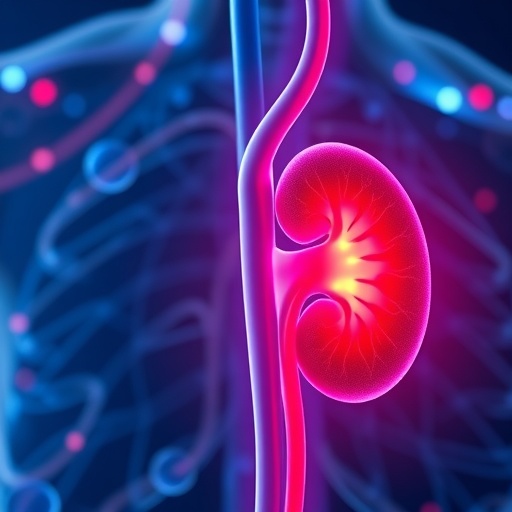
In a groundbreaking study poised to revolutionize the field of organ transplantation, researchers harnessed the power of deep learning technology to better predict outcomes for transplant recipients and improve pathology assessment through rapid analysis of collected kidney biopsies. This innovative approach, detailed in forthcoming Scientific Reports, is expected to address critical challenges in transplant medicine by providing a tool that can significantly improve the process of patient selection and postoperative monitoring.
The application of deep learning in the medical field has experienced significant growth in recent years. Traditionally, kidney transplant outcome prediction has relied on a myriad of clinical factors and manual pathology assessment. Although these methods are somewhat effective, they often lack the precision and speed required in urgent clinical settings. A new study led by Gaut et al. Significant progress has been made by utilizing sophisticated neural networks that can process complex patterns within biopsy samples that cannot be detected by traditional testing techniques.
By integrating artificial intelligence and histopathology, researchers have developed a platform that not only accelerates the analysis of kidney biopsies but also improves the accuracy of predicting outcomes for transplant recipients. The core of their methodology lies in training deep learning models on an extensive database that includes kidney pathology images, patient demographics, and transplant outcomes. This multifaceted dataset allows the AI model to learn the complex associations between different histological features and the subsequent success or failure of the transplant surgery.
The process begins with obtaining a kidney biopsy from the donor during organ procurement. These biopsies contain important information about the kidney's cellular structure and immune response patterns, which can have a major impact on transplant success. Utilizing fast deep learning algorithms, Gaut et al.'s team effectively streamlined the evaluation process, allowing them to derive actionable insights from these samples in a fraction of previous evaluation timelines.
In an experimental approach, researchers focused on developing models that can achieve high sensitivity and specificity in predicting transplant outcomes. Their results show that AI-enhanced assessments are highly correlated with traditional results, yet significantly reduce turnaround time. This capability has the potential to transform pre-transplant evaluation, allowing physicians to make more informed and timely decisions regarding organ eligibility and recipient preparation.
Moreover, the implications of this study go beyond mere predictions. This study aims to address common issues regarding donor kidney quality by improving the pathology evaluation process. Recognizing that many kidneys are discarded due to uncertain viability can lead to wasted resources in an already important medical field. Improving evaluation techniques by transplant specialists creates opportunities to retrieve and utilize more viable organs, ultimately contributing to improved patient outcomes and shorter wait times.
A notable aspect of this study's findings is its focus on the interpretability of deep learning models. One of the main criticisms of AI in healthcare is the “black box” nature of many algorithms, making it difficult for clinicians to understand how decisions are made. The authors advanced their approach to this problem by implementing a mechanism to visualize which features of the biopsy influenced the model's predictions. This transparency is essential to fostering trust and acceptance among healthcare professionals and patients alike.
The study is being prepared for publication and will set a precedent for future research in AI-assisted medicine, especially in areas where rapid decision-making is critical. The potential applications of this technology are not limited to kidney transplantation. It may be extended to other organ systems and situations where timely and accurate predictions are important. With continued advances in computational power and data analysis, the integration of AI tools in clinical practice appears not only possible but inevitable.
Additionally, the extensibility of this framework is noteworthy. As more health systems adopt electronic health records and digital pathology, the potential for collecting comprehensive datasets increases. As a result, the trained model evolves, continually improving its predictive capabilities as new data becomes available. This adaptability is one of the hallmarks of AI technology, making it an essential ally in the ongoing quest to optimize patient care.
In conclusion, the innovative approach undertaken by Gaut et al represents a paradigm shift in the way kidney transplants are evaluated and performed. Their findings herald a new era in which AI technology can provide actionable insights in real time, thereby improving both the efficiency and effectiveness of transplant medicine. As the medical community prepares for the impact of this research, the focus will no doubt shift to further integration of AI systems in other specialties with the aim of improving overall patient outcomes.
While ethical considerations surrounding AI in healthcare remain at the forefront of debate, studies such as this highlight the potential for technology to augment, rather than replace, human capabilities. Collaboration between pathologists and computer scientists could serve as a blueprint for future interdisciplinary partnerships aimed not just at innovating, but at ensuring that these advances are based on improvements in the human experience.
The advances made in this research have generated both excitement and anticipation as the meaning of fast deep learning technology continues to take shape. The field is on the cusp of a new technological revolution in which artificial intelligence can play a central role in improving clinical outcomes and patient care during transplantation and beyond. As further research builds on these discoveries, the integration of such innovative technologies will undoubtedly shape the future of medicine.
Research theme: Prediction of transplant recipient outcome and pathology evaluation using deep learning in renal biopsy.
Article title: Superior transplant recipient outcome prediction and pathology assessment using fast deep learning applied to procured renal biopsies.
Article references:
Gaut, JP, Marsh, JN, Chen, L. Superior outcome prediction and pathology assessment of transplant recipients using fast deep learning applied to et al. procured renal biopsies.
Cy Rep (2025). https://doi.org/10.1038/s41598-025-31667-x
image credits:AI generation
Toi:
keyword: Deep learning, organ transplantation, kidney biopsy, AI in medicine, collaboration with pathologists.
Tags: Advanced neural networks in medicineArtificial intelligence in organ transplantsDeep learning in kidney transplantsEnhanced postoperative monitoring of transplant patientsBreakthrough research in organ transplantsIntegration of histopathology and AIImproving transplant recipient selection with deep learningPathology assessment in kidney transplantsPrecision medicine in kidney transplantsPredicting outcomes in kidney transplantsRapid analysis of kidney biopsiesScientific advances in transplant medicine


