
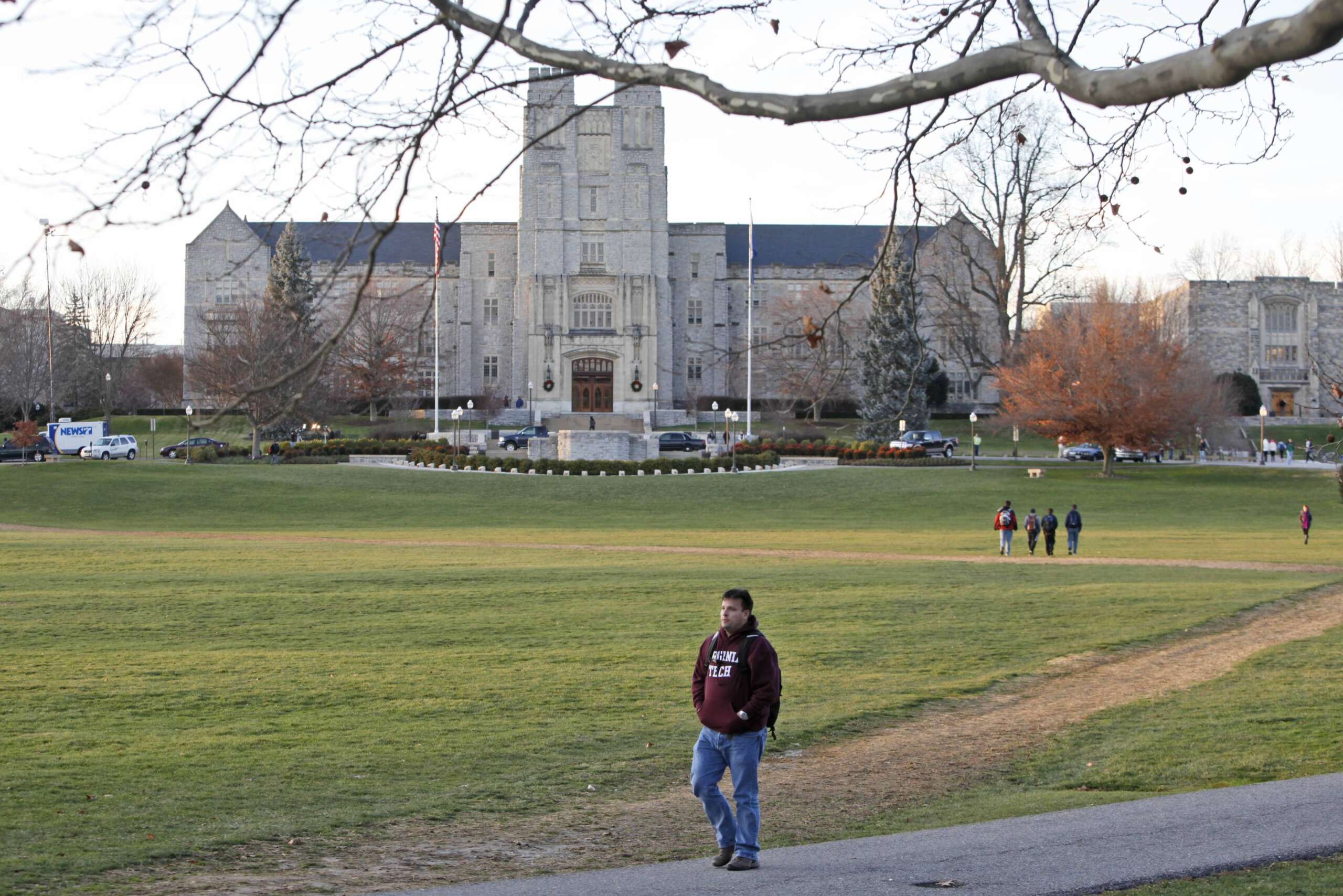
Terry Garton Virginia Tech just launched a generative AI training program. Please give us an overview of the program and why you decided to start it now.
jamie cogbill Okay, great. This partnership between Virginia Tech and Amazon Web Services is actually aimed at preparing the next generation of national security leaders for an AI-driven world. As one of six senior military universities in the country, Virginia Tech had the opportunity to pilot AWS’s new generative AI training. This is the first of its kind and is being done before it is rolled out across the country, or at least to other senior military colleges. This directly supports the White House’s recent call to make the Senior Military University a hub for AI research and talent development. And our cadets are already finding this training invaluable as they prepare to lead in a defense environment that is rapidly being transformed by artificial intelligence.
Terry Garton There are many AI courses. What makes this collaboration unique? What makes it unique in terms of content, focus, and tools?
jamie cogbill Understood. This is the first generative AI training program of its kind to be offered specifically at a senior military university. It also directly supports the recent White House AI Action Plan announced last July. The plan calls for senior military universities to become hubs for AI talent and innovation. And our cadets receive hands-on experience with the same AI tools and problem-solving approaches used in real-life defense and intelligence missions.
Terry Garton You’ve mentioned cadets several times here. For those who don’t know that Virginia Tech has a cadet corps, tell us a little bit about it and tell us how many cadets actually take this course.
jamie cogbill Understood. Yes, Virginia Tech is, as I mentioned, one of the six senior military universities, which means it has a corps of cadets, just like Virginia Military Academy, The Citadel, or its closest comparison, Texas A&M. There are currently nearly 1,400 cadets in Virginia Tech’s Corps of Cadets. However, this first pilot was intended to involve a total of approximately 75 students, at least half of whom would be cadets. And in this case it was. A total of approximately 38 cadets participated in the program.
Terry Garton So who filled the other seats?
jamie cogbill Most of the other seats were filled by people affiliated with Virginia Tech’s National Security Institute. The Institute is not only a hub for defense-related research, but also a hub for training future national security leaders right here at Virginia Tech. The ad went out to both cadets and students at Virginia Tech’s National Security Institute.
Terry Garton It seems like there was no problem filling seats. What do you see about future military and civilian defense leaders’ interest in this topic?
jamie cogbill There was certainly a lot of interest, and the cadets I spoke to after the training found it extremely valuable, not just learning about AI in general, knowing that it will be an important part of their future careers, but also learning how to use it more effectively through effective prompt engineering and other techniques they learned throughout the training.
Terry Garton Please tell us about the specific defensive AI applications covered in this course. Chat We’re all thinking about GPT and Copilot, but how are these topics being addressed, especially in defense-related issues?
jamie cogbill That’s a great question. I don’t know the exact answer to that, but I can tell you that the Department of Defense is teaching a core Amazon Gen AI service called Amazon Bedrock that partners with Amazon Web Services in a number of ways. As such, you may already be using some of these AWS services. As such, some of those attending the training are likely to go on to careers in defense or national security, and are expected to already use or quickly learn to use AWS software and AI tools. However, I think the big gain is learning about AI in general. This is clearly going to be part of the future in national security and defense.
Terry Garton I’m talking to Jamie Cogbill. He is deputy director of the Defense Civilian Training Corps at Virginia Tech’s National Security Institute. With this program and all of its various applications, we talk a lot about AI. One thing we know about this is that it’s powerful, but it’s also dangerous. So how does this type of training prepare students to not only use tools, but actually teach AI responsibly, when the stakes can be quite high?
jamie cogbill I don’t know the details of how this training addressed that type of risk. I have never taken the course myself. Amazon Web Services provided it. When I talked to the candidates, I think it was a fairly intensive curriculum. There were two different instructor-led sessions, both 4-hour sessions, with each session approximately 3 hours of content and 1 hour of lab. And in the end, we ended up with a competitive gamified lab. An additional four-hour session practiced real-world challenges and how to use AI. So I think part of the training in the instructor-led portion was around the risks of using AI, how to avoid the illusions that AI brings. And also, at the Department of Defense, it’s important to ensure the responsible use of AI, known as RAI. And I think that was included in the curriculum as well.
Terry Garton This is Cohort 1, which will be rolling out courses for the first time this fall. What do you think will happen next? Where do we go from here?
jamie cogbill So we’d like to see that, and that’s partly up to Amazon Web Services, but AWS is actively looking at ways to expand the program for the spring semester here at Virginia Tech, potentially starting again in the spring, but also generally in 2026. AWS originally planned to expand this training to all six senior military colleges across the country. And I think the success with the pilots here at Virginia Tech has proven that our cadets, and probably other cadets across the country, are eager to learn and ready to lead in the AI field. And we hope this can set the standard for what other programs are like.
Terry Garton Well, pilots always teach you a lot of lessons along the way. What did Virginia Tech and Amazon learn from trying out the program in terms of how it should be improved or expanded?
jamie cogbill Well, as you said earlier, I think there is a demand for it. So we’re hoping to expand that here at Virginia Tech and offer it beyond our 75 cadets and students. But I think the big lesson is that partnerships like this are really essential. And AI is changing the nature of national security. And we need to ensure that future military and civilian leaders can lead with confidence in that environment. And I think this program shows how academia, industry and government can work together to make that happen.
Terry Garton AI is a very rapidly changing space. How do you feel about curriculum needing to be adjusted even every semester to stay current?
jamie cogbill absolutely. And I believe that the people at AWS are right in the middle of that change. And my guess is that they’re constantly updating their curriculum to keep pace with that.
Terry Garton Are you hearing from senior leadership at the Department of Defense about how they view this program and what their expectations are for this program?
jamie cogbill For now, no, not directly. My guess is that at the senior level at AWS, they’re talking to senior leadership at the Department of Defense, and potentially the most senior levels of government, since providing this type of training was a key goal of the White House AI Action Plan.
Copyright © 2025 Federal News Network. Unauthorized reproduction is prohibited. This website is not directed to users within the European Economic Area.


