Are we in the middle of an AI bubble? Asking your legislators probably won’t give you a final opinion.
“If I had known that, I would have gone into a different field,” Democratic Rep. Ro Khanna, who represents much of Silicon Valley, told Business Insider.
Debate over the AI bubble has raged in the tech industry since August, when OpenAI CEO Sam Altman said investors were “overly excited” about the technology.
There are also concerns about the cyclical spending patterns of tech companies investing in AI technology, and concerns that companies will not be able to recoup the billions of dollars they spend on data centers and other AI infrastructure. Bill Gates explicitly compared it to the dot-com bubble of the late 1990s.
However, many in the tech industry remain convinced that there is no bubble, citing continued high demand for AI products.
“Are we in an AI bubble? I don’t know,” Democratic Sen. Brian Schatz of Hawaii told Business Insider. Even the AI people don’t know.
Democratic Sen. Elizabeth Warren of Massachusetts said she wasn’t sure if there was a bubble, but was concerned about “how much of the stock market and economic activity across the country is driven by this sector.”
“If it’s overvalued, when the bubble bursts, you’re going to be affected everywhere,” Warren said. “Concentration makes the economy much more vulnerable than it would otherwise be.”
One of the few lawmakers to speak out about the possibility of a bubble is Democratic Representative Alexandria Ocasio-Cortez of New York, who said in a hearing last week that we may now be in a “massive economic bubble” that could pose a “2008-style threat to economic stability.”
Ocasio-Cortez added: “If this bubble bursts, we shouldn’t be bailing out.”
The debate is gradually trickling down to Capitol Hill, as the Trump administration and some congressional Republicans pursue ways to make it easier for the AI industry to do business.
President Donald Trump has largely dodged questions about whether he’s worried about bubbles.
“I think so. I’m worried about everything,” Trump said in an interview on CBS’ “60 Minutes” earlier this month. “I hope it’s very good. But even if it’s not that good, we’re protected.”
President Trump has begun to argue for the need to limit states’ ability to regulate AI, reviving a battle waged over the summer when Congress considered the “Big, Beautiful Bill.”
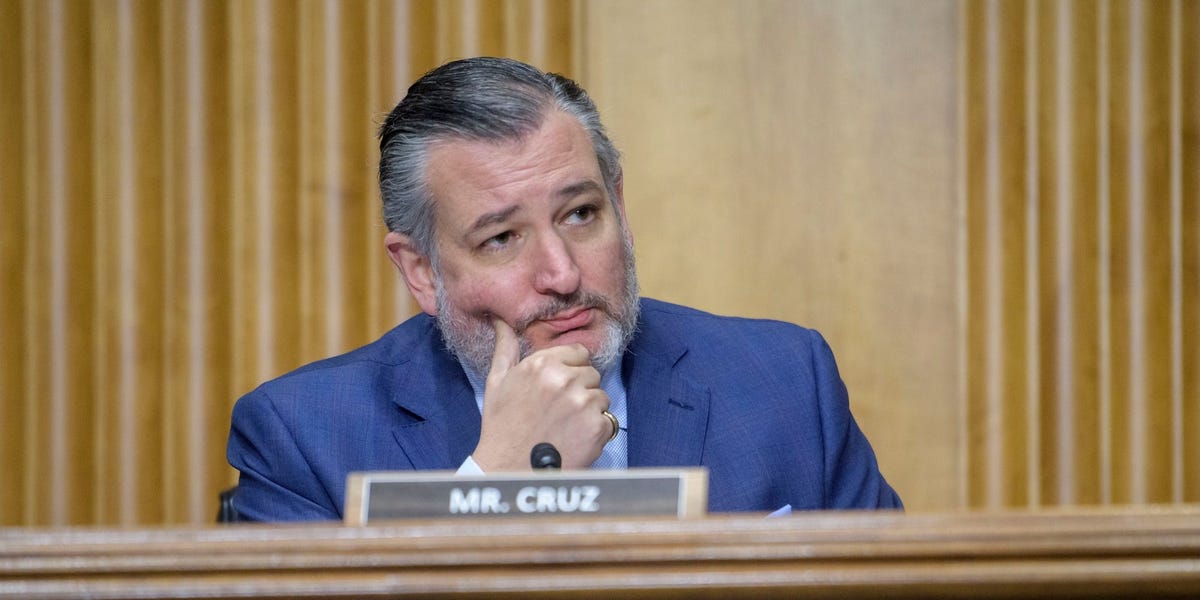
The bill originally included a provision that would prevent states from enacting some AI regulations for 10 years. This was strongly supported by Sen. Ted Cruz of Texas, chairman of the Senate Commerce Committee, who has positioned himself as an ally of the AI industry on Capitol Hill. It was later removed from the mega-bill by a vote of 99-1.
Asked last week if he thought there would be a bubble in the AI industry, Mr. Cruz was cautious.
“Is there uncertainty? Are there economic challenges? Absolutely,” Cruz told Business Insider. “But when it comes to technology on this scale, it is in our interest for America to win the competition, not China.”
Ocasio-Cortez argued that there is a connection between potential bubbles and financial incentives that make AI technology more exploitative.
“People’s deepest fears, secrets, emotional content, and relationships can all be mined for the sake of empty promises from these companies to make a profit,” Ocasio-Cortez said at the hearing.
But for some who want tighter regulation of AI, the bubble issue is largely beside the point.
“Bubble, bubble, whatever,” said Missouri Sen. Josh Hawley. “We need to focus on the impact on working people.”