
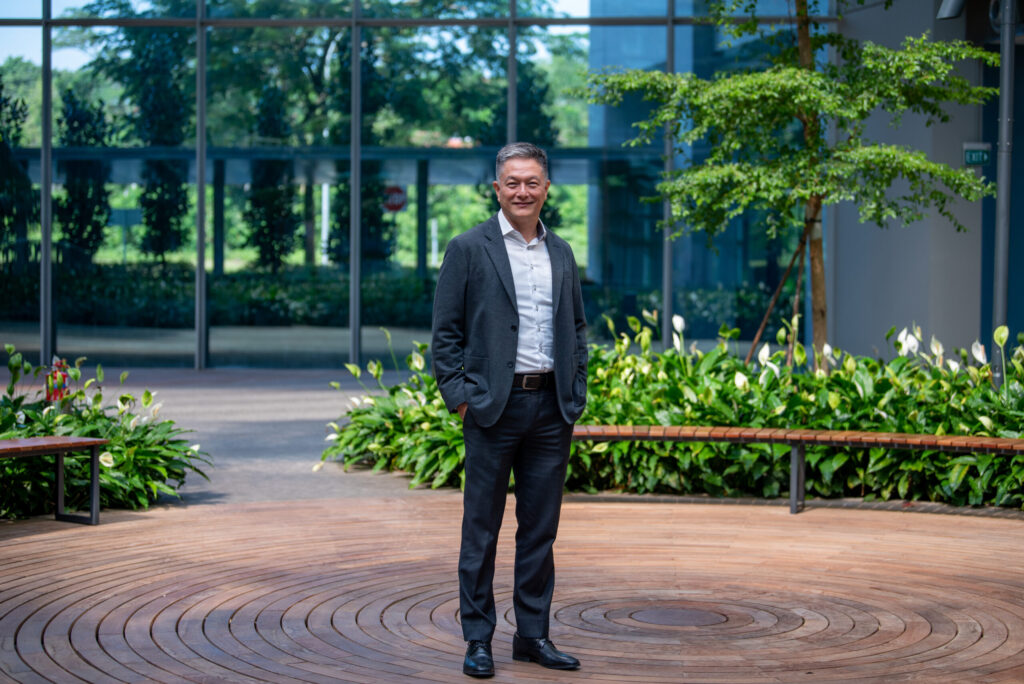
“Future talent needs to be trained within the systems they will ultimately operate, rather than learning from afar.” – Alfred Fox, Chief Integrated Solutions Officer, SJ
Automation, AI, and real-time digital systems are rapidly advancing from pilot projects to daily operations across Asia. What was once experimental technology has become standard infrastructure at airports, hospitals, logistics hubs, data centers, and corporate campuses. The patrol accuracy of security robots is increasing. Digital twin platforms monitor building operations, energy efficiency, and asset health. AI manages work orders and detects anomalies before they become problems. Cloud-based orchestration tools coordinate tasks that used to be handled by junior employees.
These advances are fundamental changes that will change the way organizations function and develop their people. These aren’t just technology upgrades. Many industries are still adjusting to the impact.
For business leaders, the economic factors are clear. Increasing cost pressures, talent shortages, demands for sustainability and service level expectations are all increasing at the same time. Agentic AI, data intelligence, and sustainability technologies are essential to compete, comply, and perform. In the built environment sector, construction costs in Singapore are expected to increase by 5-10% this year. Maintenance costs are expected to increase by 15-20% by 2028 due to labor, M&E, and utility costs.
But as organizations accelerate digital-first business transformation and operations, an unintended challenge has emerged: the gradual erosion of entry-level pathways.
The first run that disappeared
Historically, early career roles such as facility operations, logistics coordination, customer service, financial processing, and technical support have provided mandatory on-the-job learning. They helped develop judgment, situational awareness, and professional foundations for future supervisors, professionals, and managers. Many of these tasks are now performed by automated systems or AI-enabled tools. Efficiency gains are real and necessary. But as technology takes over the “learning work” that once built competency, organizations risk weakening the talent engine needed for long-term competitiveness.
This challenge is rarely discussed because the impact is not immediate. The productivity benefits are immediate. Capability gaps emerge later. But without intentional intervention, organizations may find themselves asking themselves in three to five years, “Where are the next generation of operational and digital leaders?”
The priority for boards and executives is not just deploying automation, but empowering employees to use it to operate, interpret, and innovate. This requires a balance between efficiency and continuous capacity development.
Automation does not replace the need for human capabilities, but redefines them. New employees will need to confidently interact with AI and digital platforms, interpret real-time operational and sustainability data, understand system-level interactions rather than isolated tasks, apply judgment in complex real-world environments, and support the organization’s transition towards net-zero and resilient operations.
These abilities cannot be cultivated through theory alone. These are acquired through structured learning and practical experience.
To address this new gap, organizations and educational institutions are rethinking how young talent learns. SJ and Temasek Polytechnic recently signed an agreement to promote the application of sustainability technologies in practice. Under the newly formalized collaboration, students will interact directly with real-time digital platforms, sustainability technologies, and AI-enabled campus systems. This includes digital twins, carbon accounting dashboards, smart automation tools, and a unified command environment.
Read more: Why you can’t leave reinventing your career to chance
Future talent will need to be trained within the systems they will ultimately operate, rather than learning from a distance. The goal is to build confidence, data literacy, operational understanding, and sustainability skills before you join the company, not after. Although this example is from the built environment and campus operations departments, the principles apply to many different fields. Financial institutions, logistics providers, health systems, and manufacturers will all need similar models to ensure their talent is ready for digital and climate-smart operations.
Business leaders face strategic choices. Automation and AI can streamline current operations, but they cannot automate functions. Developing a future-ready workforce requires intentional design and investment, especially at the entry level. This does not mean reinstating traditional roles or slowing down innovation. That means redesigning your first job for a new era. Entry roles should be rooted in digital systems rather than manual processes. Students need early exposure to real-time operational data and decision-making, and structured learning needs to be incorporated into transformation programs.
Collaboration between industry and academic institutions is critical to ensuring that the workforce of the future is built by organizations that align their automation and talent strategies, ensuring that early career professionals are not pushed out of learning but redeployed to alternative ways of learning. Organizations that do this well will secure a long-term advantage. In other words, a pipeline of adaptive, digitally fluent, and sustainability-minded leaders who are ready to drive change, rather than react to it.
Automation will continue to advance. AI will become central to business performance. Demands for sustainability will become even stronger. Organizations that succeed in that environment do more than just implement technology effectively. They also intentionally cultivate talent.
About the author: Alfred Fox is Chief Executive Officer of Integrated Solutions at SJ.


