of Taragrand convolution predictionThis problem, which has puzzled the mathematical community for more than 30 years, was solved by a Chinese mathematician born in the 1990s.
Yuansi Chen from the Swiss Federal Institute of Technology in Zurich published his latest research on arXiv.
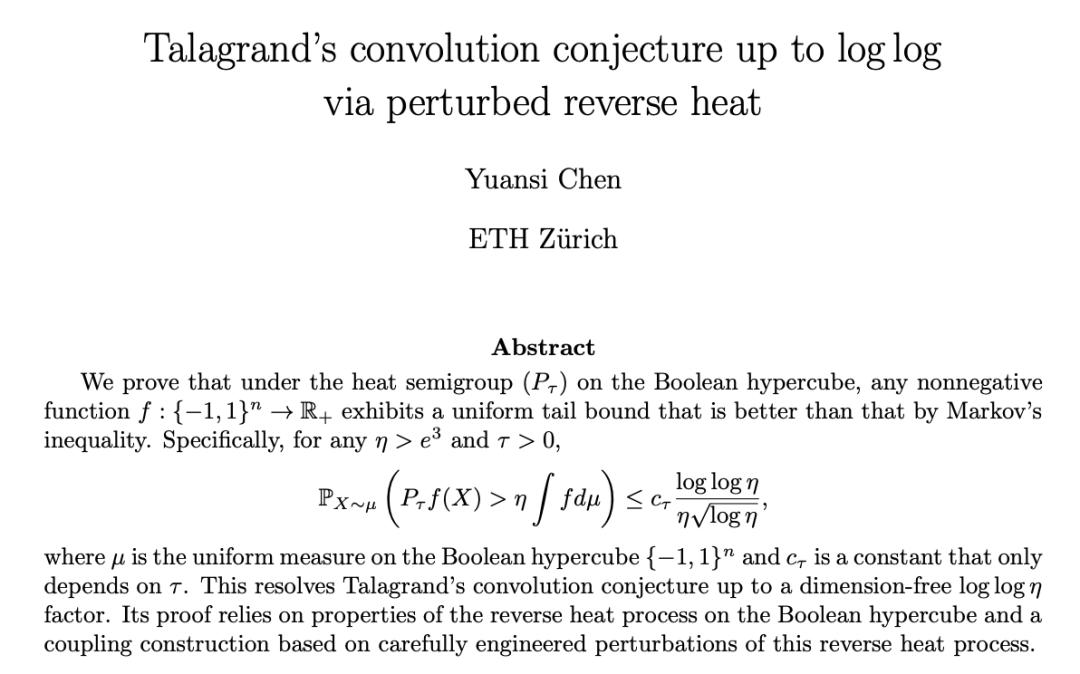
This paper proves Taragrand’s convolution conjecture for Boolean hypercubes, and the results are accurate up to a log-log η factor.

This result attracted a lot of attention. Briefly, this provides the following mathematical argument. Understanding smoothing in high-dimensional discrete spaces.
Additionally, this research is closely related to machine learning.
This theoretically supports the concept of regularization in machine learning.
Provides direct mathematical tools and physical intuition for developing generative AI models for processing discrete data.
Solving a 30-year-old mathematical problem
Taragrand’s convolution conjecture was proposed in 1989 by Michel Taragrand, winner of the Abel Prize, known as the “Nobel Prize of Mathematics.”
Let’s first understand two concepts. One is “heat smoothing.”
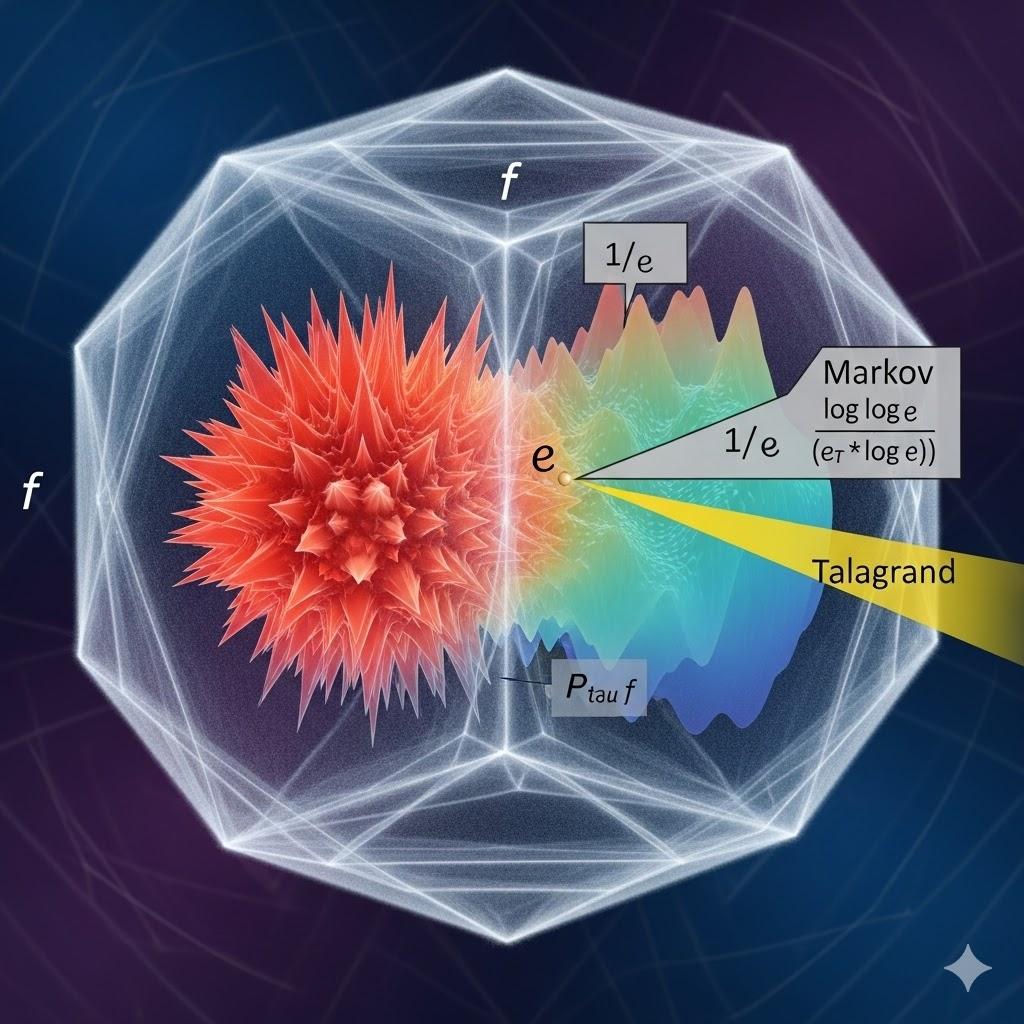
Imagine a very high-dimensional space where each square has an alternative state, like a giant multidimensional chessboard. I have a very “sharp” function, with very large values in some places and very small values in others.
The mathematical operations of “convolution” or “thermal semigroup” are like “heating” this function, allowing the heat to spread out and the higher values to flow into surrounding regions of lower values. As a result, the function is smooth and the peaks are flattened.
The second is the Markov inequality.
The Markov inequality states that the probability that a nonnegative random variable takes on a very large value is very small. For example, if the mean value is 1, the probability that the value is greater than 100 (η) is at most 1% (or 1/η).
Taragrand’s conjecture is that after performing a “heat smoothing” (convolution) operation on a function in a probability space such as Gaussian space or a Boolean hypercube, the probability that this function takes on very large values should be much lower than the probability predicted by the Markov inequality.
He believes that this probability is not only controlled by 1/η, but also needs to be divided by a relevant factor.
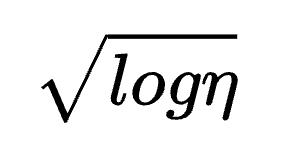
In other words, Taragrand’s convolution conjecture states that the probability of extreme outliers in the smoothed data is a certain magnitude lower than that predicted by the general theory.
△
Previously, the Gaussian form (continuous space) of this conjecture was worked out by mathematicians. However, extending this to discrete spaces like Boolean hypercubes remains a major challenge.
Gaussian-form solutions are based on the smoothness and completeness of the tools provided by calculus and stochastic differential equations in continuous space. These properties cannot be directly transferred to discrete space.
Here is Yuansi Chen’s solution for this: Utilizing a framework of stochastic analysis in Gaussian space, we use the properties of inverse thermal processes to design perturbations that adapt to the discrete properties of a Boolean hypercube..
Specifically, the new coupling structure uses perturbations along stochastic processes. The perturbation term δ is not constant but depends on the state and coordinates.
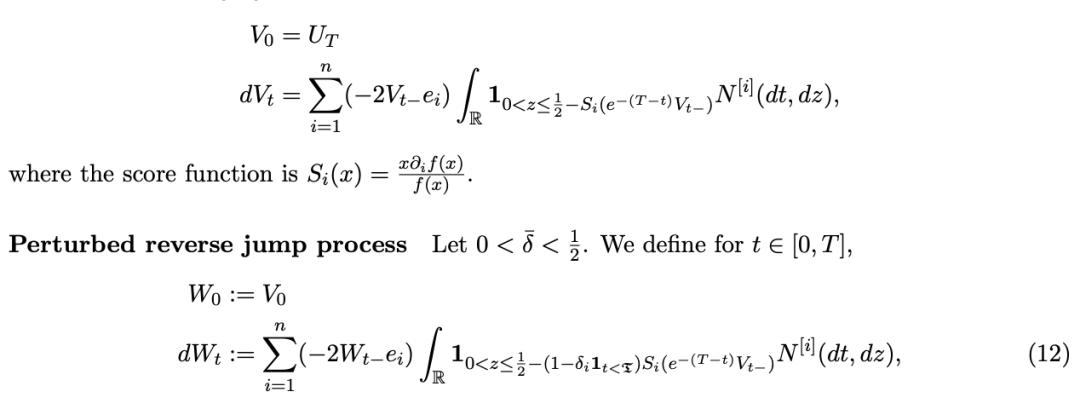
This paper ultimately proves that:

This shows that the core idea of Taragrand’s convolution conjecture is correct.
This result solves the original conjecture with an accuracy that differs by a log-log η factor. Because log log η increases extremely slowly, we believe that Taragrand’s convolution conjecture is almost completely solved.
It is worth noting that although this paper is a purely mathematical study of probability theory, its results have direct relevance to machine learning and even generative AI technologies.
First, the “inverse thermal process” used in the paper is equivalent to the diffusion model on a Boole hypercube, and the two are very similar.
This means that this study may be useful for understanding or developing diffusion generative models for discrete data.
Second, the core of Taragrand’s convolution conjecture is quantifying the regularization effect introduced by the convolution operation. In machine learning, regularization is an important means to prevent model overfitting and improve generalization ability.
This result provides theoretical support for why smoothing or adding noise makes models more stable in complex, high-dimensional spaces.
Furthermore, in machine learning, much data is discrete and high-dimensional in nature. This research helps us understand the geometric properties of high-dimensional discrete spaces and helps us develop learning theories for binary data and logical functions.
Chinese mathematician born in the 1990s
The author of this paper, Mr. Chen Yuanshi, was born in July 1990 in Ningbo City, Zhejiang Province.
His main research areas include statistical machine learning, Markov chain Monte Carlo methods, applied probability, and high-dimensional geometry.

In 2019, he graduated from the University of California, Berkeley with a Ph.D. under the guidance of Chinese statistician Bin Yu.
After two years of postdoctoral research at the Swiss Federal Institute of Technology in Zurich, he joined Duke University as an assistant professor in the Department of Statistical Sciences from 2021 to 2024. In early 2024, I transferred to the Swiss Federal Institute of Technology in Zurich as an Associate Professor.
According to Google Scholar, his paper has been cited 1623 times and has an h-index of 13.
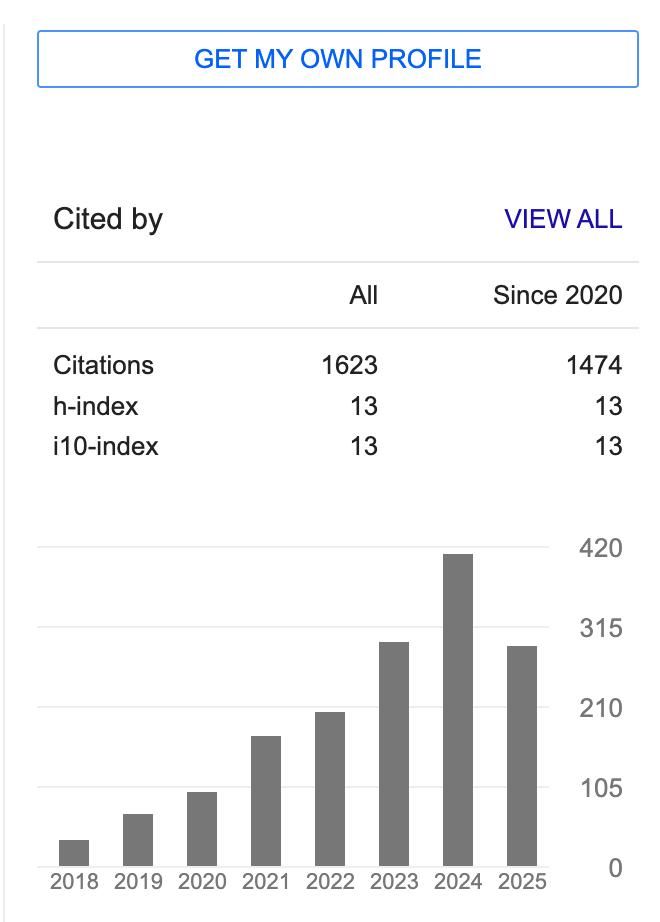
He is also the recipient of a 2023 Sloan Research Fellowship.
Previously, his work on the KLS conjecture also attracted a lot of attention. A Chinese statistics doctoral student has solved the “apple cutting” problem that has puzzled mathematicians for 25 years.
Paper link: https://arxiv.org/abs/2511.19374
This article is from the WeChat public account “QbitAI”. The authors focus on cutting-edge technology. 36Kr is authorized for publication.