
The University of São Paulo (USP) is partnering with Google to create the Responsible AI Chair to advance research in artificial intelligence. The official launch will take place at a public event on December 2nd. It will be chaired by Professor Carlos America Pacheco, who for nine years served as president of the São Paulo Research Foundation (Fapesp). cathedra. He resigned from the foundation in August. courage It will be headed by the paper’s editor-in-chief, Maria Fernanda Delmas, who will serve on the chairman’s advisory board.
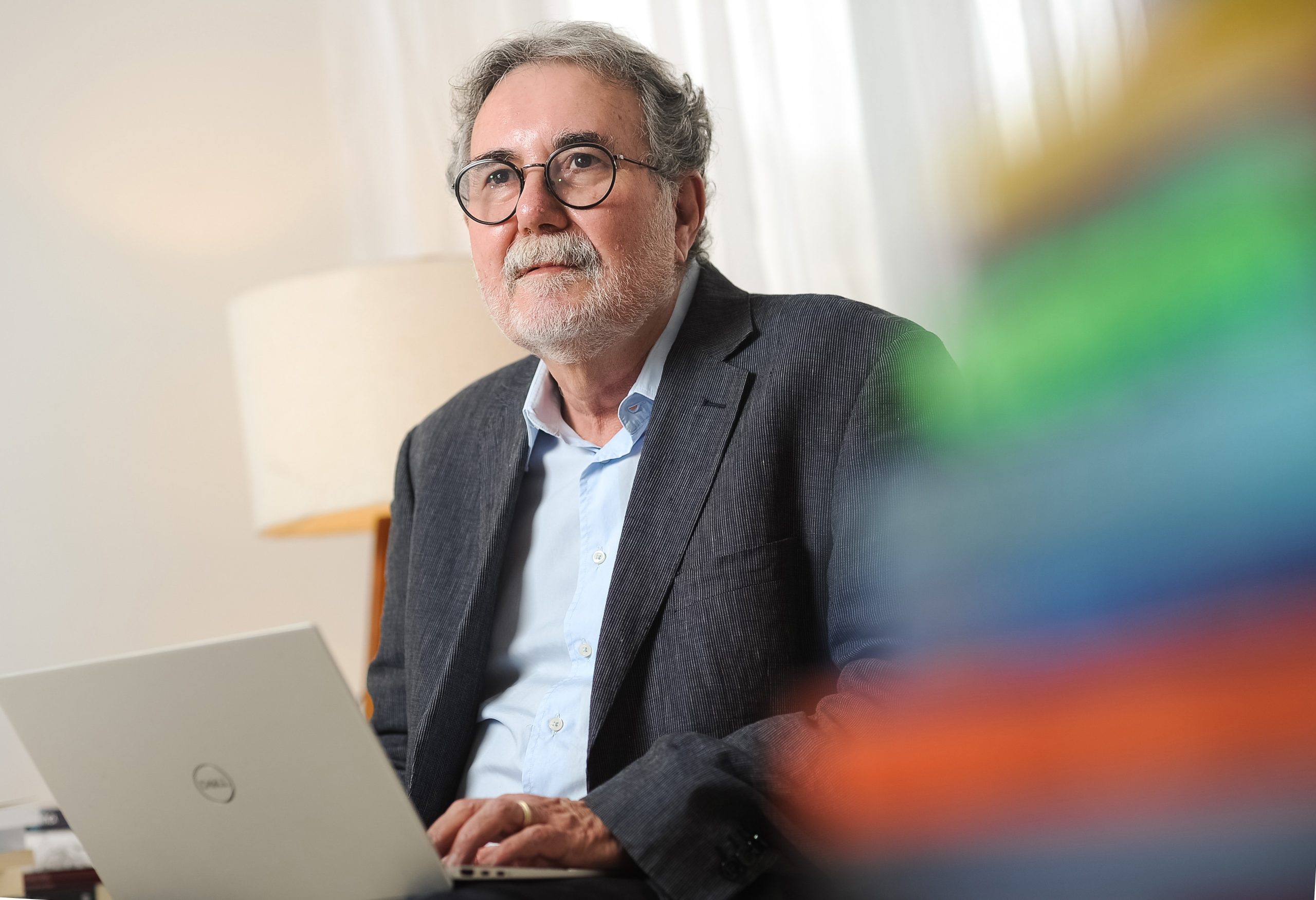
“USP has always been in line with major trends in knowledge generation, and currently artificial intelligence is having an overwhelming impact on society. AI is transforming economics, earth sciences, geopolitics and many other fields. Countries that do not pay attention to this will face serious difficulties in the future,” says Glauko Arbix, Coordinator of the Institute for Advanced Study (IEA) Innovation Observatory and Professor of Sociology at USP.
/i.s3.glbimg.com/v1/AUTH_37554604729d4b2f9f3eb9ad8a691345/internal_photos/bs/2025/U/o/DFX1ABTxyzAjBl8FX7zw/glauco-arbix-gabriel-reis-valor.jpg)
words cathedra It is of Latin origin and literally means “chair.” In Catholic tradition, it refers to the special seat occupied by a bishop in a cathedral. In academia, this has historically referred to fields of research led by experienced and well-known professors. The professor, in the distant past, sat on a high seat as a symbol of mastery in education.
In Brazil, the traditional concept of chairperson and the role of catedratico was abolished in 1968 and replaced by a departmental system. “The IEA-sponsored Chairs serve as a support structure for professors, visiting scholars, and guest lecturers in initiatives co-supervised by USP and national, international, or multinational institutions. Their goals go beyond the responsibilities of existing groups, programs, and projects,” explains Arbix, who is also the Responsible AI Chair Coordinator. “This is a resource to expand university partnerships, foster discussion, and foster research and interdisciplinary collaboration.”
The new chair will operate flexibly and organize a variety of activities, including seminars, workshops, studies, research activities and surveys, Pacheco said. One of its purposes is to participate in public policy debates. “It’s an all-encompassing concept that ties together social gatherings, events, and more.”
“for couragethis is a great opportunity to closely follow discussions and new research on topics that we cover with great care. As a vehicle that gathers insights from a wide range of sources to provide our audience with a variety of perspectives on AI, we also hope to contribute meaningfully to the Board’s discussions,” said Delmas.
/i.s3.glbimg.com/v1/AUTH_37554604729d4b2f9f3eb9ad8a691345/internal_photos/bs/2025/w/X/BugvXaSnGAppAYrGy92g/alex-freire-divulgacao.jpg)
Talks between USP and Google began in 2023 after executive Prabhakar Raghavan, currently Google’s chief technology officer and then senior vice president of search engineering, visited Brazil to speak at the IEA. “This is a strategic partnership that aims to expand research on responsible AI and spread the concept across civil society,” said Alex Freire, Google Engineering Director in Brazil. He noted that overseas, Google maintains similar chairs at leading universities, including a chair dedicated to AI and machine learning at the University of Waterloo in Canada.
In Brazil, one of the core objectives of the Chair will be to help build a professional workforce. According to the Brazilian Institute of Geography and Statistics (IBGE), between 2022 and 2024, the number of companies that integrated AI into their processes increased by 163.2% in absolute terms. The study focuses on the industrial sector. Of the 10,000 companies interviewed, 41.9% reported using AI. This is a 25% increase in two years.
The demand for talent has skyrocketed, far exceeding the available supply. According to Bain & Company research, the demand for qualified AI professionals has increased by 21% annually since 2019. Another study by a consultancy firm found that 39% of executives see a lack of internal expertise as a major barrier to expanding the use of AI within their organizations.
“Training your workforce may sound simple, but we must remember that we are talking about highly qualified personnel,” says Pacheco. In addition to alleviating the shortage of skilled professionals, training must align with responsible AI principles such as privacy, safety, sustainability, and protection against bias in AI models.
Regulation is also an important area. Although Pacheco has a degree in electrical engineering, his career developed primarily in public policy. “It’s nice to call yourself a ‘policy maker,’ but the problem is the bureaucracy that comes with it,” he jokes. Beyond major institutions such as Fapesp, the National Center for Energy and Materials Research (CNPEM), and the Institute of Aeronautical Technology (ITA), where he served as dean, Pacheco has taught for 37 years at the State University of Campinas (Unicamp). To be eligible for a professorship at USP, you must be a faculty member at another university.
Lawmakers around the world are debating how best to regulate artificial intelligence, with Europe emerging as the most influential bloc. Last year, the European Parliament approved an AI law that will be implemented in stages. The law establishes safeguards depending on the level of risk posed by AI systems. Among those deemed unacceptable include subliminal manipulation of vulnerable groups and biometric surveillance in public places not carried out for security purposes or by law enforcement agencies. The use of AI in sensitive areas such as healthcare and education is also subject to strict regulations.
One of the main concerns for governments and civil society is transparency regarding the data used to train AI models. There is growing pressure for clear rules on how users’ personal information is collected, processed and stored. Algorithmic bias is also an important issue. Depending on how systems are trained, they can reproduce biases and inequalities that directly impact people’s lives, from employment decisions to assessing criminal liability. There is also a major debate underway about copyright and how creators should be compensated for content used to train AI systems.
The main regulatory proposal in Brazil is Bill 21/2020, which establishes a legal framework for AI, and is currently being debated in Congress. The bill, authored by Congressman Eduard Bismarck, outlines general principles but does not specify how AI should be applied in areas such as education and health. Overall, we aim to foster innovation while ensuring safety measures.
The bill states that AI must not be used to suppress fundamental rights or undermine democratic institutions, must be understandable to those affected by its use, avoid discriminatory bias, and allow human intervention in important decisions. It also covers definitions of responsibility and accountability. Programmers and companies must be able to assess the risks involved and demonstrate that they are following best practices.
One issue still being debated is whether Brazil should create a dedicated AI authority or decentralize oversight among existing regulatory bodies.
“Brazil is not far behind in regulating artificial intelligence. This discussion is a recent one globally,” Pacheco said. For him, the law needs to not only define rules for the use of AI, but also address another important aspect: stimulating the creation of startups.
One of the defining characteristics of artificial intelligence is its ability to enable other technologies across multiple sectors, which opens the door to many business opportunities, Arbix says. “This is a pervasive technology. In every field, you’re going to see AI to one degree or another.” As an example of this breadth, he points out: courage The Inovação Brasil Award is presented annually in partnership with PwC’s Strategy&. This year’s August edition recognized 150 of the country’s most innovative companies.
According to data from BigData Corp., the number of companies with direct references to AI in their names has increased by 857% over the past two years, with the number of business taxpayers (CNPJ) in 2023 and beyond increasing from 142 to 1,209. Currently, more than 2,000 Brazilian companies are officially involved in this field.
“LLM” [large language models] “AI agents and AI agents are two different things. LLM trains some of the world’s most widely known digital assistants, such as Google’s Gemini, Microsoft’s Copilot, and OpenAI’s ChatGPT. AI agents, on the other hand, are systems that analyze information and make autonomous decisions for specific tasks.”
LLM training is very expensive, labor intensive and time consuming. In contrast, agents can be created quickly, with minimal commands, and at low cost. Pacheco says cloud infrastructure can encourage young people in underserved areas to build agents to solve local problems without major investments. “But you have to get the kids interested.”
For Arbix, infrastructure is a key pillar of AI development, as is professional training. One of the major challenges is attracting data centers. As AI becomes more widespread, demand for such equipment is rapidly increasing, and competition for investment from major internet companies and companies that build and operate this type of infrastructure is intensifying.
According to the Data Center Map website, Brazil currently has 195 data centers, mainly specialized in cloud computing. The country ranks 12th in the world in terms of number of facilities. Although this is by far the strongest market in Latin America, it is still far from the leader. The United States ranks first with 4,204 data centers.
“Brazil is moving. It’s not standing still. We have reasonably clean and cheap energy and a positive outlook on artificial intelligence, which is helping us a lot,” Arbix said. “We are optimistic and very energized by the collaboration between USP and Google, and are confident that the results will be far greater than the sum of the individual efforts of both institutions.”


