

The introduction of various AI applications is reinvigorating large amounts of resources that were once considered “cold data” and gradually turning into “warm data” and even “hot data” with continued access, increasing the demand for SSD and DRAM products.
According to the latest data from the CFM flash memory market, channel market data as of 11 a.m. on November 25 shows that solid state drives (SSDs) have seen significant price increases over the past week. Specifically, the weekly price increase rate of SSD 240GB, SSD 120GB, and SSD 2TB reached 35.71%, 32.65%, and 30.43%, respectively, and the weekly price increase rate of other SSD products also exceeded 25%.
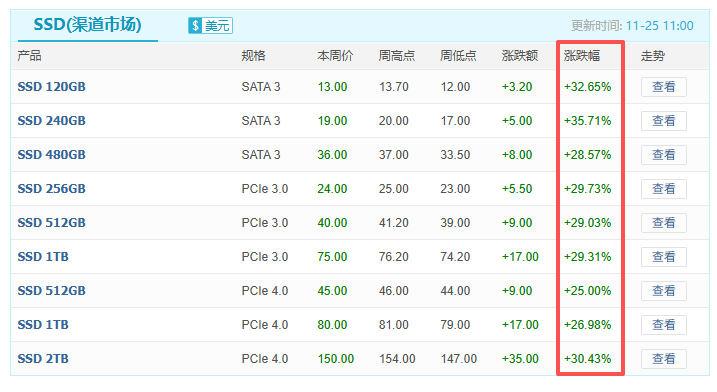
(Picture source: CFM Existence Market)
 This trend is being driven by the explosive growth of AI applications, which has led to exponential growth in data volumes and an associated surge in storage demand.
Taking Google, for example, which recently announced its next-generation large model Gemini, which surprised the world, Amin Vahdat, head of Google Cloud AI infrastructure, stated at a company-wide meeting on November 6th that “Competition in AI infrastructure is the most important and costly part of the overall AI competition.” “We need to provide 1,000 times more computing power, storage, and networking capabilities for the same cost and energy consumption,” he said.
In a research report titled “Detailed Analysis of the Storage Industry: New Cycles, New Opportunities,” Minsei Securities analyzed how the amount of data is rapidly increasing due to the development of AI-generated content. It noted that data capacity is showing a dramatic expansion trend as AI-generated content evolves from simple formats such as straightforward audio and images to more complex formats such as songs, videos, and even multilingual videos.
In 2005, data generation was less than 1 ZB. Entering the “mobile cloud era”, data generation increased to 72 ZB in 2020. And in the “AI era,” data generation is predicted to further increase to 394 ZB by 2028.
The agency noted that the release of advanced video-generating AI applications like Sora 2 further accelerated data growth, reflecting the close relationship between advances in AI technology and increased data scale.
Such large amounts of data naturally require a storage solution.
Typically, “cold data” that is accessed infrequently is stored primarily on the hard disk drive (HDD), “warm data” that is accessed moderately is stored primarily on both HDD and SSD, and “hot data” that is accessed frequently is stored primarily on SSD and DRAM.
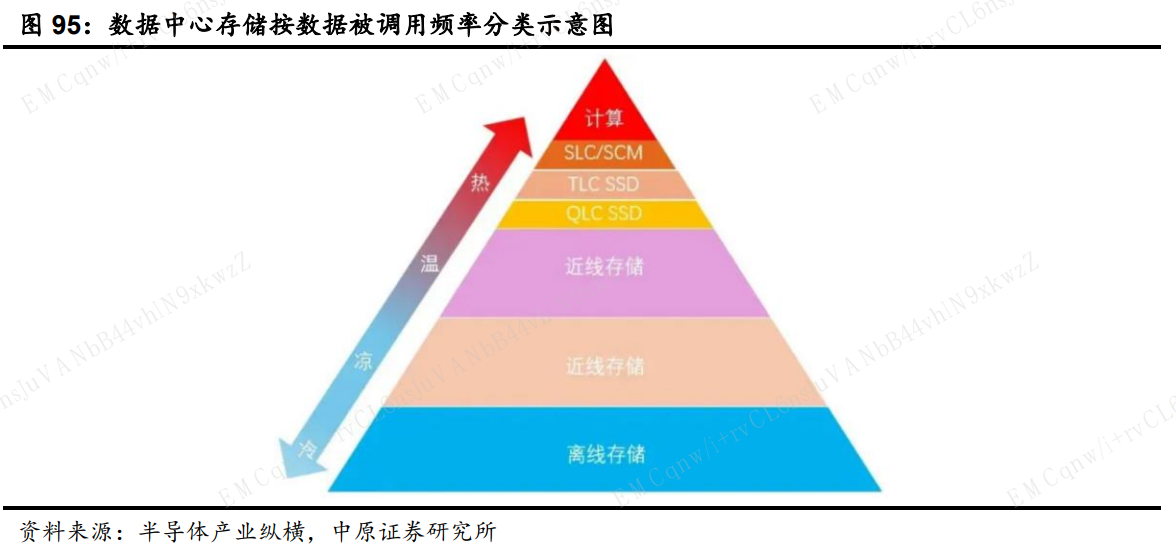
However, with the deployment of various AI applications, large amounts of resources that were once considered “cold data” are being reinvigorated, gradually turning into “warm data” and even “hot data” with continued access. This trend is increasing the demand for SSD and DRAM products.
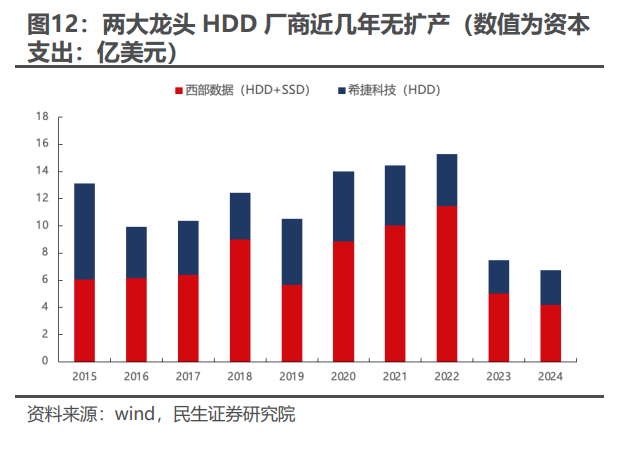
On the other hand, the world’s major HDD manufacturers have not planned to expand their production lines in recent years, and have not been able to quickly respond to the sudden and large-scale demand for storage that is rapidly increasing due to AI. TrendForce reports that lead times for nearline HDDs have skyrocketed from a few weeks to more than 52 weeks. North American cloud computing service providers, such as Microsoft, Google, and Amazon, are beginning to plan greater adoption of SSDs for warm data applications and are considering using SSDs for cold data as well.
Based on this, TrendForce predicts that high-capacity enterprise SSD shipments will explode by 2026 and may continue to increase in 2027.
Domestically, China’s enterprise SSD market size is expected to reach USD 9.1 billion by 2029, mainly driven by demand for storage expansion by AI workloads and return on investments in cloud data centers, according to IDC forecasts.


