Image by author
This article is intended for people who know nothing about MLOps or want to refresh their memory. You’ve probably heard about MLOps while scrolling through LinkedIn, reading blogs, and watching AI conferences.
let’s start.
MLOps stands for Machine Learning Operations, a combination of machine learning, DevOps, and data engineering. We will define each as the point of this article.
machine learning Allow models to use past experience to learn and improve by exploring data and identifying patterns with little or no human intervention.
DevOps It is a combination of developing and building good practices to improve the efficiency, speed, and security of software development.
data engineering We focus on designing and building pipelines that can transform data into formats and transfer them so that they can be accessed by other technical professionals such as data scientists and other end users.
These three are used together to deploy and maintain machine learning systems in a reliable and efficient manner.
Working with models can get messy. It can take a long time to execute and you may run into problems trying to reach out to other members of your team, which can lead to major communication issues.
Mirroring the Data Scientist
A data scientist may not work with other technical experts on the team. Their roles and responsibilities are different and they may not even need to communicate. However, as models are developed, collaboration with data scientists becomes essential. Data scientists are responsible for curating, cleaning, and gathering insights from datasets that are further used to build AI models.
collaboration
Bringing all the technical experts together in a team and collaborating on a project naturally increases model development. Faster deployment times, better model management, and validation. All this is due to the fact that various skills were put together.
Manage the ML lifecycle
With the right MLOps architecture in place, other experts on your team can track, version, reuse, and audit any aspect or asset of your machine learning model lifecycle. This not only increases reliability in an efficient manner, but also provides transferable knowledge that can be applied in the future.
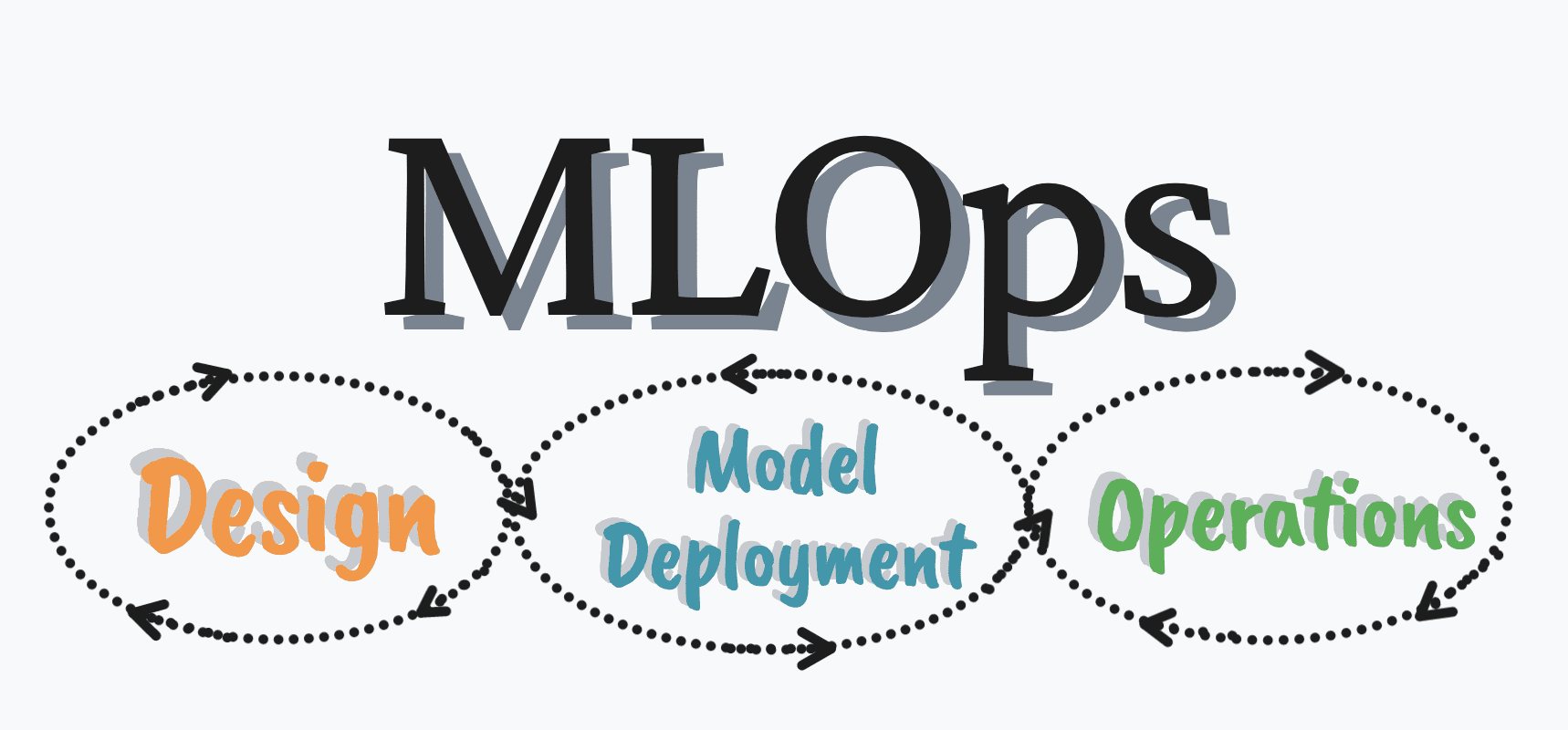
The MLOps process involves three broad phases:
- Designing applications powered by ML
- ML experimentation and development
- ML operations
Designing applications powered by ML
This phase is the beginning of all projects. It’s about understanding the problem at hand or the problem you’re trying to solve. During this phase, you’ll develop a deeper understanding of your business, then move on to understanding your data and deciding how to design your ML-powered application.
The main components of this phase of MLOps are:
- Data collection
- data analysis
- data preparation
- model development
- model training
During the model design phase, we review the available data, its limitations, and the capabilities of the ML model. They serve as building blocks to help you design the architecture of your ML application, ensuring that you’re one step closer to solving your problem.
ML experimentation and development
We then proceed to the next phase, which is purely focused on validating the effectiveness of ML applications. At this stage, we recommend applying a proof-of-concept of the ML model method. Proof-of-concept methods are used to assist the validation process by further examining scalability, technical capabilities, limitations, etc.
The main components of this phase of MLOps are:
- Model validation
- model offer
- model monitoring
- Model retraining
These components help identify which machine learning algorithm is the most suitable for the problem at hand. This is stable enough to run smoothly in production.
ML operations
The final phase is to deliver the machine learning model to production. To do this, she needs certain DevOps practices that need to be established.
The main components of this phase of MLOps are:
- test
- versioning
- monitoring
There are three levels at which MLOps can be implemented.
- manual process
- ML pipeline automation
- Automate your CI/CD pipeline
manual process
This process is entirely data scientist driven, so it is a manual process. If your model changes/trains infrequently, or if you’re just starting out with an ML implementation, this process is probably best for you.
Due to its manual nature, it is a highly experimental and iterative process. So all phases like data transformation, validation, model testing, training etc. are all done manually. The most common tool used in manual processes is Jupyter Notebook.
ML pipeline automation
This includes processes that do not require manual execution. The model should be trained automatically. During this process, when new data becomes available, the pipeline will recognize it and trigger a response to retrain the model. This is known as continuous training.
This process can be adopted by businesses that exist in a constantly changing environment and need to continuously address these metrics.
Automate your CI/CD pipeline
This stage provides the most performant, reliable, and fastest ML model deployment that requires a robust automated CI/CD system. With this CI/CD system in place, data scientists and other technical professionals can delve deeper into new ideas for feature engineering, model architecture, and hyperparameters.
The difference between this process and the previous process is that the data, machine learning model, and all its training pipeline components are automatically built, tested, and deployed.
This article has tried to help you understand the absolute basics of MLOps: what they are, why they are used, key concepts, and how they are implemented. I hope this was a nice and easy breakdown!
Nisha Aria Data scientist and freelance technical writer. She is particularly interested in providing her advice and tutorials on data science careers, and theory-based knowledge on data science. She also wants to explore different ways artificial intelligence can extend human lifespan. She is an avid learner looking to expand her technical knowledge and writing skills while helping guide others.