


Evgenii Mikhidenko
How to use AI to create videos in Pixel Gun Universe
When we first started using AI at Cubic Games, we were primarily focused on classic use cases. It speeds up game production, improves content output, and improves quality. But over time, we began to actively apply AI to marketing. Especially in creating videos that will help keep your audience interested, even if you're not ready to view gameplay yet. That's how the idea for a short “comic style” video came about. These don't divert your team from core development, but they can stay connected to the community.
Lie detector concept
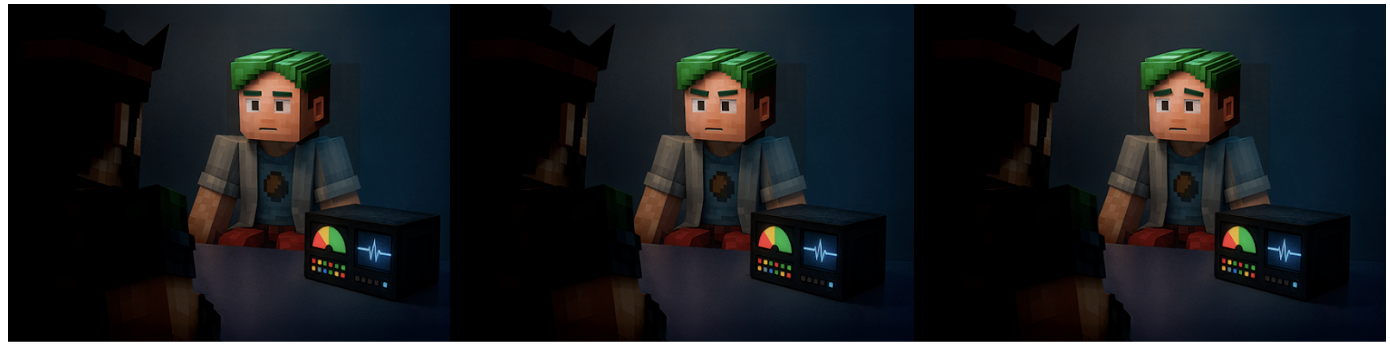
When we launched any of these videos, we deliberately chose not to link it directly to the Pixel Gun 3D. After all, the PG3D and Pixel Gun 2 are two different products. So we used a light, sarcasmy form. In a video featuring a lie detector, the game designer answers tricky questions and instantly reveals when the device is lying. This creates emotional engagement without affecting the PG3D brand and builds subtle excitement around the Pixel Gun 2. I just want it to be fun with destruction, perks and all the features I'm working on right now.
Embedding meaning in a video
We aim to communicate not only the atmosphere but also the values that are important to our community. For example, I would like to show that games are about game design rather than monetization or paid leave. Currently, Danya is working on scripts, and one idea is to show how to use AI as a team and how it can be useful in real-world tasks. I plan to create a dedicated video about this.
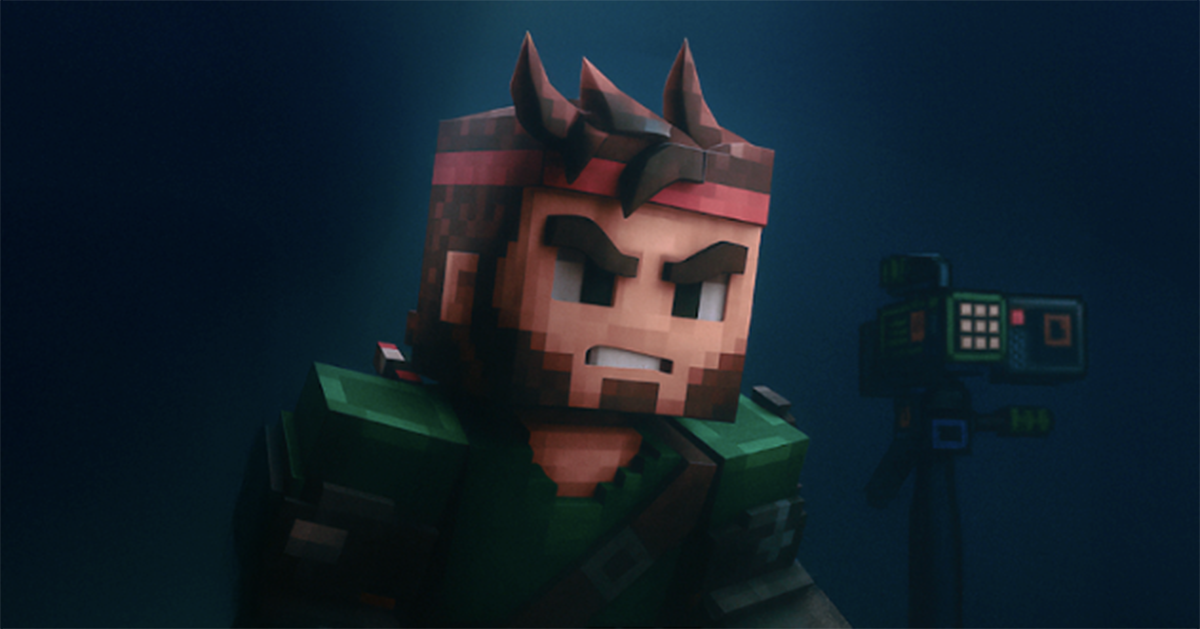
That's also why we launch several new social channels and clearly separate the two products into visual, stylist and tones. In fact, we are gradually shaping the entire series, like “The Office,” starring the character Pixelman. He exists in the studio, interacting with artists, developers and game designers, delivering meaningful messages through humor, light storytelling and character interaction. It's like storytelling about challenges and solutions, not directly, but through characters. Think of it like a “ninjago.” There are plots, obstacles, and conclusions. I think the short 30-40-second episode format fits perfectly with this.
How to create an actual video
The project was originally intended as a gift to the community, so we paid particular attention to quality. Our goal was to create videos entirely with AI, but there were no classic AI artifacts: blurred faces, broken hands, drifting eyes, etc. Ironically, this meant that compromises were accepted for speed, and that they would be fine-tuned manually over ad creatives or user-acquired videos, for example.
Around 70-80% of the video was generated by AI from image generation to animation, but as a rule, we completely ruled out hand-drawn animation and traditional 3D rendering.
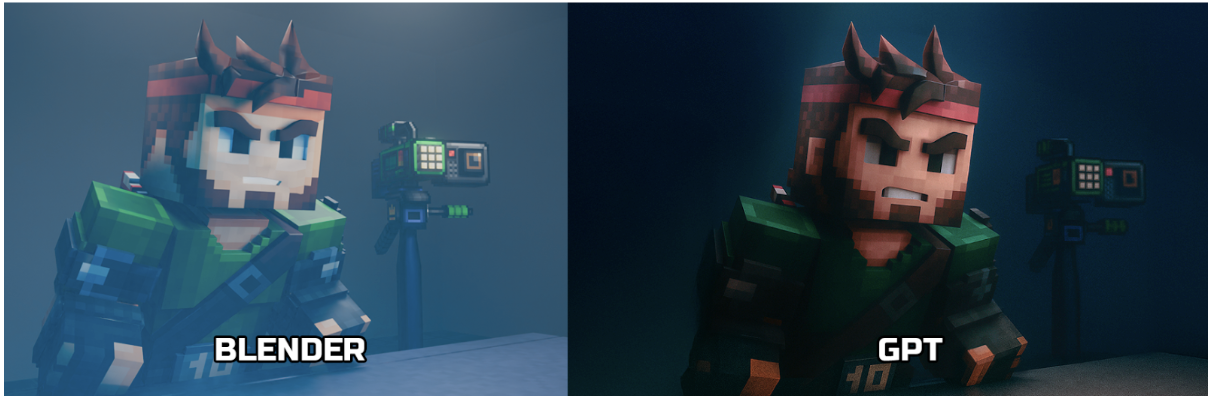
Manual tasks included preparing references, final editing, correcting artifacts, and inserting important elements such as lie detector screens. This hybrid approach allowed us to maintain visual consistency while flexibly repetitive.
Our pipeline
First, I exported the game assets and laid out the blender scene. This was the fastest way to replicate the required configuration and style. I then used GPT to generate keyframes. Usually I asked to enhance the rendering, give it a cinematic feel, save the details and set the desired lighting and mood. If the frame was successful, I saved it under the label “interview” and requested all subsequent frames in the same style.
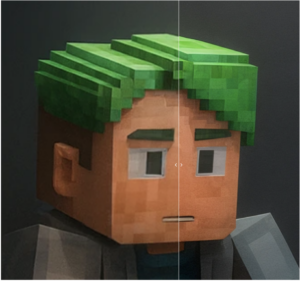
If there are artifacts or blurry, I ran them with Krea Enhancer. Expanded Photoshop background if aspect ratio changes. The animation was done via kling.ai. For example, it provides the style you need and fits the format. Veo 3, for example, tends to introduce artifacts and fight with consistency.
At Kling, I uploaded a short 5-second clip. It was easier to manage artifacts like that. The emotional expression worked best using visual references rather than text prompts.
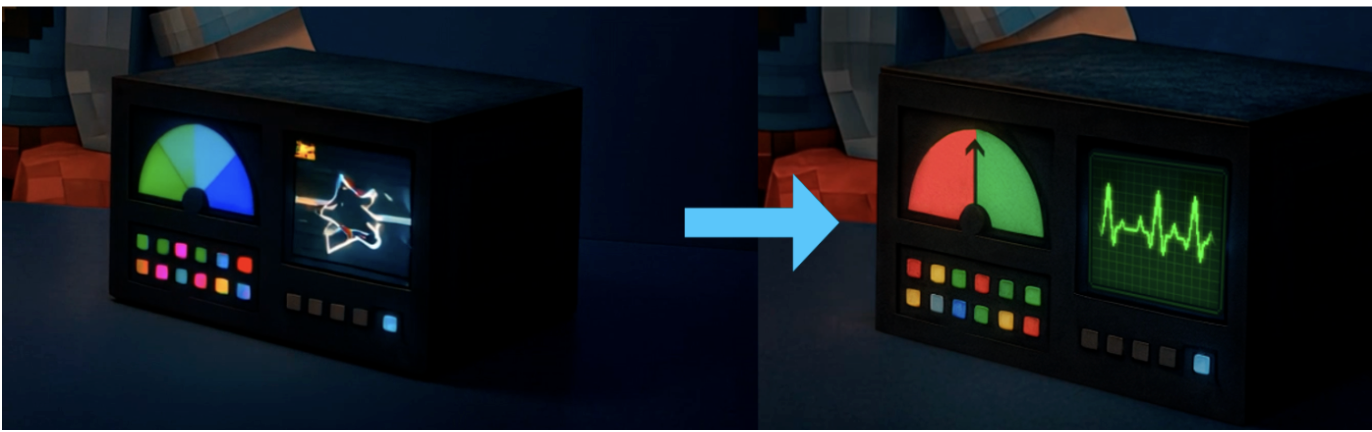
Voiceover was done via 11 Lab V2 and using voice marks and Reginalds. The lie detector scene was a challenge. Most of the time, I generated a bug. So me:
- I generated it individually with Kling,
- Create a loop animation and
- Insert it into the after effect,
- The screen has been polished (added pulses, movements, etc.)
What AI helped us achieve
After publishing, we tracked our first 24 hours of views and checked our activity on Discord, Instagram and other platforms. Interest had previously declined, but the video brought a surge. It almost matches the top post of engagement! So we definitely continue this approach.
Two types of content will be displayed.
- Focused on entertainment (if you don't have anything new to show, but you want to keep your interest).
- It focused on products (AI is not very useful – it doesn't run misleading ads and doesn't use only built-captured footage).
That said, AI speeds up scene composition, asset selection and static generation. This means it helps in preparation, but no final product is created.
Currently, AI is primarily used as an accelerator and optimizer. It used to take 10 hours. It currently takes 5 hours. It's not about exchanging people. This is how two people can make 20 videos instead of 15. Save resources by investing in licensing and experimentation.
What's next?
We continue to experiment with the tools, and in the next video we improved narration by combining human voice with AI enhancements. As with the broader goals of GDEV, our goal is to do faster, better, and bigger things. What reduces daily tasks – test.
We would like to develop the Pixel Gun 2 significantly. Even without the final gameplay, you can create excitement by telling the story through text, images and mascots. I hope to be able to reach the format of short animated episodes set in the Pixel Gun Universe. It covers both studios (through Pixelman, etc.) and in-game lore.
This allows you to talk to the community about the Pixel Gun 2 without violating the NDA or viewing raw content. Most importantly, it's not to hide the game, it's to communicate honestly with the players. everytime.


