Machine Learning Engineer: Machine learning engineering is a very exciting and impactful career path, offering opportunities to tackle challenging issues and create real-world value. This is an artificial intelligence-centric subfield in computer science. The fundamentals of machine learning are to create algorithms that can be analyzed and learned from data, and to simulate human learning processes to gradually improve accuracy. From face recognition on smartphones to advanced video surveillance systems, this technology is everywhere.
Beyond consumer-oriented technology, it is also a powerful tool for businesses seeking to understand consumer behavior. To provide highly focused advertising and personalized product recommendations, companies like Meta and Amazon use machine learning to look at customer data such as likes, posts, and past purchases. Machine learning is a key component of modern marketing and e-commerce operations because it has the ability to understand and predict consumer trends.
Also, please check:
Mext Scholarship 2025: Eligibility, Criteria, and Application Process
The most important engineering skills of your career in 2030
Commonwealth Scholarships 2025: Eligibility, Benefits, Application Process
Oxford Scholarship 2026 Open for International Students: Eligibility, Benefits and Application Details
Top 10 Best Government Engineering Colleges in India 2025: NIRF Rankings, Courses, Fees
Chevening Scholarship 2026: Eligibility, benefits, application process, and important details
How to become a machine learning engineer?
To become a machine learning engineer, you need a combination of solid computer science fundamentals and specific machine learning expertise. This is a detailed roadmap to help you.
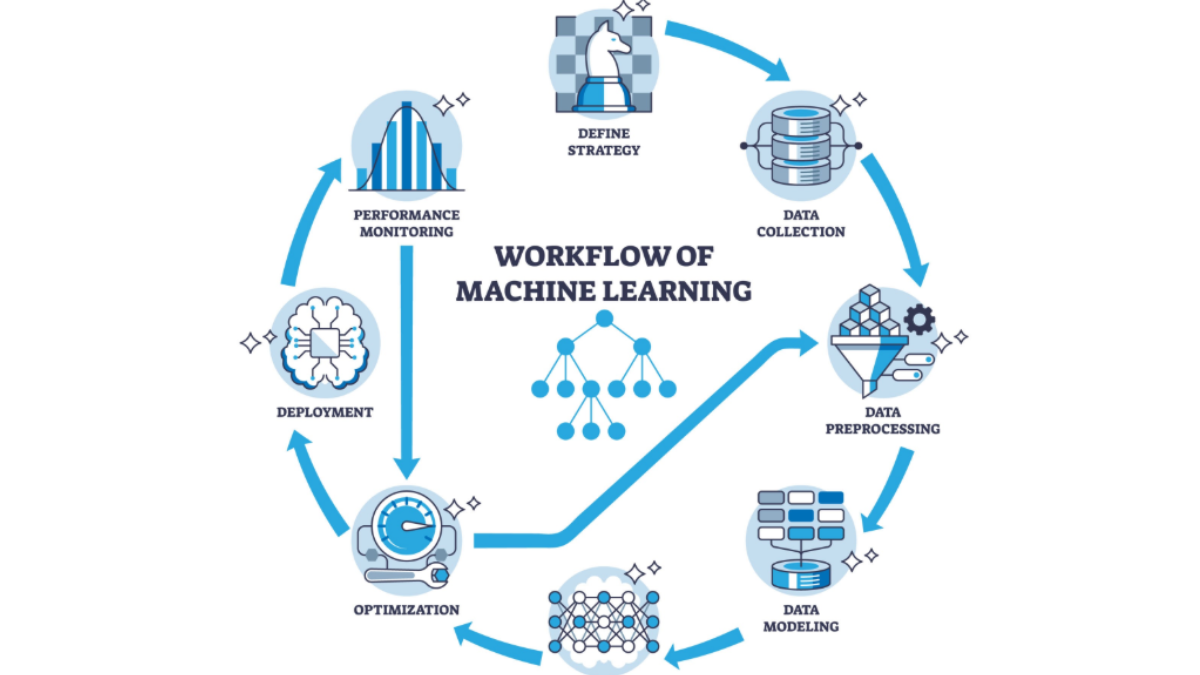
Step 1: Learn the basics
First establish a strong foundation in basic technical fields.
Step 2: Research machine learning theory and practice
After you've mastered the basics, delve into machine learning.
-
Basic Ideas: Start with the basics. Model evaluation metrics such as reinforced learning, supervised and unsupervised learning, and recall, accuracy, accuracy, and more.
-
Algorithm: Research basic algorithms such as linear regression, logistic regression, decision trees, and clustering.
-
Frameworks and libraries: Use these important resources directly. Traditional machine learning is ideal for Scikit-Learn. Learn Pytorch or Tensorflow for deep learning.
Step 3: Create a portfolio
The theory is insufficient. You need to use actual tasks to show off your abilities.
-
Start with a dataset: Use open datasets from sites such as the UCI Machine Learning repository or Kaggle.
-
Create the entire project, not just the model training. Create a comprehensive project that incorporates functional engineering, data cleansing, model training and deployment.
-
Contribution to Open Source: Working with other engineers to gain expertise is two great benefits of participating in open source initiatives.
Step 4: Specialization and advancement
The field is wide, so choose your niche and focus.
-
Specialization: Focuses in areas such as computer vision, reinforcement learning, and natural language processing (NLP).
-
Advanced topics: Explore more complex subjects, including transformers, generative artificial intelligence, and neural networks.
-
Keep going: The field is changing rapidly. To keep your skills up to date, read research papers, access meetings, and join online groups.
What do machine learning engineers do?

Research, development and maintenance of AI systems is the responsibility of machine learning engineers, a key member of the data science team. Their main responsibility is to transform the data scientist models into scalable, production-enabled applications. This requires a solid understanding of software engineering concepts and machine learning algorithms. Implementing machine learning algorithms, creating and building a complete AI system, and conducting tests and experiments to validate and enhance existing models are just a small part of the various daily responsibilities of machine learning engineers. Statistical analysis is also conducted to extract insights from the data.
Work with data scientists to understand model needs and work with other engineers to ensure smooth deployment and operation of AI systems. For companies using AI, this position is essential as it combines theoretical understanding with practical engineering.
Read again:
Top IIT Colleges offering data science courses to learn online in 2025
Best Free AI Courses for Beginners in 2025
Best Pharmacy University in India after 12 days 2025 after offering high employment placement
To stay up to date with current trends, join the Jagran Josh Telegram Community!