

Retailers are striving to improve customer experience and loyalty. This requires the creation of engaging content in a variety of formats, effective marketing efforts, and excellent customer service.
Generative AI allows retailers to address most of these issues through automation, especially by increasing their ability to analyze customer data and deliver more personalized experiences.
See examples and benefits of generative AI in retail.
7 use cases for generative AI in retail
1- Product and display design
Generative AI can create new product designs based on analysis of current market trends, customer interactions, consumer preferences, and past sales data. AI models can generate multiple variations, allowing companies to shortlist the most attractive options. Creating designs for clothing, furniture, and electronics is also an option.
Figure 1: Product design may be the biggest use case for generative AI in retail.
Personalizing the display options according to your choices is another option. The video below shows an example of an AI-generated 3D model that can be integrated into your product display.
A video showing how an AI-generated 3D model is transformed into a product display.
Learn more here Generation AI fashion.
2- Automatic content generation
Generative AI creates marketing content at scale, including product descriptions, email campaigns, social media posts, and ad copy. This automation allows retailers to personalize messages for different customer segments and channels while maintaining a consistent brand voice.
Figure 2: ChatGPT content creation is an example of how generative AI can be used in retail.
3- Personalized marketing
AI can generate personalized customer experiences through marketing content for individual customers, such as emails and ads. These are created based on customer data such as past purchasing behavior and preferences.
AI predicts what promotional content will be most appealing to each customer, increasing the effectiveness of marketing campaigns.
4- Product recommendations
Using generative models, AI can suggest new or alternative products that may be of interest to customers based on their purchase history and preferences. We can also predict your future needs and preferences to improve your shopping experience.
5- Inventory management and supply chain optimization
Generative AI helps predict product demandgenerate forecasts based on historical sales data, trends, seasonality, and other factors. This improves inventory management and reduces the occurrence of overstocks and stockouts.
Generative AI can be a must-invest technology for many supply chain operations, including:
- Demand forecast
- Supplier risk assessment
- Anomaly detection
- Transportation and route optimization
6- Visual search and virtual try-on
AI-powered visual search allows customers to find products by uploading images, and virtual try-on technology lets them see how products will look before they buy. These technologies reduce uncertainty in online shopping and improve customer trust.
Generative AI powers conversational virtual assistants that support customers throughout their shopping journey, generating responses to queries and even guiding them through the purchase process.
7- Customer service automation
AI-powered chatbots and virtual assistants respond to customer inquiries, provide product information, and guide customers through the buying process. Advanced systems can understand context and provide human-like responses while escalating complex issues to human agents.
Modern AI customer service systems maintain conversation context during support interactions, understand customer intent, and provide relevant product recommendations.
Examples of reality-generating AI in retail
1- ChatGPT for shopping
ChatGPT Shopping Research is an AI shopping assistant that asks questions, searches for product information online, and compares options.
- Personalized buyer guide: Create customized guides to help users explore, compare, and discover products.
- Conversational product research: Users can describe what they’re looking for in natural language, and the system asks follow-up questions about preferences, budget, features, and more to refine recommendations.
- Optional automatic comparison: We gather information from multiple sources and show you the key differences, pros and cons, and trade-offs between products.
- Real-time product data: Find the latest details online including pricing, availability, specifications, images, reviews and more while making recommendations.
- Interactive filtering of results: Users can provide feedback (such as “not interested” or “see similar items”), allowing the system to dynamically adjust recommendations during the search process.
2- eBay’s AI Shopping Agent
eBay’s AI Shopping Agent is a conversational AI assistant that helps users find products by answering questions and providing guidance during the shopping process. Here’s how it works:
- Highly personalized recommendations: Analyze user preferences and behavior and suggest relevant products in real time.
- Predictive assistance while browsing: AI appears throughout the purchase process, responding to queries and proactively displaying suggestions while users explore the site.
- Improved product discovery: We help shoppers discover products from eBay’s vast inventory and provide curated suggestions on gifts, clothing, and more.
- Agent commerce platform: Connect eBay’s data, infrastructure, and AI models to support personalized shopping experiences and integrate with external AI agents.
- Responsible AI framework: All AI capabilities are developed with oversight focused on safety, fairness, transparency, and accountability.
eBay uses AI to simplify product listings. Sellers start listings with photos and titles, and AI fills in product details and descriptions.
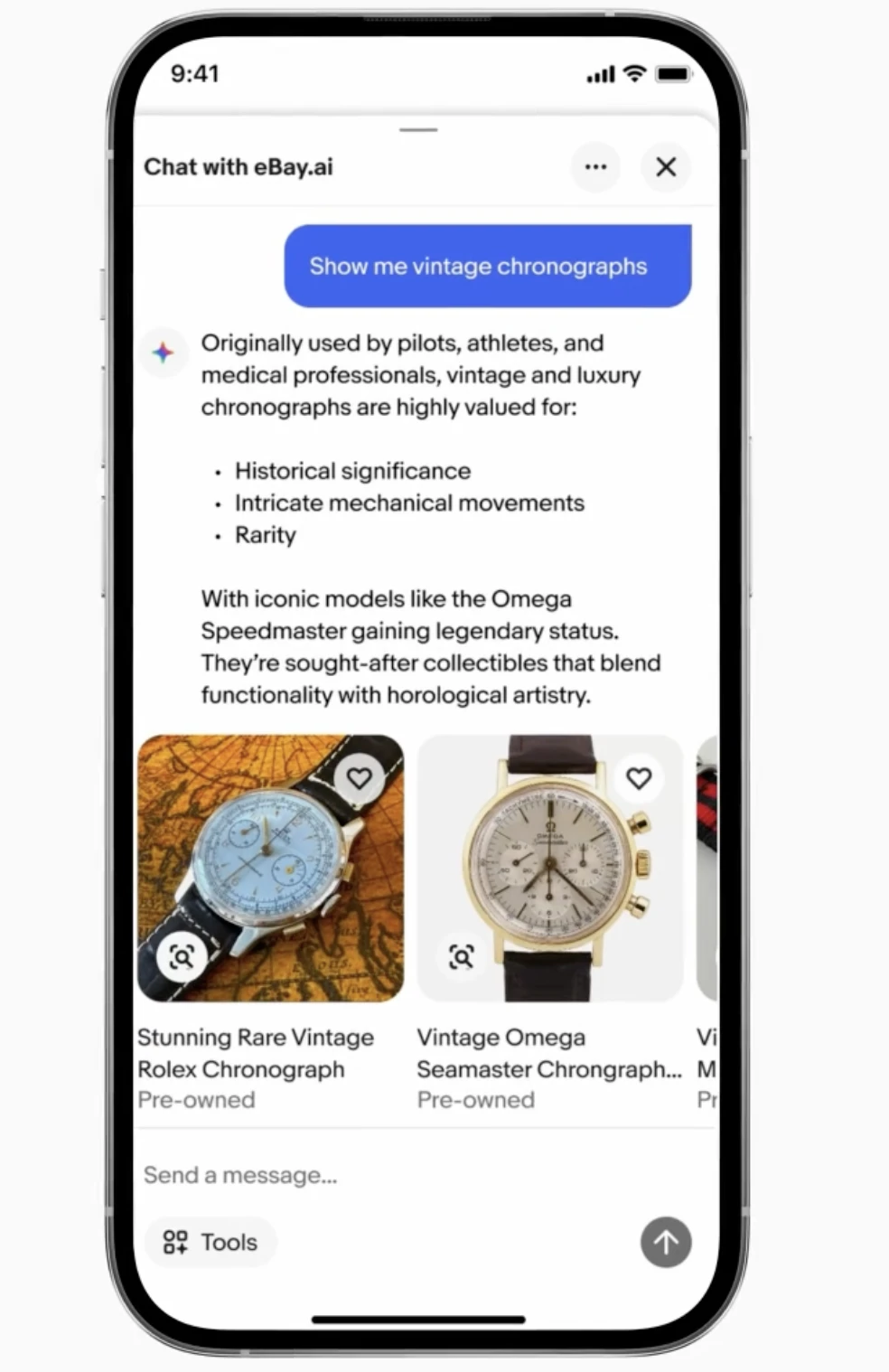
Figure 3: eBay AI agent chat user interface.
3- Shopify Magic
Shopify Magic is a built-in suite of AI tools that enables sellers to create content, design stores, analyze customers, and manage operations more efficiently.
- AI text generation: We use information provided by merchants to automatically generate content such as product descriptions, blog posts, page text, headlines, and email subjects.
- Sidekick AI Assistant: The AI-powered Commerce Assistant understands Shopify features and store data to provide personalized help and suggestions to help you run your store and complete tasks.
- Media generation tools: Create or edit visual content used in online stores and help sellers create images and banners more easily.
- Generating themes and theme blocks: Generate store design elements such as themes and blocks to simplify building or customizing your store’s layout.
- App review summary: Summarize app reviews to help sellers understand feedback and rate Shopify apps.
- Customer insights and segmentation: Analyze customer data, create customer segments, and project metrics such as expected spend per customer to support marketing decisions.
Figure 4: Example of generating a Shopify reply.
4- Stitch correction: personalized styling recommendations
Stitch Fix uses generative AI to create personalized style profiles for each customer. AI analyzes customer feedback, purchase history, style preferences, and even social media activity to recommend clothing and accessories. The system generates detailed style profiles that help human stylists make better choices, resulting in higher customer satisfaction and lower return rates.
5- The North Face: Interactive Shopping Assistant
The North Face uses AI, powered by IBM’s Watson, to provide a conversational shopping assistant on its website. The AI assistant asks a series of questions about the customer’s preferences, planned activities, and what the outdoor gear will be used for, and generates product recommendations based on the answers. The North Face leverages generative AI to enhance the online shopping experience, making it more interactive and personalized.
Figure 5: An example of North Face’s conversational AI assistant.
6- Sephora Virtual Artist
Sephora’s Virtual Artist app uses facial recognition and AR technology to allow customers to virtually try on makeup. AI analyzes facial features, skin tone, and lighting conditions to realistically preview how different products will look. Customers can try different combinations before purchasing.
This luxury retailer implemented an AI chatbot on its Shopify website to match the level of personalized service offered in its physical stores. The AI system includes product recommendations, sizing advice, and care instructions while maintaining the brand’s premium service standards.
Benefits of generative AI in retail
- Increase efficiency and reduce costs: Generative AI in retail can automate various taskscontent creation, customer service, inventory management, and more. This saves time, reduces labor costs, and allows companies to focus more on strategic and other important decisions. task.
- Improved personalization: Generative AI can create highly personalized content and recommendations for individual customers. This can lead to a better customer experience, increased customer loyalty, and increased sales.
- Improving customer service: By leveraging generative AI in retail, businesses can provide 24/7 customer support. AI-powered chatbots can respond to customer questions, solve problems, and provide information in real-time. Therefore, it helps improve customer satisfaction.
- Innovation and product development: Generative AI can provide new product designs and variations based on market trends and customer preferences, driving innovation and potentially leading to more successful products.
FAQ
Generative AI is a type of artificial intelligence that creates new content by learning patterns from existing data. In the retail sector, it is used to generate product descriptions, personalized recommendations, realistic images, and even entire marketing campaigns. Generative AI models, such as OpenAI’s GPT, leverage deep learning techniques to generate human-like text and visuals, enabling retailers to create engaging customer experiences and improve operational efficiency.
principal analyst

Sem Dilmegani
principal analyst
Cem’s work has been cited by major global publications such as Business Insider, Forbes, and the Washington Post, global companies such as Deloitte and HPE, NGOs such as the World Economic Forum, and supranational organizations such as the European Commission. See more reputable companies and resources that reference AIMultiple.
Throughout his career, Cem has worked as a technology consultant, technology buyer, and technology entrepreneur. He has spent more than a decade advising companies on technology decisions at McKinsey & Company and Altman Solon. He also presented a McKinsey report on digitalization.
Reporting to the CEO, he led the communications company’s technology strategy and procurement. He also led the commercial growth of deep tech company Hypatos, from 7-figure annual recurring revenue and 0 to 9-digit valuation within two years. Cem’s work at Hypatos has been featured in major technology publications such as TechCrunch and Business Insider.
Cem regularly speaks at international technology conferences. He graduated from Bogazici University as a computer engineer and holds an MBA from Columbia Business School.
View full profile
researcher

Senna Cezel
industry analyst
Sena is an industry analyst at AIMultiple. She received her bachelor’s degree from Boğaziçi University.
View full profile


