

Solutions Review’s Expert Insights series is a collection of contributed articles written by industry experts in the enterprise software category. In this feature, LTIMindtree’s Vinay Padegaonkar gives us the most important Google Cloud Platform trends to know right now.
 Google Cloud Platform (GCP) addresses the growing need for automation and agility, customer experience excellence, the rise of remote work, a focus on ensuring business continuity, and flexibility and technology powered by artificial intelligence and machine learning. .
Like its hyperscaler competitors, GCP is constantly adding new services and enhancements to meet this growing demand and solve future business and technical challenges.
Here are seven key cloud computing trends to watch in 2023 and how GCP can help meet the challenge.
Google cloud platform trends
Data and AI adoption at scale
Organizations looking to implement predictive AI at scale can leverage GCP to address challenges related to improving customer experiences, optimizing operations, and automating routine tasks. Google Cloud provides solutions that help you meet the challenges of AI-based development and implementation through pre-trained APIs that require no code. It also enables custom AI with automatic machine learning for predictive modeling of structured and unstructured data without code and serverless training with custom models on pre-built frameworks and no operations. It also provides end-to-end AI with core tools. It also offers BigQuery M, which provides descriptive and predictive modeling of structured data using simple SQL code.
Hybrid and multi-cloud interoperability
Organizations are adopting multi-cloud strategies to reduce risk and save costs. In 2023, interoperability will be a key consideration across hybrid and multicloud platforms, application and data layers.
There are two ways companies can address interoperability requirements. Start with platforms like Openstack, Openshift, Cloud Foundry, and Snowflake that provide multi-cloud and hybrid cloud interoperability. Second, it uses cloud-native services to support multi-cloud and hybrid clouds. For example, Google Cloud’s Anthos, BigLake, and BigQuery Omni address your interoperability needs while avoiding vendor and platform lock-in. GCP enables enterprises to develop and deploy platform-independent applications to support multi-cloud and hybrid clouds.
future-oriented infrastructure
How companies design their application and data infrastructure will determine their competitiveness in 2023. Organizations looking to scale up their workloads can consider cloud graphics processing units (GPUs), which are effective for ML workloads due to their parallel architecture. GCP has a variety of NVIDIA GPUs on Google Compute Engine (GCE), ranging from P4 to T4.
Concentrate on reasoning. GCE offers custom virtual machine shapes with tooling and workflow support available through on-demand, preemptible Committed Use Discounts and Sustained Use Discount Space Reservations. GCP provides a powerful compute engine ready for future requirements for running AI/ML models.
Another area of interest is Kubernetes Engine, which provides a managed environment for deploying containerized applications. Organizations can use GPUs and tensor processing units as part of the GCE infrastructure to instantly scale their workloads up or down. GKE also provides the ability to autoscale using containers.
Convergence of operational and analytical databases
Organizations use two types of data: operational data and analytical data. Operational data resides in databases of business functions and is packaged in applications or microservices. This data is transactional, remains current, and serves the needs of business applications. Analytical data is a temporal, aggregated view of a company’s facts over time, often modeled to provide retrospective or predictive insight. Used for training ML models and generating analytics reports. Current technologies, architectures, and designs reflect the divergence of these two data planes, which has always led to architectural fragmentation. Extraction, transformation, loading jobs, and increasingly complex data pipelines are common challenges in connecting these two planes.
GCP offers a variety of database solutions that can be used for operational and analytical data processing. Cloud Bigtable, Alloy DB, and DataStream for BigQuery have been enhanced to meet your database operational and analytics needs.
Invisible security comes first
The pace of digitization has led to a surge in cyberattacks and ransomware incidents worldwide. Organizations put enterprise security at the center of all decisions, removing implicit trust relationships in favor of explicit trust in each transaction.
Google Cloud’s expanded partnerships with security solution providers enable enterprises to consistently implement best-in-class security. Instead of siled security information and event management (SIEM), security orchestration, automation and response (SOAR), and threat intelligence solutions, the new Google Cloud security operations solution unifies security operations capabilities so security teams can Allows you to quickly pivot to manage alerts more effectively. His SIEM, SOAR and GCP threat intelligence from Google Cloud Chronicle seamlessly automate security threat detection and operations.
Application Modernization Gains Momentum
Rising demands for agility and innovation, along with decreasing costs, are putting additional pressure on technology leaders. Organizations have invested heavily in technology transformation.
Infrastructure modernization. In 2023, organizations will focus on transforming applications and introducing innovations into business processes.
Google Cloud offers a comprehensive set of features for modernizing your applications. Anthos enables users to quickly build new applications and upgrade existing applications for greater agility. GCP also provides modernization by accelerating the modernization of traditional apps to native containers. Containerization automation provides the jump start needed for organizations that have not yet embarked on their modernization program.
SAP on GCP takes center stage
There will be increased focus on ERP transformation with SAP workload migration and modernization programs. Google’s AI, ML, and advanced analytics capabilities help organizations get the most insight from their SAP data. Blocks that include vision, translation, and text-to-speech enable agile decision making by automating processes, making intelligent predictions, and streamlining operations.
Google Cloud is also making further enhancements to modernize the mainframe, increase developer productivity, and transform the software supply chain. Google Cloud’s continued transformation will make it a hyperscaler to watch in 2023, as more enterprises adopt multi-cloud strategies to acquire more flexible resources and capabilities for each workload.
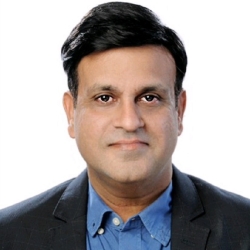
Vinay Padegaonkar is Senior Director of the Google Cloud Practice at LTIMindtree, a global technology consulting and digital solutions company.


