# introduction
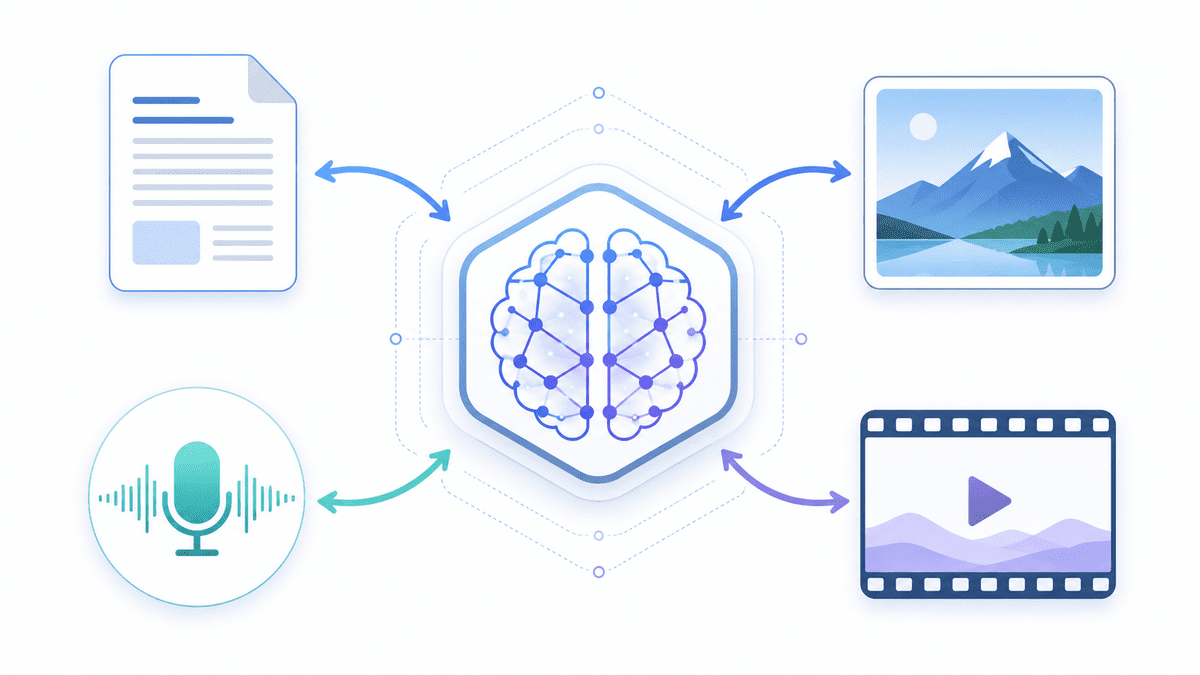
A year ago, omni AI models felt more like a future promise than something developers could actually use. Most multimodal systems still relied on multiple separate models running in the background. One for text, one for images, one for audio, and sometimes one for video. The idea of a single model that understands different input types and can accommodate different formats felt ambitious.
That is starting to change. Now, open source omni and multimodal models can understand text, images, audio, and video in a more integrated way. Some can analyze images and documents, transcribe and reason with audio, understand video frames, and respond with text. Some go even further by producing audio and images, and supporting real-time multimodal interactions.
In this guide, we look at five open source omni AI models that are moving the field forward. Not all models on this list are complete “any-to-any” systems, and the distinction is important.
Some models accept many input types and produce only text, while others support voice, image generation, or real-time audio and video interaction. The purpose is to help you understand what each model can actually do.
# 1. NVIDIA Nemotron 3 Nano Omni 30B A3B Inference
NVIDIA Nemotron 3 Nano Omni 30B A3B Inference is a powerful open omni model designed for enterprise-grade multimodal understanding. It can process video, audio, images, text, and generate text-based responses.
This helps with tasks such as video and audio analysis, document intelligence, chart reasoning, optical character recognition (OCR), transcription, graphical user interface (GUI) understanding, and multimodal question answering.

Images from NVIDIA Nemotron 3 Nano Omni introduction
The model is built on the 31B parameter Mamba2-Transformer hybrid Mixture-of-Experts architecture, with approximately 3B active parameters per token. This allows you to combine powerful inference capabilities with more efficient inference.
It also supports a 256K token long context window, making it suitable for analyzing long documents, extended transcripts, meeting recordings, training videos, and other rich enterprise content.
What sets Nemotron 3 Nano Omni apart is its focus on real-world workflows rather than simple multimodal demos. Designed for use cases such as customer support, media analysis, document review, AI assistants, browser agents, email agents, and GUI automation.
Perfect for: Video and audio analytics, document intelligence, OCR, chart understanding, GUI workflows, automatic speech recognition (ASR), enterprise multimodal Q&A.
# 2. Google Gemma 4 12B IT
Google Gemma 4 12B IT is part of Google DeepMind’s open Gemma model family and is designed as a compact and efficient multimodal model for local and self-hosted AI applications. It can process text, image, audio, and video inputs and generate text-based responses.
This helps with tasks such as visual question answering, document and PDF understanding, OCR, diagram understanding, speech transcription, speech translation, coding, reasoning, and multimodal assistant workflows.

Image from InfoQ
The 12B Unified model is particularly interesting because it uses an encoder-free multimodal architecture. Instead of relying on separate vision or audio encoders, we project raw image patches and audio waveforms directly into the language model’s embedding space through lightweight linear layers.
Gemma 4 12B supports long context windows of 256K tokens. This is useful when working with long documents, large codebases, extended conversations, and multimodal input that combines text, images, audio, and video frames.
Perfect for: Efficient multimodal assistants, document understanding, image and audio inference, video frame analysis, coding, multilingual tasks, and local AI applications.
# 3. Qwen3-Omni 30B A3B Instructions
Qwen3-Omni 30B A3B Instructions is one of the most capable open omni models available today. It is designed as a native end-to-end multilingual omnimodal model that can process text, images, audio, and video, and respond with both text and natural speech.
This helps build AI assistants that can see, listen, understand, and respond in real-time. It can be used for speech recognition, speech translation, speech captioning, music analysis, OCR, image question answering, video understanding, and audiovisual interaction.

Image from Qwen/Qwen3-Omni-30B-A3B-Instruct
This model uses the Thinker-Talker designed Mixture-of-Experts architecture. Thinker handles multimodal understanding and reasoning, and Talker enables natural speech output. This design helps Qwen3-Omni support both deep multimodal inference and low-latency voice interaction.
One of its biggest strengths is real-time audio and video interaction. Unlike many multimodal models that operate in the form of slow uploads and responses, Qwen3-Omni is built for streaming use cases with natural alternations and instant text or voice responses.
It also has strong multilingual support with 119 text languages, 19 voice input languages, and 10 voice output languages. This is especially useful for global applications, multilingual voice assistants, accessibility tools, and audio-video systems that need to work across different languages.
What makes Qwen3-Omni stand out is how close it gets to the idea of a true omni assistant. It’s not just about understanding multiple input types. It can also produce natural-looking speech, follow system prompts, support agent-like workflows, and handle complex audiovisual tasks.
Perfect for: Open omni-assistant, real-time voice interaction, video understanding, voice reasoning, multilingual applications, audiovisual interaction, text/voice response.
# 4. DeepSeek Janus-Pro 7B
DeepSeek Janus-Pro 7B is an integrated multimodal model that focuses on both visual understanding and image generation. Although it is not a complete omni model for text, audio, images, and video, it is an important open model because it brings image understanding and image creation into a single framework.
This helps with tasks such as visual question answering, image inference, image captioning, text-to-image generation, and multimodal creative workflows.
Janus-Pro is built on DeepSeek-LLM-7B and uses a novel autoregressive framework that separates visual encoding into different paths for understanding and production. This design helps solve a common problem in multimodal models, where the same visual encoder needs to support both image recognition and new image generation.
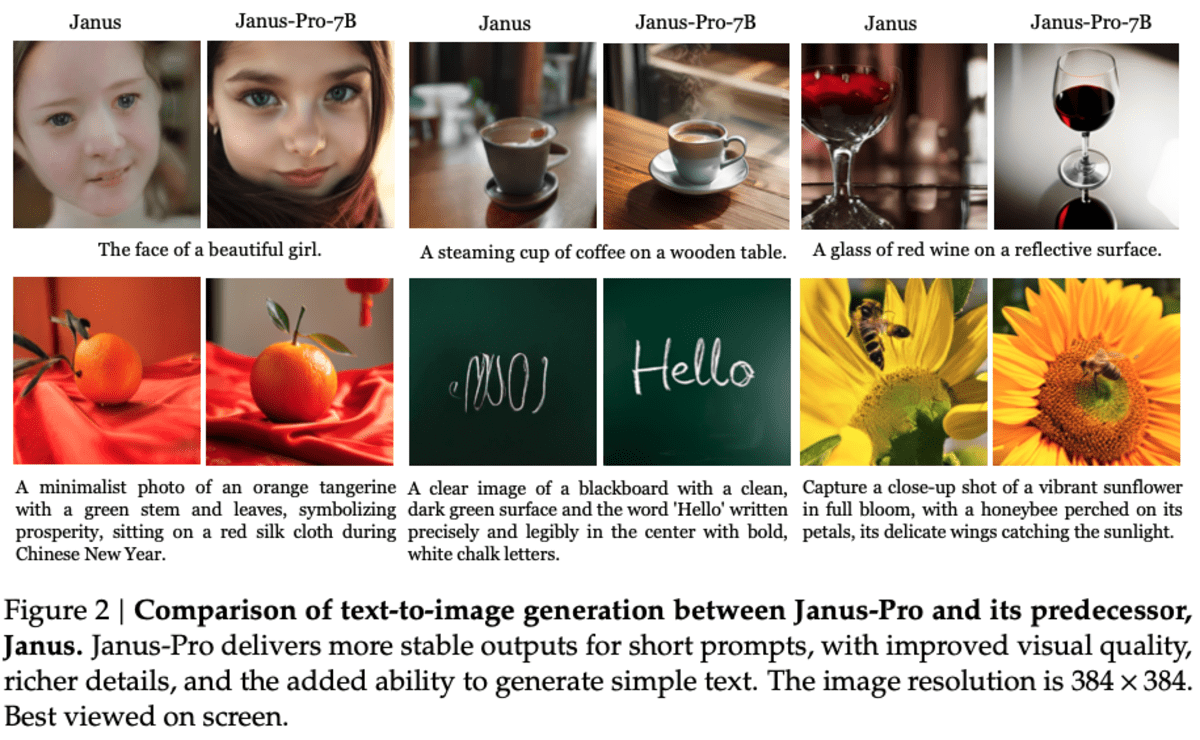
Image source: deepseek-ai/Janus-Pro-7B
To understand images, Janus-Pro uses SigLIP-L as a vision encoder and supports 384 x 384 image input. Image generation uses a dedicated image tokenizer, allowing the model to generate images from text prompts.
What sets Janus-Pro apart is its simple but effective architecture. By separating visual understanding and visual generation while using a unified transformer, the model becomes more flexible and performs well across both tasks.
Perfect for: Image understanding, visual reasoning, image captioning, visual question answering, and text-to-image generation.
# 5. MiniCPM-o 4.5
MiniCPM-o 4.5 is one of the most exciting open omni models because it is designed for visual, audio, and full-duplex multimodal live streaming. It can process text, images, video, and audio and produce both text and audio output.
This helps build live AI assistants that can see, hear, and speak at the same time. It can be used for real-time voice conversations, video understanding, OCR, document analysis, visual question answering, voice interaction, and multimodal assistant workflows.
The model is built with a total of 9B parameters and combines components such as SigLIP2, Whisper-medium, CosyVoice2, and Qwen3-8B. This provides powerful visual, audio, and language capabilities while keeping the model large enough for real-world local deployment.

Image from openbmb/MiniCPM-o-4_5
What sets MiniCPM-o 4.5 apart is its full-duplex multimodal streaming capability. Unlike traditional multimodal models that wait for uploads before responding, MiniCPM-o 4.5 can process continuous video and audio streams while simultaneously generating text and voice responses.
It can also support active dialogue. This means that the model can continuously observe the live scene and decide when to speak, comment, or respond, rather than only reacting after the user gives a direct prompt.
MiniCPM-o 4.5 also excels in visual understanding and OCR. It can process high-resolution images, high FPS videos, and documents with various aspect ratios, making it useful for document parsing, screen understanding, and real-world visual AI applications.
Another big advantage is deployment flexibility. model supports pie torch Inference on NVIDIA GPUs, llama.cpp, orama, GGUF quantized model, vLLMand SGLang. This makes it easy for developers to run models locally on GPUs, PCs, and even some edge devices.
Perfect for: Real-time multimodal assistant, live video and audio understanding, voice interaction, OCR, document analysis, edge AI, full-duplex omnimodal applications.
# final thoughts
Omni models are becoming more important as AI moves from simple chatbots to systems that can be used by real people in real-world situations. In everyday workflows, information is not provided in just one format. People use text, images, documents, audio, video, screenshots, meetings, graphs, and live conversations. For AI to be truly useful, it needs to understand all of these inputs naturally.
Previously, building these types of systems typically required combining multiple models for audio, visual, OCR, text inference, and generation. This approach works, but increases complexity, delay, and engineering overhead. Each additional model increases the number of moving parts that developers must manage.
The changes we are seeing now are different. More functionality is built directly into the model itself. Omni models begin to understand multiple modalities within a single architecture, rather than interconnecting many separate systems. This allows models to see, listen, reason, and respond with much lower latency, making real-time interactions more practical.
This is especially important for live AI assistants, voice agents, video analytics tools, document intelligence systems, accessibility tools, and agent workflows. When multimodal understanding is built into the model, the user experience is smoother and more natural.
Abid Ali Awan (@1abidaliawan) is a certified data scientist professional who loves building machine learning models. Currently, he is focusing on content creation and writing technical blogs about machine learning and data science technology. Abid holds a master’s degree in technology management and a bachelor’s degree in communications engineering. His vision is to use graph neural networks to build AI products for students suffering from mental illness.