

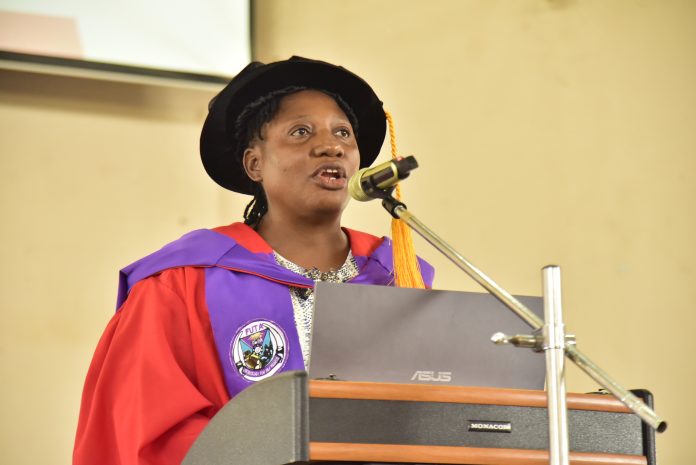
A professor of Computer Science (Artificial Intelligence) at the Federal University of Technology, Akure (FUTA) has said the digital age offers a transformative opportunity to harness artificial intelligence, AI and digital technologies for the betterment of society.Prof Bolanle Ojoko made the assertion during the university’s 168th Commencement Lecture on Tuesday, June 24, 2024.
Speaking on the theme, “Intelligently Traversing the Information Wilderness: Towards Knowledge Discovery and Decision Support,” she said, “AI is already having a profound impact across sectors. In healthcare, it is aiding in diagnosis, drug discovery, and personalised treatment plans. In finance, we are using AI for fraud detection, algorithmic trading, and risk assessment. Even customer service is being transformed by AI-powered chatbots and virtual assistants.”
She said the rise of AI creates several challenges, including the spread of misinformation and disinformation. She therefore advocates for the establishment of standardized quality metrics for online information, increased transparency in search engine algorithms, and the fostering of media literacy through education. She also advised that “policymakers could also consider economic incentives to stop the spread of false information.”
“To shape the future of this transformative technology, it is crucial to ensure that AI is developed and used ethically for the benefit of society. Growing awareness of AI's immense potential has led governments and businesses to invest heavily in research and development. At the same time, the increasing availability of open space libraries and cloud-based platforms has democratised the sector, enabling small businesses and individual developers to harness the power of AI,” said Professor Ojoko, who is also Co-Chair of the TWAS Young Affiliates Network (TYAN) and Dean of the School of Information Systems at FUTA.

According to Don, “By leveraging powerful tools such as search engines, information extraction and retrieval techniques, question answering systems, recommendation systems, machine learning, and other AI applications, we can transform this information wilderness into fertile soil for knowledge discovery and informed decision-making.”
With regard to ensuring the responsible use of AI, Professor Ojoko recommended a robust ethical framework, including the development and enforcement of guidelines that address bias, privacy and transparency in AI systems, while encouraging the development of transparent and ethical AI models through grants and awards, encouraging responsible innovation.
She also called for leveraging AI in healthcare delivery and ensuring open access in this regard. According to her, “AI has the potential to revolutionize healthcare through data analytics and personalized medicine. Equitable access to AI-powered healthcare tools should also be a priority. Open access to research and data will accelerate knowledge discovery,” but she warned that “strict privacy and security measures are needed to protect sensitive healthcare data.”
The speakers called for international cooperation to establish global standards and regulations on AI, as well as continuous monitoring and adaptation of policies to keep pace with technological advances. Ojoko noted that AI development must be aligned with the principles of sustainability and be harnessed to create solutions that prioritize environmental and social considerations.
The Vice Chancellor, Professor Adenike Oladji, who chaired the ceremony, described Ojoko as an intelligent researcher and polymath who has made significant contributions to the specialist field of artificial intelligence. He said that since assuming his post at the university, the lecturer has demonstrated exceptional intellectual aptitude in the field and has provided leadership to both students and young researchers.


