

- More and more use cases for generative AI are being developed.
- OpenAI makes it easier for developers to access this technology and create more apps.
- Some generative AI use cases may be of concern to society.
After the explosion of ChatGPT, generative AI has been introduced into almost every use case imaginable today. From simple use cases in the office to complex use cases such as managing cybersecurity, generative AI use cases continue to grow as its capabilities evolve. While most of these use cases make sense and can be justified, some startups and even large companies are developing some very strange yet fascinating generative AI use cases.
There's no denying that AI has brought incredible results to some industries. For example, AI in healthcare can help with diagnosis, patient care, and management. In the financial sector, AI capabilities are enabling financial institutions to improve fraud management. In e-commerce, retailers are using AI to better understand their customers and manage their supply chain.
Despite concerns about AI bias, privacy, and even copyright, most companies find the benefits of using this technology to be far greater. In fact, in a recent Gartner survey of more than 1,400 executives, 78% of respondents believed the benefits of generative AI outweigh the risks.
While most AI deployments in enterprises are well-defined, some startups and enterprises are developing some interesting generative AI use cases. To them, these use cases demonstrate the capabilities of the technology, but some use cases simply don't feel meaningful.
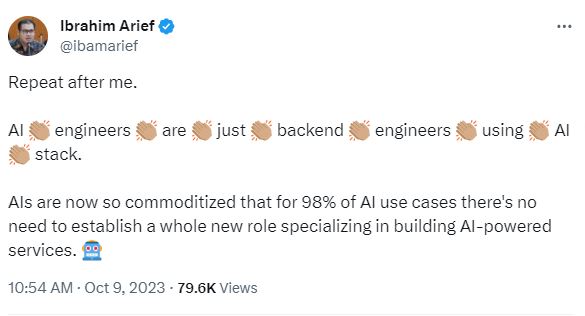
Developing generative AI use cases – are they too commoditized?
10 creative and weird generative AI use cases
Here are 10 of the weirdest AI use cases ever developed. Note that these generative AI use cases are actually available in some countries.
AI toothbrush that achieves perfect tooth alignment
The AI toothbrush was manufactured by the famous dental hygiene company Oral-B. The Oral-B Genius X electric toothbrush uses AI to track how you brush your teeth and provides real-time feedback to help you get the best results every day.
This toothbrush is made with iO magnetic technology that combines micro-vibrating bristles with Oral-B's round brush head for a professional clean experience. The toothbrush display will appear red if you brush too hard and white if you brush too lightly. If you brush at the perfect speed, it will turn green.
Meals without overcooking: Bringing AI to your kitchen
Flippy is a kitchen robot that makes hamburgers. Powered by Miso's patent-protected AI, his Flippy is a smart commercial kitchen robot that frys everything from fries to chicken nuggets, working with humans to improve quality and consistency while providing restaurants with an eye-catching edge. resulting in significant cost savings.
This machine is equipped with a series of sensors, cameras and intelligent algorithms that allow it to fry food. Flippy can also be adapted to a variety of cooking techniques and recipes, making it versatile for any kitchen environment.
Incredibly Good: AI Fake News Generator
As if there wasn't enough misinformation and disinformation already on the web, Grover is an AI tool that creates fake news. According to reports, Grover has been trained using large portions of internet content and is used to create news articles that are nearly indistinguishable from those written by real humans.
But here's where it gets interesting. A study by the developers of Grover claims that the best way to detect fake news is to use a model that is also a generator. As such, Grover is a generator that allows you to easily identify fake news articles generated by other AIs as well as those generated by you. Amazingly, he obtained 92% accuracy in conveying human-written news from machine-written versions.
Pain purr: cat pain detector
Cats express themselves by purring and meowing. They could be hungry, sick, or just bored. However, sometimes it can be difficult to convey your cat's true feelings. For cat lovers in Japan, a technology company and a Tokyo-based university have invented a new web app that uses AI to detect if your pet cat is in pain.
The accuracy level of the Cat Pain Detector app is said to be over 90%. The AI detection system is based on 6,000 cat photos, studying cats' whiskers, eyelids, ears, and noses and inputting them into a scoring system to distinguish between healthy cats and those suffering from pain due to less visible diseases. Measure the difference between the cat and the cat you think it is. .
The app's popularity has grown to around 43,000 users in Japan, Europe, and South America since its launch in June 2023.
Size Doesn't Matter: AI Penis Recognition Tool
If that wasn't weird enough, a Singaporean healthcare platform is trying to cure sexually transmitted diseases in men by allowing users to submit digital images of their penises for analysis and receive the results anonymously. We have developed an app that allows you to check. The 'Penis Check' tool utilizes a customized Convolutional Neural Network (CNN) AI model. With instant results, the HeHealth platform can also detect other types of penile conditions, such as penile cancer.
For those concerned about privacy and data security, HeHealth says it does not collect personally identifiable information. Although users must create anonymous accounts to use the service, the company ensures multiple layers of data protection that meet his HIPAA guidelines.
Moonwalkers: Electric shoes powered by AI
On the other hand, if you love walking but don't want to be lazy, you can rely on an AI-powered walking shoe called Moonwalker. The functionality is the same as other shoes, but what sets them apart is the AI that learns your walking patterns and automates your movements. $1,000 shoes are becoming popular.
“To walk faster, just walk faster. To slow down, walk slower. Stopping means stopping walking,” the company said in a media release. Doesn't seem that complicated, right?
Best to drink neat: AI Whiskey
For whiskey lovers, Sweden-based Mackmilla Whiskey is collaborating with Microsoft and Finnish tech company Fourkind to develop the world's first AI-developed whisky. However, this makes some sense, as the company plans to feed Mac Mira's existing recipes, cask types, sales data, and customer preferences into the AI model. According to Microsoft, the AI can generate “his more than 70 million recipes that are predicted to become popular,” including new combinations that a human master distiller would never have thought of.
Sleep like a baby: AI mattress
Memory foam has been around for a long time and is now incorporated into most shoes and even mattresses. Memory foam fits based on your walking and sleeping style, and one company has devised an autonomous adaptive module, AI Trackbot, to do this on your mattress. HEKA AI mattress collects body pressure distribution data in real time, uniquely recognizes your body shape and sleeping position, and can calculate the optimal pressure distribution for your sleeping position based on a sleep medicine database.
The mattress autonomously adjusts the height and firmness of the mattress to change your sleeping position. Such features ensure that your body is kept in the right position and properly supported while you sleep.
Are AI use cases everywhere? (AI-generated image)
Scent that kills: AI perfume
The perfume industry continues to create innovative scents. Most scents are created by researchers who mix different chemicals to get the most out of the scent, but now AI can speed up that process.
Algorithmic Perfumery is the world's first AI-guided scent creation platform that allows users to explore the world of scent. This platform allows you to create personalized scents by customizing pieces from our in-house library. Artist-technologist Frédéric Duerink collaborated with scent designer Anahita Mechanic to provide a new way to interact with scent by driving the creation process with AI.
Praise be to God: AI Pastors and Preachers
Although AI is not God (as far as we can determine at this point), some people are using technology to better communicate with God. Yes, AI pastors and preachers are gaining popularity in some countries around the world.
South Korea's Meadow is a ChatGPT-based Bible chatbot service that suggests Bible verses and customizes prayers based on the issues users discuss in the chatbot. It seems to be popular among young Protestants in their 20s and 30s.
Earlier this year in Germany, a ChatGPT bot, embodied by multiple on-screen avatars, oversaw a 40-minute prayer for more than 300 believers at St. Paul's Church in the Bavarian town of Fürth. did. However, the report found that AI services left many people feeling emotionally unfulfilled.
Impact of AI on society
Considering the impact of generative AI, it is undeniable that this technology will continue to be popular among users. Some people worry that AI will replace jobs, but the reality is that AI can do more than just take over jobs.
The use cases discussed here are just a few of many that continue to be developed. However, there are also use cases that are being developed for the wrong reasons. For example, AI deepfake generators are being used to create pornography and fake news content, which can be a major problem for society.
This is also why some countries are regulating how AI can be used and how it can be used. Many people feel that regulation only slows down technological innovation, but in reality, regulation is meant to be more protective of privacy and society.
The bottom line is that the world will only develop more use cases for generative AI. It is up to society, businesses, and leaders to decide how much they rely on AI.


