why this matters
The use of generative AI such as ChatGPT and Bard has exploded to over 100 million users due to increased functionality and user interest. This technology has the potential to dramatically increase productivity and transform the day-to-day operations of society as a whole. Generative AI can also spread disinformation and pose significant risks to national security and other areas.
technology
what is that? Generative artificial intelligence (AI) is a technology that can create content such as text, images, audio, and video according to user instructions. Generative AI systems create responses using algorithms that are trained on open source information such as text and images from the internet. However, generative AI systems are not cognitive and lack human judgment.
Generative AI has potential applications in a wide range of fields, including education, government, medicine, and law. These systems use prompts (questions or explanations entered by the user to generate and refine results) to quickly compose a speech in a particular tone, summarize complex research, or write legal documents. can be evaluated. Generative AI can also create artwork such as realistic images, musical compositions, and poetic language for video games using only text prompts. In addition, it can assist in complex design processes such as molecular design of new drugs and generation of programming code.
How does it work? Generative AI systems learn patterns and relationships from large amounts of data so that they can generate new content that is similar to, but not identical to, the underlying training data. It processes and creates content using advanced machine learning algorithms and statistical models. For example, large language models use training data to learn written language patterns. Generative AI can use models to emulate human writing. Generative AI can also learn to use many other data types, such as programming code, molecular structures, and images.
Systems typically require the user to send prompts to guide the generation of new content (see Figure 1). Generative AI is sensitive to prompt wording, so many iterations may be required to produce the intended result.
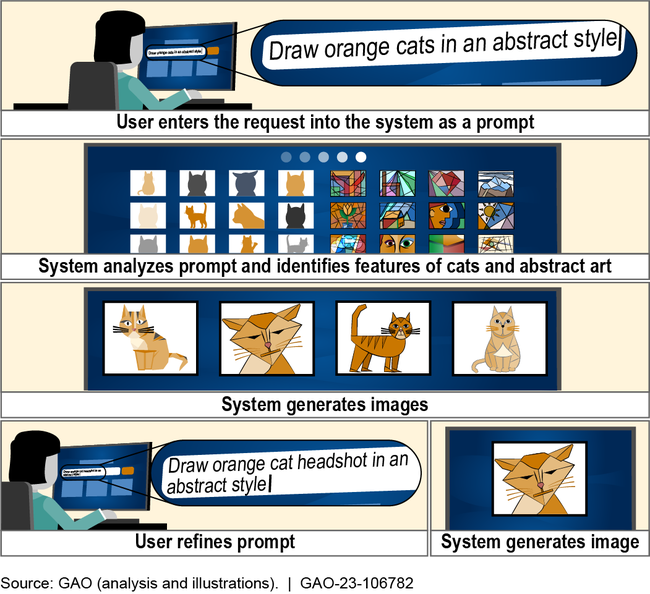
Figure 1. An example of a generative AI system that creates an image from a prompt.
How mature are you? Advanced chatbots, virtual assistants, and language translators are mature generative AI systems in widespread use. Generative AI capabilities have been expanded with increased computing power that can handle large amounts of data for training. As of early 2023, the emerging generative AI system has reached over 100 million users, drawing global attention to its potential applications. For example, a research hospital is piloting a generative AI program to create answers to patient questions and reduce administrative workload for healthcare providers. Other companies may apply pre-trained models to improve customer communication.
chance
- We are gathering information. By quickly aggregating a wide range of content and simplifying the search process, generative AI speeds access to ideas and knowledge, enabling people to gather new information more efficiently. For example, researchers can identify new chemicals in pharmaceuticals based on AI-generated analysis of existing pharmaceuticals.
- Enable automation. Generative AI can help automate a variety of administrative and other repetitive tasks. For example, it can be used to draft a legal template, which can then be reviewed and finalized by lawyers. You can also improve customer support by creating more nuanced automated responses to customer inquiries.
- Increased productivity. Generative AI has the potential to improve productivity in many industries as it can rapidly automate a variety of tasks. Multiple studies and research papers show that generative AI can improve the speed of administrative tasks and computer programming, but users may need to edit the generated results.
Theme
- Trust and Surveillance Concerns. In June 2021, GAO will identify key practices, such as commitment to values and principles of responsible use, to ensure accountable and responsible use of AI across the federal government and other organizations. bottom. Generative AI systems can respond to harmful instructions, potentially increasing the speed and magnitude of real-world harm. For example, generative AI could help generate new chemical warfare compounds. In addition, generative AI systems share monitoring challenges similar to other AI applications, such as assessing the reliability of data used to develop models, because their inputs and operations are not always visible. I’m here. The White House announced in May 2023 that a working group would provide input on, among other things, how best to ensure that generative AI is developed and deployed fairly, responsibly, and safely. Other institutions, such as the National Institute of Standards and Technology, are also promoting responsible use of generative AI.
- Incorrect information. Generative AI tools can “hallucinate”, or generate false responses that appear to be believable. One reason hallucinations occur is when users request information that isn’t in the training data. Additionally, users may use AI to intentionally and quickly create inaccurate or misleading text, enabling the spread of disinformation. For example, generative AI can create phishing emails or fake but realistic social media posts containing misleading information. Moreover, bias in training data can amplify the potential for harm caused by AI-generated outputs.
- economic problem. Generative AI systems may be trained using copyrighted, proprietary, or confidential data without the knowledge of the owner or subject. Open questions remain about how copyright concepts such as copyright, infringement, and fair use apply to content created or used by generative AI.
- Privacy Risk. Certain technical features of generative AI systems may reduce the privacy of users, including minors. For example, a generative AI system may not be able to “forget” sensitive information that the user wants to remove. Furthermore, if you enter personally identifiable information, that data may be used indefinitely for other purposes in the future without your knowledge. Section 230 of the Communications Decency Act 1996 protects online service providers and users from liability for third party hosting or sharing of her content, but this law also protects his AI-generated content systems and their creators. It is unclear how it will be applied.
- National security risk. Information about when and how some generative AI systems retain and use input information is sparse or unavailable to many users, creating risks when using these tools. increase. For example, if a user enters sensitive information into a prompt, that information may be stored and misused, or merged with other information in the future. Moreover, adversaries may benefit if the system is publicly and internationally accessible. For example, generative AI can help rewrite code, making it difficult to identify the cause of cyberattacks. Also, even attackers with limited computer programming skills may generate code for more effective cyberattacks.
Policy Background and Questions
- What AI guidelines are best to ensure that generative AI systems are used responsibly and follow existing guidance?
- What criteria can be used or developed to evaluate the methods and materials used to train generative AI models and ensure fairness and accuracy of responses for different use cases?
- How can public, private, academic, and non-profit organizations empower their workforce to ensure responsible use of generative AI technology?
- What privacy laws can be used or developed to protect sensitive information used or collected by generative AI systems, including information provided by minors?
For more information, please contact Brian Bothwell (202) 512-6888 or bothwellb@gao.gov and Kevin Walsh (202) 512-6151 or walshk@gao.gov.