The distributed and dynamic nature of Kubernetes lends itself well to modern software architectures. However, the complexity of the platform and the intricate structure of today’s cloud-native applications pose obstacles to monitoring Kubernetes deployments.
Observability in a Kubernetes environment includes collecting and analyzing metrics, logs, and traces for problem identification, diagnosis, and cluster performance optimization. However, tracking requests across a microservice-based application stack can be difficult. Processing the massive amounts of data generated by Kubernetes clusters and containerized applications creates additional challenges.
Applying AI and machine learning (ML) helps IT teams sort through the noise and produce actionable intelligence about cluster operations and health. But don’t get caught up in the hype. To get the most out of these techniques in Kubernetes, it’s essential to overcome some misconceptions about AI and ML and carefully consider their limitations.
Use cases for AI and ML in Kubernetes environments
Some areas of Kubernetes observability and management are particularly well-suited for AI and ML. Whichever you choose, be careful and start small.
Tackle your AI and ML adoption in Kubernetes with a pilot project that includes input and feedback from your organization’s key Kubernetes experts. Document lessons learned and extend to other of her Kubernetes projects that may benefit from improved observability and performance.
1. Anomaly detection and root cause analysis
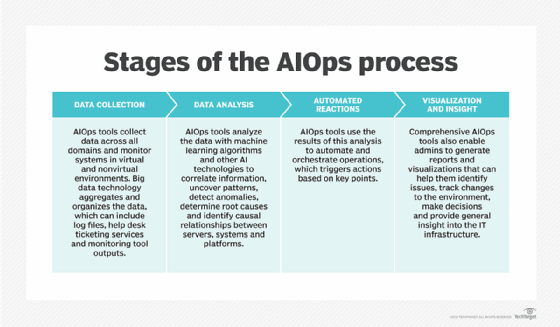
AI and ML models trained to detect anomalous behavior in Kubernetes clusters and applications help operations teams proactively address issues before they escalate.
Anomaly detection is as much an art as it is a science. These models are an option to support operations staff with limited anomaly detection experience, as AI systems can identify patterns and correlations in data that humans might miss. AI cannot replace experienced Kubernetes experts, but using AI to assist engineers can lead to more accurate and efficient problem detection and analysis.
Similarly, using AI tools to detect the root cause of Kubernetes cluster and application issues can reduce the time and effort required for troubleshooting. AI for root cause analysis is particularly attractive to companies looking to extend and maintain his limited Kubernetes expertise in-house, as Kubernetes expertise continues to be in short supply.
2. Performance optimization
AI and ML can improve the performance of Kubernetes clusters and applications by identifying bottlenecks and recommending optimizations. Based on system data and performance metrics, AI tools identify potential problem areas and suggest ways to improve user experience and satisfaction.
AI cannot replace a seasoned Kubernetes administrator when it comes to optimizing performance. However, insights from AI tools help her less experienced Kubernetes admins make decisions and tackle more performance optimization tasks.
3. Forecast capacity planning
AI systems can learn complex relationships between workload characteristics and existing resource usage patterns to more accurately predict future resource usage.
Based on these analyses, AI tools can help predict resource usage and demand in Kubernetes clusters, enabling IT teams to plan and allocate resources more effectively and sustainably. This type of AI support can help operations team members of all experience levels by providing new data points to consider in capacity planning.
Drawbacks and Limitations of AI and ML in Kubernetes
The AI hype in the IT industry is currently at manic levels and shows no sign of stopping. Therefore, it is especially important to be hands-on and perform due diligence when evaluating AI and ML tools for Kubernetes.
As with other AI use cases, the potential for model bias and inaccurate predictions is a distinct limitation of AI for Kubernetes. AI predictions based on unrepresentative or inadequate data can be unreliable and inaccurate, as a model is only as good as the data it was trained on. Models in production need retraining as their performance degrades over time due to changes in workload characteristics and underlying environment.
Interpretability of the model’s output is another drawback. Due to the black box nature of AI and ML, it can be difficult to understand why a model made a particular decision. This may lead some teams to trust less the insights and suggestions they get from AI systems.
AI and ML implementations always involve privacy and security concerns. Using these technologies in an enterprise environment can involve the collection of sensitive data, raising data protection, user privacy, and compliance concerns.
Tool options for exploring AI in Kubernetes
Various AI and ML products designed for Kubernetes environments are already on the market.
- Kubelinter. This is an open source static analysis tool for Kubernetes YAML files and Helm charts. Use AI and ML techniques to ensure consistency and reduce errors when creating Kubernetes resources.
- Prometheus. It’s an open-source monitoring and alerting tool for enterprise-grade Kubernetes observability. Collect and analyze metrics using AI and ML to provide insight into the performance and health of your Kubernetes clusters.
- Grafana. It is an open source data visualization and monitoring platform. Its AI and ML capabilities include anomaly detection and prediction.
- Dynatrace. It is an observability platform that provides comprehensive visibility into your Kubernetes environment. Dynatrace uses ML algorithms to detect anomalies and provide actionable insights aimed at improving performance and reducing downtime.