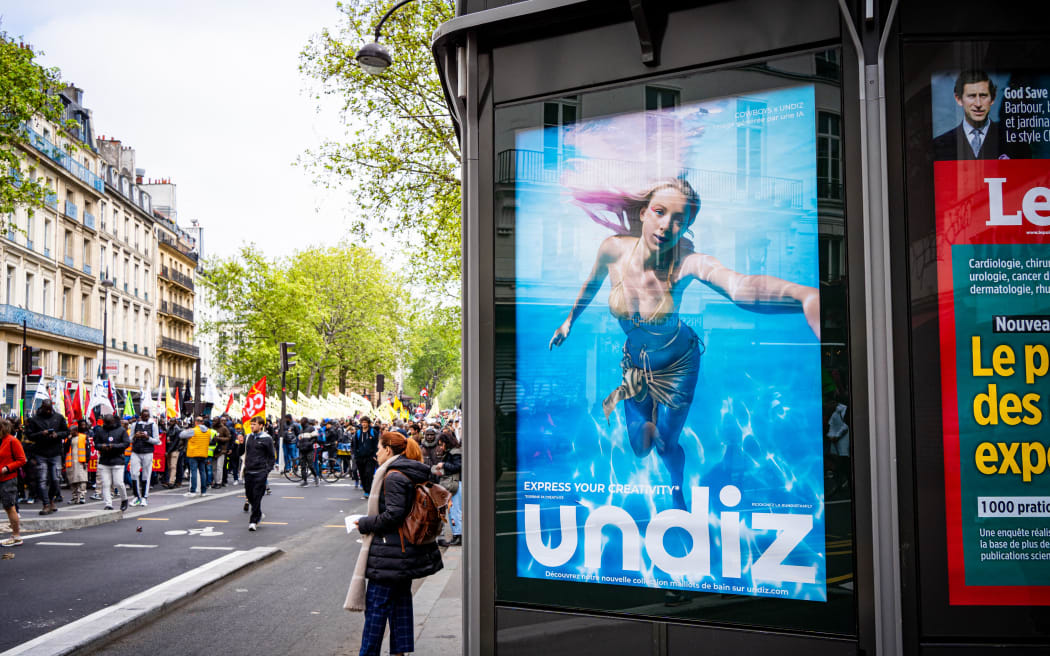
On April 29, 2023, this advertisement for shoes on display in Paris turned out to be controversial due to the AI-generated images.
photograph: AFP/Amaury Cornu
Public relations firms believe political parties should publicize the use of artificial intelligence in election advertising as a matter of course.
But advertisers aren’t so sure.
The political party itself said it did not use this information in most cases, but did not commit to disclosure if it did. That said, disclosure requirements are becoming more and more mandatory in Europe, and the United States may also be required to do so.
National was an exception. I used a tool called Midjourney to create an ad about Ram Raids, fast and furiousno disclosure.
Leader Christopher Luxon said it wasn’t a big deal. But lawmakers in other regions may disagree.
“Transparency is definitely the first principle,” said Kim O’Connell, a Sydney attorney who has compared AI laws across countries.
She was talking about a bill just introduced by the US Democrats that would require disclosure of the use of AI in political advertising.
“idea [is] Election campaigns, in particular, should contain real content and real people, as they are of great public importance in democratic systems. ”
China was far ahead with AI laws specific to its authoritarian regime.
Western countries won’t try to imitate them, but Europe’s pioneering AI laws are another matter, O’Connell said.
“There is a lot of attention on what is happening in Europe because the law says there are tiers to the use of AI, particularly electoral and political uses in the high-risk category. “
Among the many rules was also the principle of transparency, which “requires anyone using that type of AI to disclose to people that the AI is being used.”
She said this applies to all AI-generated images, not just deepfake images.
Perhaps surprisingly, the New Zealand Public Relations Association, which represents 1,000 PR firms, loved the idea.
“We’re definitely going to say, ‘Yeah, that has to be disclosed,'” said Chairman Heather Claycomb.
“Why don’t you want to reveal it? I think you have to ask yourself…because whether it’s a political party or not, are you trying to instill fear or manipulate the message?” Is it?”
A spokesperson was concerned about how AI might be used, telling the institute to develop a policy on AI. Claycombe said one Oakland organization, which he didn’t name, denied its use outright, but noted that most companies didn’t have a policy yet.
“Whether you belong to a political party, a government organization, a corporation, or a government agency, you need a policy that says, ‘How do we use this as an organization and where are the boundaries?'” Claycombe said. He said.
In the US, ad makers were also nervous.
The American Association of Political Consultants has condemned deepfake political ads and banned them from winning any awards, but its main problem lies in the ads that depict real people.
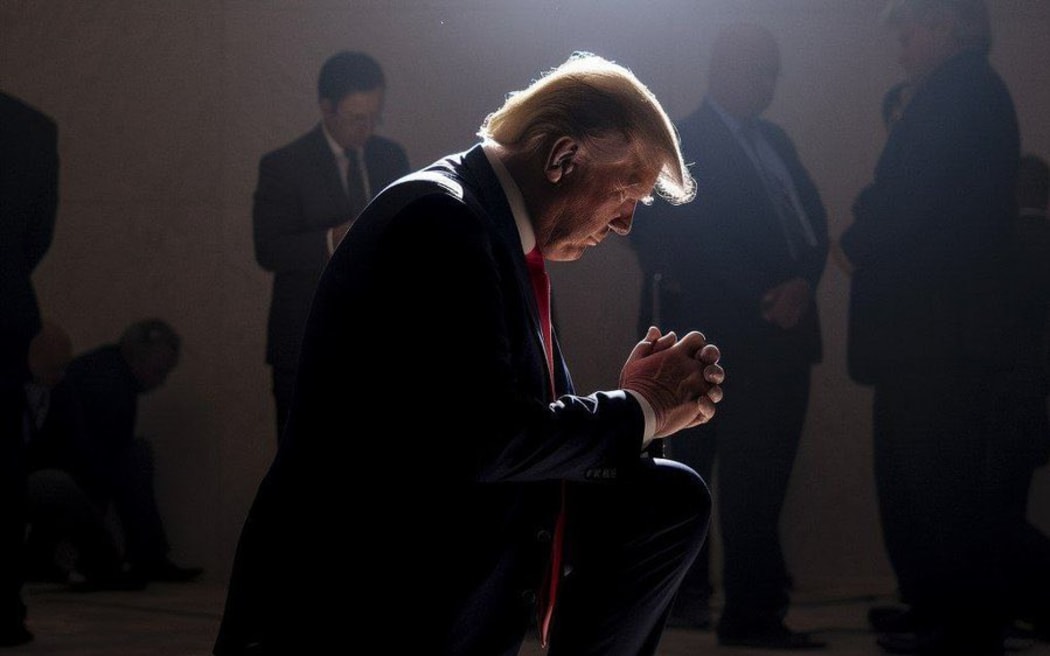
Former US President Donald Trump posted an AI-generated image of himself that, if you look closely, you can see that he’s missing a finger.
photograph: real society
The National ads didn’t use deepfakes per se, but they did copy movie actors.
The New Zealand Advertisers Association has taken a different course. He said how the ad is made is “irrelevant” and it’s all about the content.
“Is it offensive and misleading? Can you substantiate it?” said the association’s chief executive, Lindsay Moore, in a text message.
“Both humans and AI can break the rules or follow the rules.”
The Advertising Standards Authority’s regulations state that advertisements must not mislead, confuse, abuse public trust, or use false representations.
AI is not mentioned in the agency’s just-released annual report.
As for AI-attack ads, testing of the ad code is still to come.
At the electoral level, if any testing is done, it is not by independent election review. This is because independent election review is not driven by AI or election commissions.
“We do not regulate the content of election ads and therefore have no position on the use of AI in election ads,” the commission said.
Its job was to ensure that promoters, or party campaigners, put their names on all advertisements.
However, he added, “We are keenly aware of the continuous changes in the information environment and the speed at which technology develops.”
The Privacy Commission released guidelines on the use of AI on Thursday, shortly after the nationwide AI ads came to light, without mentioning information disclosure in political ads.
His official said Monday night that political parties have the same responsibility as other agencies for handling information about specific individuals.
O’Connell said Australia may be further behind New Zealand, with only one deepfake ad in Queensland in 2020.
“My experience so far has been very limited,” she says. “Australia will have to work on this.”
Disclosure is a ‘great first step’, but ‘how specific does the disclosure need to be?’
“Look, can you really get an indulgence just by advertising on any content and announcing that AI is being used to generate the ads? There’s a lot more to say about that. I guess.”