Researchers at Colorado State University will play a key role in a new research institute that will use artificial intelligence to create more sustainable farms and forests.
The University of Minnesota will lead a new National Artificial Intelligence Laboratory funded by a five-year, $20 million grant from the National Science Foundation and the USDA National Institute of Food and Agriculture.
Researchers at the AI Institute for Climate-Land Interactions, Mitigation, Adaptation, Tradeoffs and Economy (AI-CLIMATE) are using artificial intelligence (AI) to absorb and store carbon while at the same time boosting the economy. We aim to create climate-friendly practices. Agriculture and forestry.
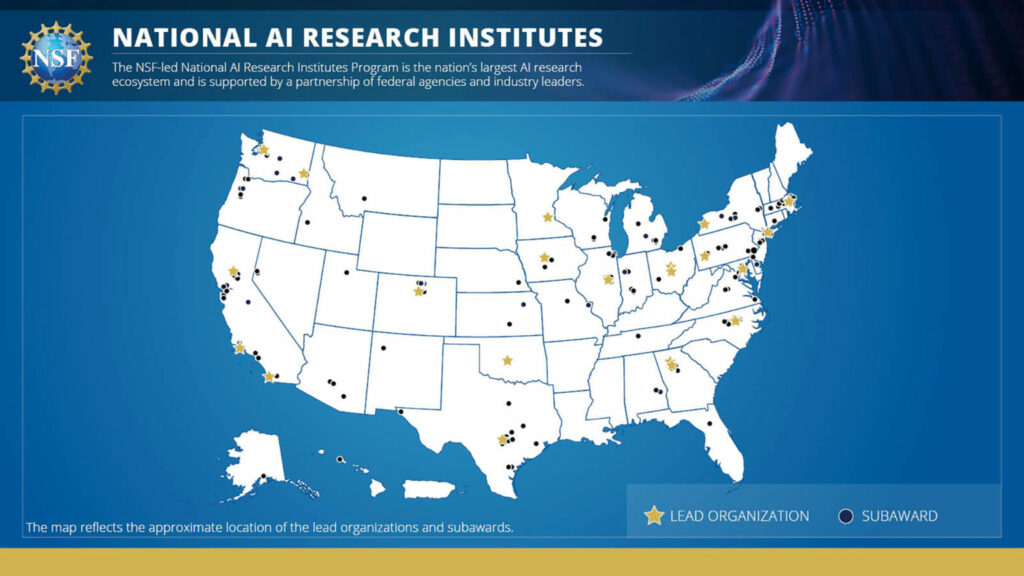
The lab is one of seven new NSF-USDA-funded AI labs recently announced, with a total of nearly $500 million to strengthen joint national AI research. Part of a federal initiative.
AI-CLIMATE includes scientists from Minnesota Twin Cities University, Cornell University, Colorado State University, Delaware State University, Purdue University, and North Carolina State University, including national experts on AI and climate-smart agriculture and forestry. Engineers assemble. The researchers will also work with the American Indian Higher Education Consortium and the tribal nations it represents.
“One of the drivers of climate impacts is carbon emissions,” said Shashi Shekhar, director of the institute and professor of computer science engineering at the University of Minnesota. “The United States is aiming to reach net zero carbon emissions by 2050, and one of the most promising ways to achieve this is to use natural systems such as forestry and agriculture as ‘carbon sinks. ”
Farms and forests can be used as carbon sinks, removing more carbon dioxide from the atmosphere than it is emitted. Farmers and foresters can do so through a carbon market, a system in which landowners can sell “carbon credits” equal to the amount of carbon dioxide their farms and forests sequester to companies seeking to offset their carbon emissions. You may be rewarded for doing this. However, with current technology, it is difficult and expensive to accurately measure how much carbon farmers and foresters are sequestering.
Researchers at the AI-CLIMATE Institute are using new AI techniques such as deep learning and knowledge-guided machine learning to improve accuracy, reduce computational costs of carbon and greenhouse gases in farms and forests, and improve final The goal is to make this process more accessible to more people.
Keith Paustian, University Distinguished Professor of Soil and Crop Science and Senior Fellow at the Natural Resources Ecology Laboratory (NREL), will lead CSU’s AI-CLIMATE team of faculty, postdocs and students. increase. His other CSU scientists on the team are:
- Francesca Cotolfo, Professor of Soil and Crop Science, Senior Research Fellow, NREL
- Patrick Keyes, Assistant Professor of Atmospheric Sciences
- Nathan Mueller, Assistant Professor of Ecosystem Science and Sustainability, Soil and Crop Science
- Stephen Ogle, Professor of Ecosystem Science and Sustainability, Senior Research Fellow, NREL
- Sanmi Palikkara, Professor of Computer Science
- Shrideep Pallickara, Computer Science Professor
- Yao Zhang, NREL and soil and crop science researcher
“Climate change poses one of the greatest challenges to humanity now and for the foreseeable future,” Paustian said. “Our farmlands and forests are a major source of greenhouse gas emissions as well as a huge opportunity for CO2 reduction and emissions reduction. It could revolutionize our ability to predict climate change impacts on , ranches and forests, quantify diverse sources of GHG emissions, and optimize policies to improve management and radically reduce emissions.”
The CSU team has developed AI for model-based prediction of changes in soil carbon stocks and soil greenhouse gas emissions, including data assimilation approaches using process-based biogeochemical models and implementation of knowledge-guided machine learning models. Develop a guided approach. AI-based analytical methods are developed to improve the determination of soil organic matter content and other key soil properties using infrared spectroscopy. Together, these developments will help improve measurement and monitoring related to carbon offset programs and climate-friendly commodity indicators.
Fundamental AI research is directed toward developing “digital twins” that fuse simulation and observational datasets down to the farm, ranch and forest stand level to provide management, policy and economic interactions for different adaptation and mitigation options. Evaluate the action. This twin is an AI-guided, encapsulating factor that impacts the farm, the history of management decisions made by the producer, and the impact of those management decisions considering his GHG emissions, crop yield, and economics. A digital representation of a farm.
“The digital twin will enable producers to interactively explore climate-related trade-offs (greenhouse gas emissions and carbon sequestration), resilience, and vulnerability to short-term and long-term climate change impacts. will be,” said Shleidup Parikala. Computer Science Professor at CSU She led the digital his twin portion of the project with Sangmi Pallickara.
The CSU team will also engage stakeholders and the public by developing narrative scenarios based on AI Institute research, policy and social insights, and educational materials that support AI Institute activities.
The CSU has advanced methods to quantify carbon and greenhouse gas emissions from agricultural systems, soil organic matter dynamics and carbon dioxide emissions and their impact on improving soil health, climate change assessments, and more. It is a world leader in several areas of research related to variability-sensitive agriculture. Dissemination and education on impacts and adaptations to agricultural land, and agriculture that considers climate change.
For more information on the new AI Lab, please visit the NSF website.
The Natural Resources Ecology Institute, which manages the partnership between CSU and the AI Institute, is part of the Warner University of Natural Resources. The Department of Ecosystem Science and Sustainability is located at Warner University of Natural Resources. The Department of Soil and Crop Science is located in the Faculty of Agricultural Sciences. The Department of Computer Science is located in the Faculty of Natural Sciences. The Department of Atmospheric Sciences is located in the Walter Scott Jr. School of Engineering.